Time to celebrate Pahela Boishakh in style
Shubho Bangla Noboborsho (Happy Pahela Boishakh) 1433. Aviation & Tourism Times extends greetings of Pahela Boishakh 1433 to its readers, patrons, peers, advertisers and well-wishers.
 ATT Desk Report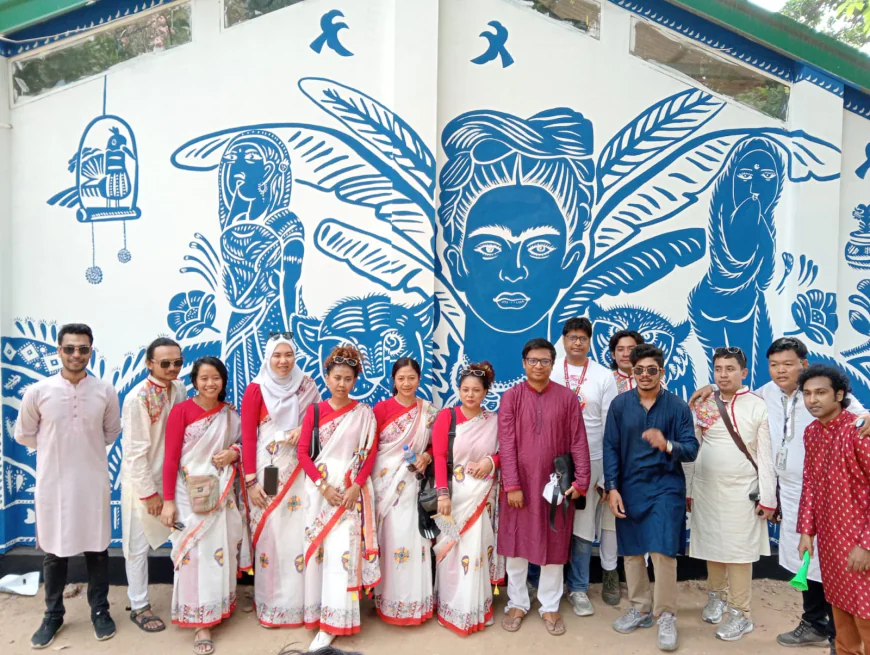
Pahela Boishakh, the very first day of the first month of the Bangla calendar, is celebrated as the Bangla New Year. This festival is invariably observed on April 14 in Bangladesh. People flock to celebration points in the morning and join revellers to ring in the new year.
Every Bangladeshi celebrates this day in grand style. Men wear Boishakhi-themed Punjabi or kurta and pyjama. On the other hand, women wear sari. Young girls often wear salwar, kameez or churidars with flower crowns. Couples visit Boishakhi nerve centres, especially Ramna Park, Suhrawardy Udyan and the Dhaka University campus.

Baishakhi fairs are held across the country featuring traditional foods, handicrafts and rides like merry-go-round.
The festival has deep historical roots. Most historians believe the Bangla New Year originated during Muslim rule, based on the Hijri calendar. Mughal Emperor Akbar (1556-1605 AD) introduced the Bangla calendar to simplify tax collection from peasants, aligning the tax year with the harvest season.
In 1610, when Dacca (now Dhaka) was first established as the capital, Subedar Islam Khan Chishti followed Akbar’s example by distributing sweets and celebrating the Boishakhi festival. This tradition continues today, making Pahela Boishakh a delightful day.
Boishakhi Shobhajatra
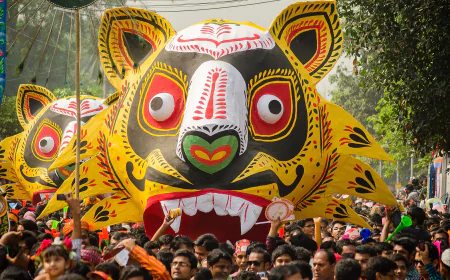
Mangal Shobhajatra (procession for well-being) has become an iconic part of Pahela Boishakh celebrations. However, Mangal Shobhajatra has been renamed as Boishakhi Shobhajatra (Boishakhi procession) this year. In 2025, it became Ananda Shobhajatra (joyous procession). In 1986, the first Boishakh procession was started in Jessore by Charupith School under the name Ananda Shobhajatra. Later in 1989, the Institute of Fine Art (now Faculty of Fine Art) at Dhaka University began organising Mangal Shobhajatra in Dhaka. It was officially named Mangal Shobhajatra in 1996.
The procession features symbolic artworks, colourful masks and effigies of various animals introduced with an eye to unifying people against authoritarian rule, celebrating peace and conveying hopes for well-being in the new year. In 2016, UNESCO recognised Mangal Shobhajatra as an “Intangible Cultural Heritage of Humanity”.
Celebrations and Traditions
The day begins at dawn with cultural organisation Chhayanaut performing Rabindranath Tagore's song "Esho he Boishakh" under the banyan tree at Ramna Batamul in Dhaka. Businesses open new ledgers with red covers and white pages, offering sweets to loyal customers.
Significance of hilsa
As part of an age-old tradition, Pahela Boishakh becomes incomplete without the silvery hilsa fish. The traditional Boishakhi meal centres around panta bhat (fermented water-soaked rice) served with fried hilsa, green chilies, onions and potato mashes.
Regional traditions
Beyond the capital, Pahela Boishakh is celebrated with unique local events. Bull racing takes place in Munshiganj, Boli Khela (traditional wrestling) in Chittagong, Nouka Baich (boat racing) in various riverine areas, along with cockfights and pigeon racing. Traditional Jatra plays and puppet shows are also staged.
Secular festival
Today, Pahela Boishakh is largely a secular holiday enjoyed by people of all faiths and backgrounds. It unites Bengalis worldwide in celebrating their cultural heritage, marking a time of new beginnings, hope, and joy.
As Bangladesh continues to evolve, the spirit of Pahela Boishakh remains a vibrant expression of Bengali identity and pride.