Chapainawabganj: The capital of mango
Covering an area of 1,744 square kilometres, Chapainawabganj lies at the westernmost edge of Bangladesh
 Tariq Al Banna
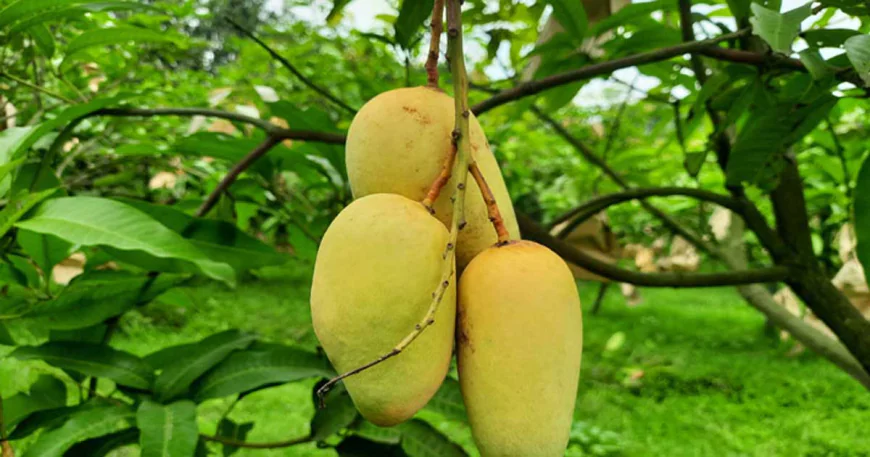
Chapainawabganj is an administrative district in the Rajshahi Division of northwestern Bangladesh. The district is also sometimes referred to simply as Nawabganj or Chapai. Before the partition of the Indian subcontinent, it was part of the Malda district. In 1947, it was separated from Malda and incorporated into East Pakistan, where it became a subdivision of Rajshahi district. It officially emerged as an independent district in 1984.
Chapainawabganj is widely known as the “city of mangoes” or the “land of mangoes”. A significant share of Bangladesh’s mango production comes from this district, earning it the title of the country’s “mango capital”. The mangoes grown here are especially renowned for their rich flavour and quality.

Covering an area of 1,744 square kilometres, Chapainawabganj lies at the westernmost edge of Bangladesh. It is bordered by the Indian state of West Bengal to the north, west and south, while Rajshahi and Naogaon districts lie to the east. Geographically, the district is situated between 24°22′ and 24°57′ north latitude and between 87°55′ and 88°23′ east longitude.
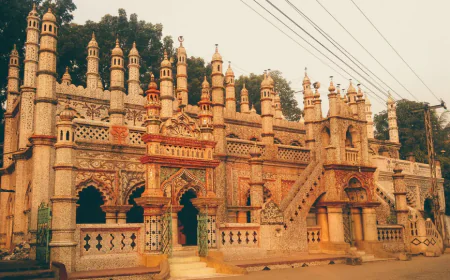
Among the district’s notable tourist attractions and historical landmarks are the Choto Sona Mosque, Tohakhana, Nachole Rajbari, the shrine of Shah Niyamatullah, Chamchika Mosque, Darasbari Mosque, Swapnapalli, Dhaniyachak Mosque, Rohanpur Nawda Buruz, Neelkuthi, the Mahananda River, the ancient tamarind tree of Shurla, Tangon Picnic Park and the Kansat Zamindar House.
Choto Sona Mosque
The Choto Sona Mosque, regarded as a jewel of Sultanate architecture, is located in Shahbazpur Union of Shibganj Upazila in Chapainawabganj district under the Rajshahi Division. An inscription above the mosque’s main entrance states that it was built by one Mansur Wali Muhammad bin Ali during the reign of Sultan Alauddin Hussain Shah between 1493 and 1519.
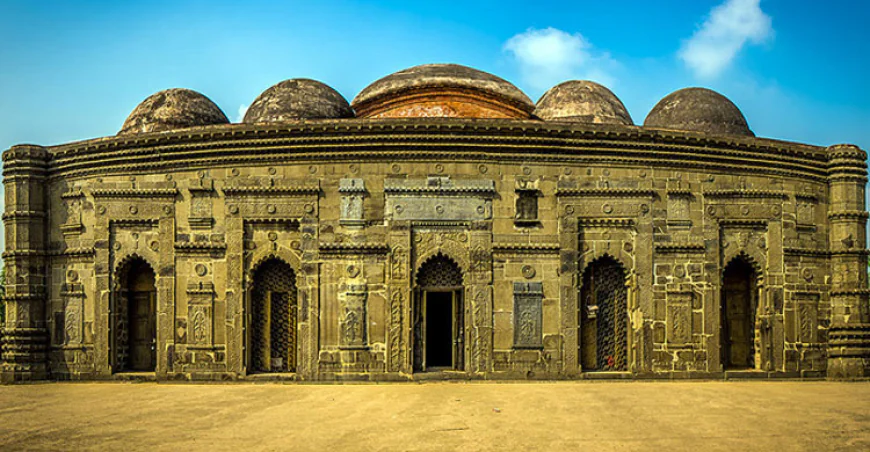
The architectural gem hidden in the Chapai Nawabganj, Choto Sona Masjid, was constructed in the late 15th century. Photo: Wikipedia
According to local accounts, the mosque’s domes were once plated with gold, which is believed to be the origin of its name, “Sona Mosque”. Since another and larger Sona Mosque exists across the Bangladesh-India border in India, this mosque gradually became known as the “Choto” or “small” Sona Mosque. The mosque courtyard stretches 42 metres from west to east and 43.5 metres from south to north.
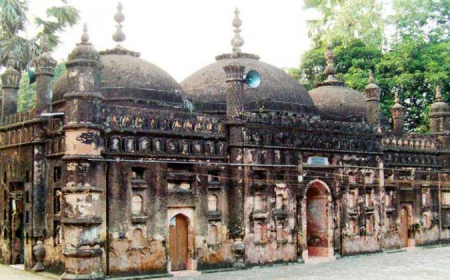
Khoniadighi Mosque
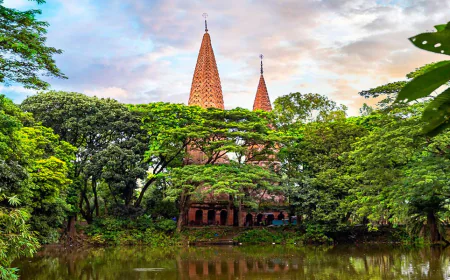
Located in Shibganj of Chapainawabganj district, the Khoniadighi Mosque is one of Bangladesh’s ancient and historically significant architectural monuments. It is situated around 36 kilometres from the district headquarters. Among locals, the mosque is also widely known as Rajbibi Mosque and Chamchika Mosque. The structure was built between 1450 and 1565, when Gaur served as the regional capital.
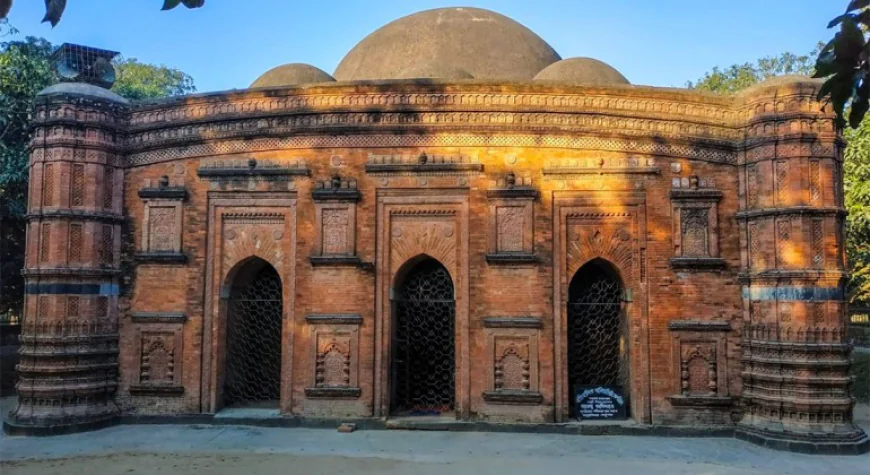
With its 500-year-old legacy, Khania Dighi Mosque is not only a place of worship but also a proud symbol of Bangladesh's cultural heritage. Photo: Syed Sajjadul Islam
The mosque measures 62 feet in length and 42 feet in width. Decorated with terracotta and brick ornamentation, the mosque features stonework on its pillars and cornices. Built in the Mughal architectural style, the mosque’s main square chamber has sides measuring 28 feet each. Its walls are nearly seven feet thick, helping to keep the interior cool even during extreme heat. The mosque has one large central dome above the main prayer hall and three smaller domes over the veranda. Beside the mosque lies the vast Khoniya Dighi, from which the mosque derives its name.
Shrine of Shah Niyamatullah
Located within the Tahakhana complex in Shibganj Upazila, just half a kilometre from the Choto Sona Mosque, the shrine of Hazrat Shah Niyamatullah is recognised as an important example of Mughal architecture. Hazrat Shah Syed Niyamatullah (RA) was one of the most renowned spiritual figures of the sixteenth century. He was believed to be a descendant of the Prophet Muhammad (PBUH) and was revered as a saint, scholar and spiritual guide.
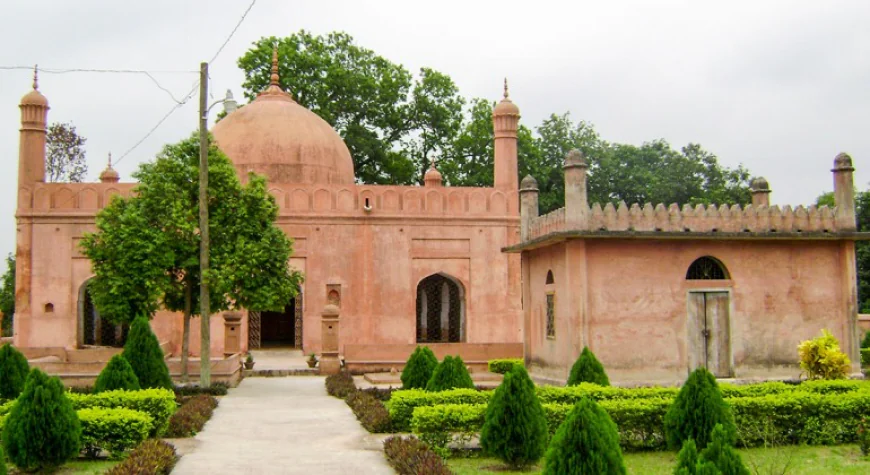
The Shrine of Shah Niamatullah, located in the Firozpur area of Shibganj, Chapainawabganj, Bangladesh, is a 17th-century Mughal mausoleum. Photo: Wikipedia
During the reign of Sultan Shah Suja, he travelled from Koronia in Delhi to various regions before arriving in Rajmahal of Firozpur. The Bengal Sultan welcomed him with great respect and became his disciple. Shah Niyamatullah later established a permanent spiritual centre on the outskirts of Gaur in Firozpur, where he spent 33 years preaching Islam with distinction. Following his death in either 1075 or 1080 Hijri, he was laid to rest at the present shrine site.
Kansat Mango Market
Chapainawabganj is widely regarded as Bangladesh’s mango capital, and Kansat in Shibganj Upazila hosts the country’s largest mango market. During the mango season, trade worth hundreds of crores of taka takes place in this bustling wholesale market. From dawn until dusk, the market remains crowded with buyers and sellers.
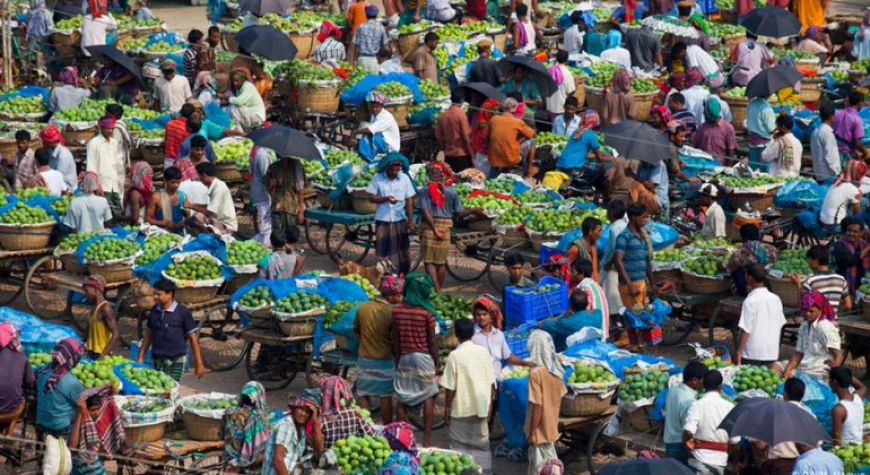
Kansat Mango Market is situated in Shibganj upazila, approximately 23 Kilometers from Chapainawabganj local Sadar. Photo: M Mamun
Although there are several mango markets across Rajshahi and Chapainawabganj, Kansat is considered the largest and most famous wholesale hub. Visitors can enjoy the vibrant atmosphere of what feels like a kingdom of mangoes, tasting a variety of freshly ripened fruit or purchasing baskets full of mangoes to take home.
Darasbari Mosque
The Darasbari Mosque is located near Ampur in Chapainawabganj Sadar. Locals refer to the surrounding area as Darasbari. According to inscriptions found at the site, the mosque was constructed in 1497 during the reign of Sultan Shamsuddin Yusuf Shah. Initially known as the Firozpur Mosque, it became popularly known as Darasbari Mosque after the establishment of the Darasbari Madrasa in 1504.
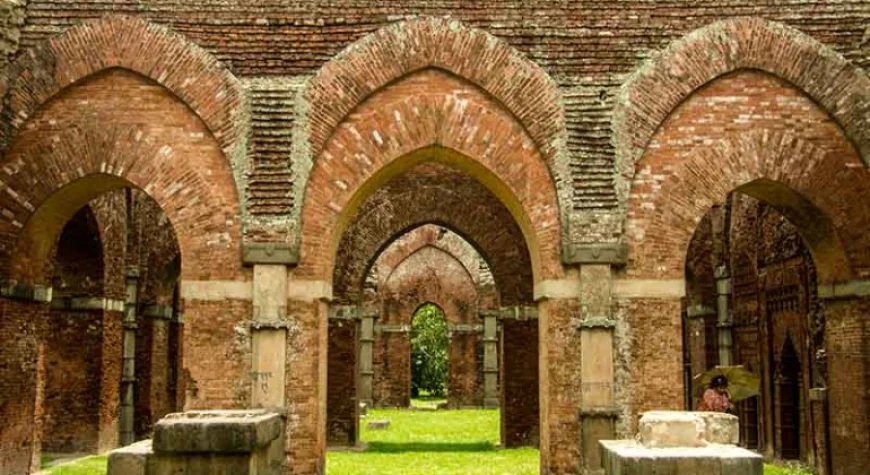
The Darasbari Mosque is an historic former mosque and now architectural monument, located in Shibganj upazila of the district. Photo: Faisal Aman
Built with terracotta bricks, the mosque bears strong similarities to the Chamchika Mosque in India. The interior is divided into two rectangular sections, while the main dome is particularly striking in appearance. The mosque measures 99 feet 5 inches in length and 34 feet 9 inches in width, with a veranda on the eastern side measuring 10 feet 7 inches. The structure contains nine intricately designed mihrabs, while to the north lies a vast pond covering nearly 60 bighas of land.
The historic Yusufi Shahi inscription engraved in Tughra script, recovered from the Darasbari Mosque, is currently preserved at the Kolkata Museum.