

Tuna industry in Maldives expanding
Maldives' tuna production surges 66% and exports 87% in 2025, driven by sustainable pole-and-line fishing

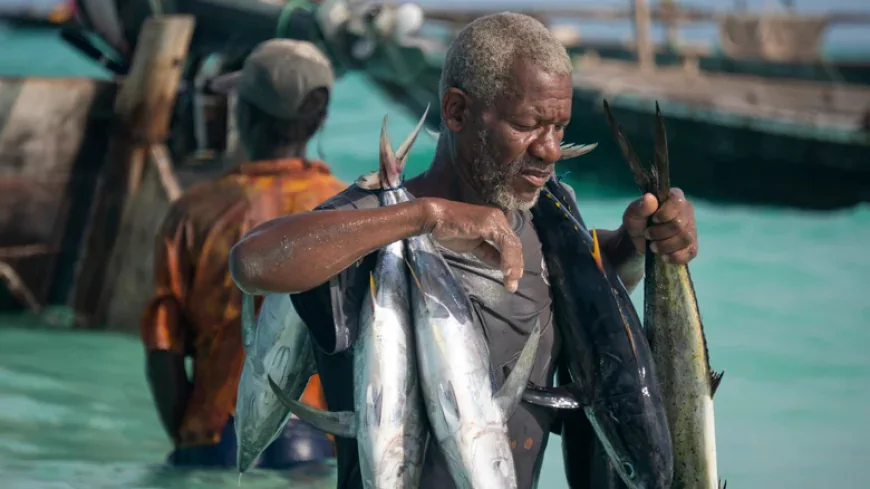
The Maldives’ tuna industry is experiencing an unprecedented boom, with fish production soaring by 66 per cent and exports surging nearly 87 per cent in 2025, according to the Maldives Monetary Authority. The sector, second only to tourism in economic importance, landed 88,347 metric tonnes of fish last year, driven by a remarkable 80 per cent spike in skipjack tuna catches.
At the heart of this success lies a centuries-old tradition: pole-and-line fishing. Unlike industrial methods that devastate marine ecosystems, Maldivian fishermen catch tuna one fish at a time using single poles and lines — a technique that generates virtually no bycatch. The country’s skipjack fishery holds the prestigious Marine Stewardship Council sustainability certification, with bycatch rates as low as 0.65 per cent, compared to 28 per cent for longline fishing.
President Mohamed Muizzu, speaking on World Tuna Day, reaffirmed the nation’s commitment to this sustainable method, describing it as a model of responsible practice that supports both conservation and coastal livelihoods. The government has introduced timely payment mechanisms — fishermen now receive payment within 48 hours of sale — and established a National Fishermen’s Register to provide banking access. These reforms have encouraged many who had left the industry to return, boosting active vessels and fishermen.
Yet significant challenges loom. Climate change is altering tuna migration patterns, with rising ocean temperatures pushing fish into deeper, cooler waters. This threatens the effectiveness of surface-focused pole-and-line fishing. A World Bank-funded study projects the Maldives could lose up to 75 per cent of its maximum catch potential by century’s end under pessimistic climate scenarios.
The government is responding with investments in energy-efficient vessels, renewable energy integration across processing operations, and infrastructure expansion including new ice plants and cold storage facilities. The Maldives is also leading regional efforts, co-proposing the Indian Ocean Coastal Alliance with 10 other nations to strengthen sustainable tuna management. For an island nation defined by the ocean, balancing tradition, sustainability, and economic growth remains the defining challenge of its blue economy future.
What's Your Reaction?
 Like
0
Like
0
 Dislike
0
Dislike
0
 Love
0
Love
0
 Funny
0
Funny
0
 Wow
0
Wow
0
 Sad
0
Sad
0
 Angry
0
Angry
0



Comments (0)