

Global tourism grows 2pc in Q1
International tourist arrivals grew 2% over the first quarter of 2026, despite disruption caused by the crisis in the Middle East in March

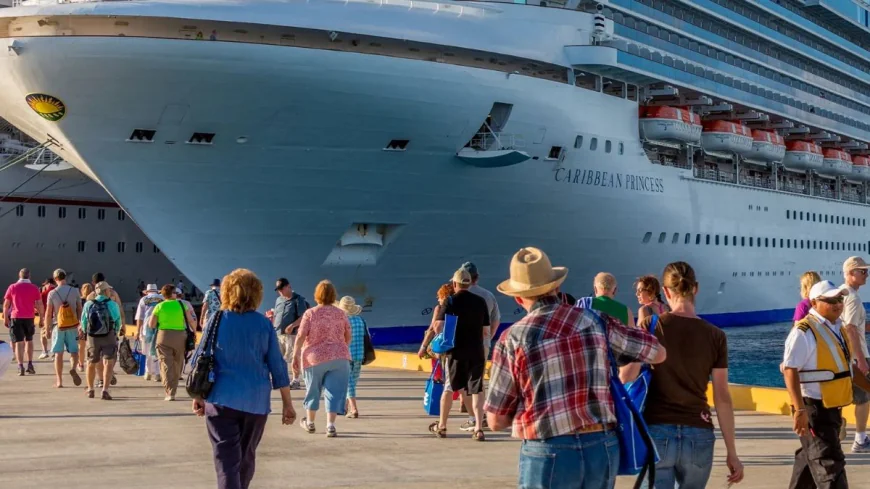
According to the latest data from UN Tourism, around 307 million tourists travelled internationally in the first quarter of 2026, about 6 million more than the same period of 2025.
While the start of the year saw sustained travel demand overall (+2.5% cumulative growth in January and February), the Middle East conflict impacted performance in March (+0.4%).
The conflict is expected to reduce growth in international arrivals by 1 to 2 percentage points below UN Tourism’s initial forecast of 3% to 4% for 2026, depending on the conflict’s duration and scope. Aside from disruptions in flights to, from and within the Middle East and effects on traveler confidence, the spike in oil prices and jet fuel shortage in some markets is increasing air fares and reducing flight capacity also in other regions. More expensive travel coupled with uncertainty about air connectivity, could redirect demand towards closer tourism destinations while also affecting overall travel demand.
UN Tourism Secretary-General Shaikha Al Nuwais said: “The ongoing conflict in the Middle East is disrupting travel patterns well beyond the region itself, including rising inflation, particularly in transport and accommodation. This is placing pressure on travelers, businesses and destinations alike. Even amid this uncertainty, international tourism continued to show resilience in the first quarter of 2026, with 307 million people traveling internationally, a 2% increase on last year. At a time of growing geopolitical and economic pressure, this reinforces tourism’s wider role in supporting economies, creating opportunity and sustaining communities far beyond the sector itself.”
At a time of growing geopolitical and economic pressure, this reinforces tourism’s wider role in supporting economies, creating opportunity and sustaining communities far beyond the sector itself.
Europe and Africa on top in first quarter
The latest World Tourism Barometer by UN Tourism provides a regional breakdown of results for Q1:
• Europe, the world’s largest travel destination region, saw over 130 million international tourists in Q1 2026, a 4% increase, building on the strong momentum of 2025 (+5%). Some destinations benefited from the redirection of tourism flows. Southern Mediterranean Europe and Northern Europe both saw a 4% increase in arrivals in Q1 2026, while Central Eastern Europe (+6%) continued its recovery.
• Arrivals in Africa (+4%) continued to grow in Q1 2026, with North Africa recording a 4% increase supported by strong double-digit figures in March (+18%). Arrivals in Sub-Saharan Africa also increased 4% in Q1.
• Asia and the Pacific recorded 3% growth this first quarter, somewhat slower than expected due to mixed performance among destinations. Strong results were recorded in February (+9%) but were more moderate in March (+2%), as disruptions affecting Middle Eastern air hubs contributed to a 27% decline in South Asia. Oceania (+9%) and North-East Asia (+5%) saw particularly robust results in Q1 2026. Overall, arrivals in Asia remained 11% below pre-pandemic values (89% of Q1 2019 levels).
• The Americas recorded 2% more international arrivals this first quarter of 2026, with strong growth in Central America (+18%) but weaker in South America (-1%).
• In the Middle East arrivals dropped 14% in Q1 2026, impacted by the conflict. Several Gulf destinations recorded strong declines this quarter, while Egypt (+16%) saw a robust increase in arrivals. This follows a strong rebound in the Middle East after the pandemic, with arrivals in 2025 climbing 40% above 2019 levels.
Among destinations reporting growth in arrivals for the first three months of 2026, the best performers include: Paraguay (+46%), New Caledonia (+45%), El Salvador (+43%), Mongolia (+39%), Palau (+37%) and Uzbekistan (+37%). In terms of receipts, several countries reported double-digit growth in Q1 2026, among which Pakistan (+60%), the Republic of Korea (+38%), Morocco (+24%), Brunei (+22%) and Brazil (+12%).
Middle East crisis and rising travel costs
According to the latest survey of the Panel of Tourism Experts, the Middle East conflict, high transport and accommodation costs as well as other economic factors are the three main challenges affecting international tourism in 2026.
Almost two thirds of Panel Experts (64%) indicated that the Middle East conflict is negatively affecting travel demand for their destination, of which 43% consider the impact to be moderate and 21% high. Another 36% indicated the conflict is having little or no impact on demand.
Around 61% of experts said the Middle East conflict is reducing inbound tourism to their destination. Conversely, 17% reported an increase in inbound tourism because of disruptions in other destinations. Around 14% of responses indicated an increase in domestic tourism, with domestic travel replacing some outbound tourism.
What's Your Reaction?
 Like
0
Like
0
 Dislike
0
Dislike
0
 Love
0
Love
0
 Funny
0
Funny
0
 Wow
0
Wow
0
 Sad
0
Sad
0
 Angry
0
Angry
0





Comments (0)