US judge blocks Trump's $100,000 H-1B visa fee
The court ruled that the charge amounted to an unlawful tax lacking congressional approval
 ATT Correspondent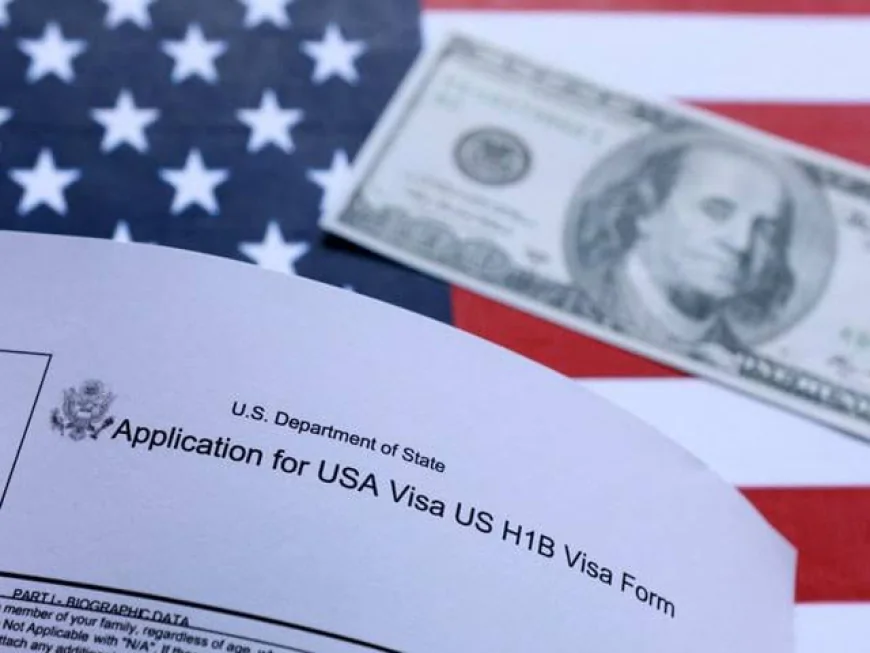

A US federal judge has struck down a controversial $100,000 fee imposed by President Donald Trump on new H-1B visas, ruling that the charge amounted to an unlawful tax lacking congressional approval.
US District Judge Leo Sorokin issued the ruling on Monday in a lawsuit brought by 20 Democratic state attorneys general challenging the administration's decision to sharply increase the cost of hiring highly skilled foreign workers through the H-1B visa programme, reports Reuters.

The fee, announced by Trump in September, raised the cost of obtaining an H-1B visa from the typical range of $2,000 to $5,000 to as much as $100,000. The programme is widely used by technology companies and other employers seeking specialised foreign talent.
The Trump administration argued that the fee was a lawful penalty intended to discourage employers from replacing American workers with foreign labour. Officials maintained that the president had authority under federal immigration law to impose such restrictions when deemed necessary to protect US interests.
Judge Sorokin rejected that argument, concluding that the payment functioned as a tax rather than a penalty and therefore required congressional authorisation.
"The substance and application of the $100,000 payment reveal that it is a tax, regardless of what the payment is called," the judge wrote in his decision.
Sorokin also cited a recent US Supreme Court ruling that invalidated Trump's broad tariff measures, saying the same legal reasoning applied in this case because immigration law does not grant the president authority to impose taxes.
The White House quickly signalled that it would challenge the decision.
"President Trump has clear legal authority to restrict entry of any class of aliens he determines is not in America's best interests," White House spokeswoman Taylor Rogers said, adding that the administration was confident the ruling would be overturned on appeal.
The H-1B programme currently issues 65,000 visas annually, with an additional 20,000 visas reserved for foreign workers holding advanced degrees. The visas are typically valid for three to six years.
The $100,000 fee did not apply to foreign nationals already in the United States on student visas, who account for a significant share of new H-1B recipients.
The measure had limited practical impact, with government records showing that only 85 employers had paid the fee as of mid-February.
The fee sparked several legal challenges, including a separate lawsuit by the US Chamber of Commerce. That case remains under appeal after a federal judge in Washington previously upheld Trump's authority to impose the charge.
California Attorney General Rob Bonta, who led the coalition of states challenging the policy, welcomed the ruling.
"This tax was an attack on America's ability to attract and retain the high-skilled talent that strengthens our economy and helps us meet critical workforce needs," he said.
The ruling marks another legal setback for Trump's efforts to tighten immigration rules and reshape employment-based visa programmes, although the administration's appeal could prolong the legal battle over the policy.