

5 toughest airports for pilots to land at
From mountain ranges and oceans to less than half a mile runways, these are the five most dangerous airports in the world, where landings and takeoffs require extreme precision and massive pilot skill


Landing an aircraft is one of aviation's most demanding tasks, but some airports push pilots to the limits of their training and experience. Surrounded by mountains, affected by unpredictable weather or constrained by short runways, these airports require specialised certification and exceptional skill to operate safely.
From Himalayan valleys to urban skylines, the following five airports are widely regarded as among the world's most technically challenging, according to a report written by Viviana Tarnowska and published on aviation-based news portal Simple Flying.
Aspen-Pitkin County Airport, Colorado, USA
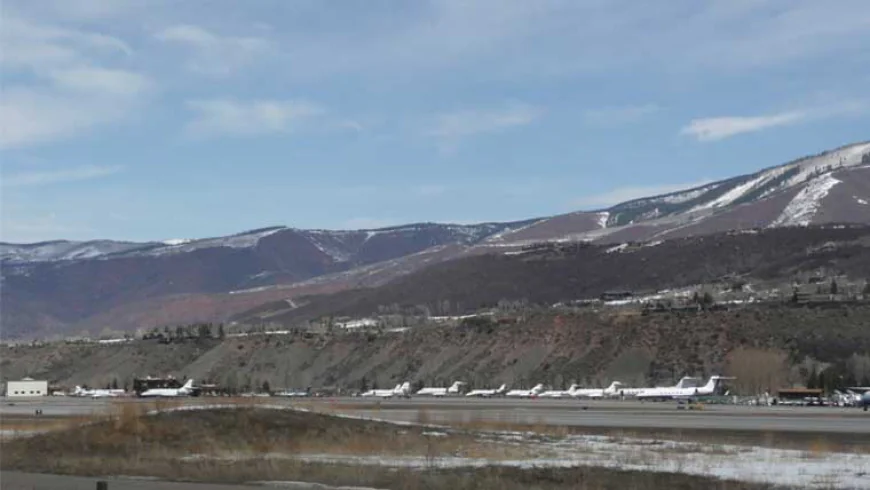
The Aspen-Pitkin County Airport is a commercial service non-hub airport with significant environmental and terrain constraints. Photo: Mead & Hunt
Often described as North America's most demanding commercial airport, Aspen-Pitkin County Airport sits at 7,820 feet above sea level in a mountain valley surrounded by peaks rising to 14,000 feet.
The terrain dictates a unique operating pattern: aircraft land on Runway 15 and depart from Runway 33, using opposite directions on the same runway. Pilots must undergo special training, and only specially certified crews are permitted to operate there.
Aspen's air traffic procedures are also unusual. During busy periods, arriving and departing aircraft operate in close proximity under carefully coordinated procedures that allow departures to clear the approach path while arrivals are still on final approach.
Variable winds, challenging terrain and marginal weather add to the difficulty, making Aspen one of the most demanding airports in the United States.
London City Airport, United Kingdom
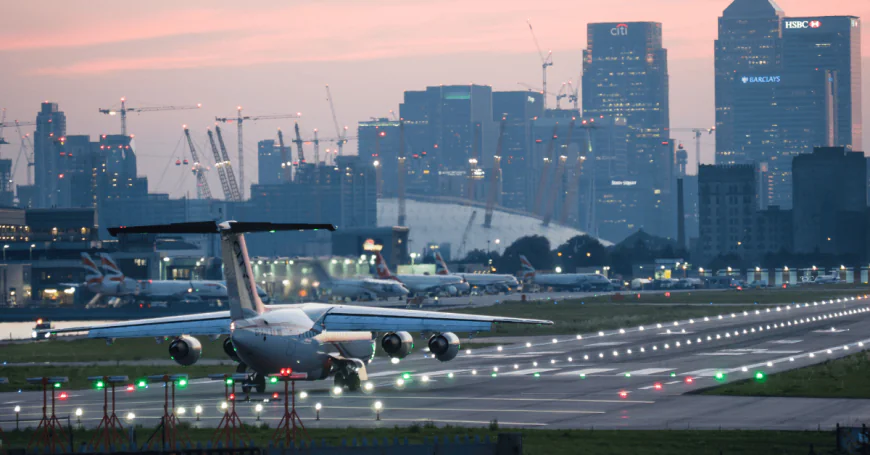
London City Airport spans an area that accommodates a single runway and a compact passenger terminal designed to efficiently handle short-haul flights. Photo: Blacklane
Located in the heart of London's financial district, London City Airport combines a short runway with one of the steepest approach angles used in commercial aviation.
While most airports use a glide path of about three degrees, London City requires aircraft to descend at 5.5 degrees because of surrounding buildings, including the Canary Wharf skyline. Its runway is only 1,508 metres long, significantly shorter than those at major international airports.
The steep approach requires separate certification for aircraft, airlines and pilots. New pilots must complete a familiarisation approach and meet strict visibility requirements before operating independently.
Only a limited number of aircraft types are approved for the airport, which remains one of Europe's most technically demanding urban airports.
Cristiano Ronaldo International Airport, Madeira, Portugal
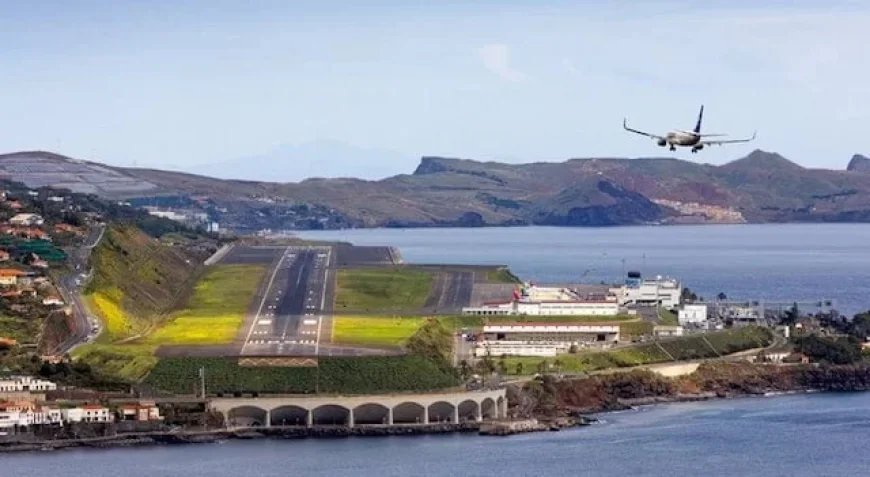
Christiano Ronaldo Airport is the gateway to the Portuguese island of Madeira, serving both domestic and international flights. Photo: Holidays Maderia
Madeira Airport has long been known for its difficult approaches, shaped by rugged terrain and strong Atlantic winds.
While one runway direction offers a standard instrument approach, the opposite direction requires pilots to perform a visual manoeuvre involving a 180-degree turn before lining up with the runway. Mountains rise on one side of the airport, while the Atlantic Ocean lies on the other.
Pilots must complete specialised simulator training and observe take-offs and landings before receiving authorisation to operate there. Strong crosswinds frequently force diversions, although improved wind-monitoring systems introduced in recent years have helped reduce disruptions.
The airport is also known for its remarkable runway extension, supported by 180 concrete pillars built above the coastline.
Tenzing-Hillary Airport (Lukla), Nepal
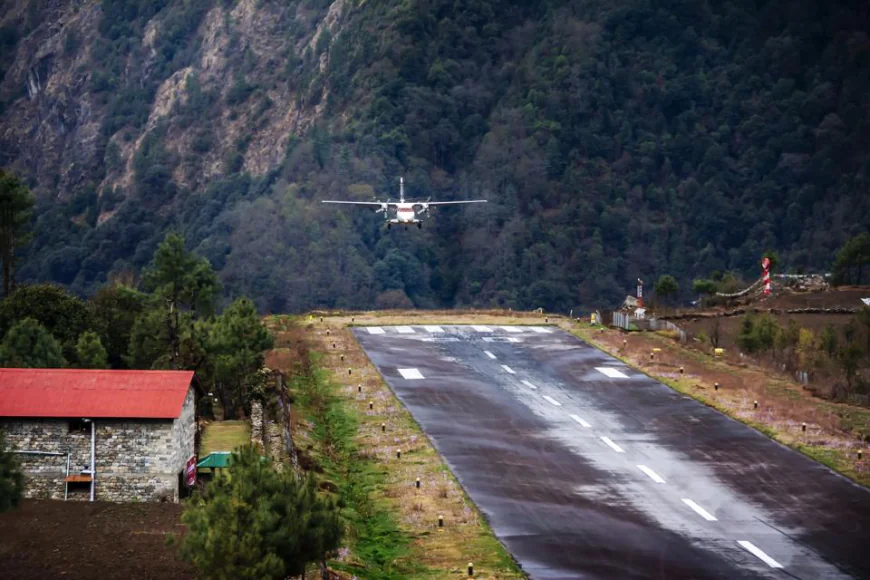
Tenzing-Hillary airport in Lukla is renowned for its short and sloped runway, measuring only about 527 meters (1,729 feet) in length. Photo: Getty Images
Serving as the gateway to Mount Everest, Lukla Airport is often described as one of the world's most unforgiving airfields.
Its single runway is only 527 metres long and features an uphill gradient designed to help aircraft stop after landing. One end of the runway is bordered by steep terrain, while the other drops sharply into a valley, leaving little room for error.
Located at 9,334 feet above sea level, the airport operates without advanced navigation systems such as radar or instrument landing guidance. Pilots must fly under visual flight rules and rely heavily on experience and local knowledge.
Nepal's aviation authorities require pilots to have extensive short take-off and landing experience before they can operate at Lukla. Only specially suited aircraft, including the DHC-6 Twin Otter and Dornier 228, are authorised to use the airport.
Paro International Airport, Bhutan

Paro International Airport (PBH) has a single 2,265 m (7,431 ft) asphalt runway. Photo: Great Tibet Tour
Nestled deep within the Himalayas, Paro is frequently cited by pilots as one of the most technically complex commercial airports in the world.
The airport lies at 7,332 feet above sea level and is surrounded by mountains rising to about 18,000 feet. Pilots must navigate a winding valley using visual landmarks before making a steep final approach to a runway that becomes visible only shortly before landing.
There is no radar guidance, and aircraft are flown manually throughout the approach. Operations are also affected by strong mountain winds and seasonal weather conditions, particularly during the monsoon.
Paro's certification requirements are among the strictest in aviation. Pilots need extensive flight experience, specialised simulator training and numerous supervised take-offs and landings before receiving approval. Only a small number of pilots worldwide are certified to operate there, and only two airlines currently serve the airport.
These airports demonstrate how geography, weather and infrastructure can combine to create some of the most challenging flying conditions in the world. For the pilots who operate there, every landing demands precision, concentration and a thorough understanding of the environment.
What's Your Reaction?
 Like
0
Like
0
 Dislike
0
Dislike
0
 Love
0
Love
0
 Funny
0
Funny
0
 Wow
0
Wow
0
 Sad
0
Sad
0
 Angry
0
Angry
0




Comments (0)