FIFA World Cup 2026: A geopolitical gambit off the pitch
FIFA World Cup 2026, overshadowed by the US-Iran war, Trump-era travel bans, co-host tensions, and a history of political exploitation of football

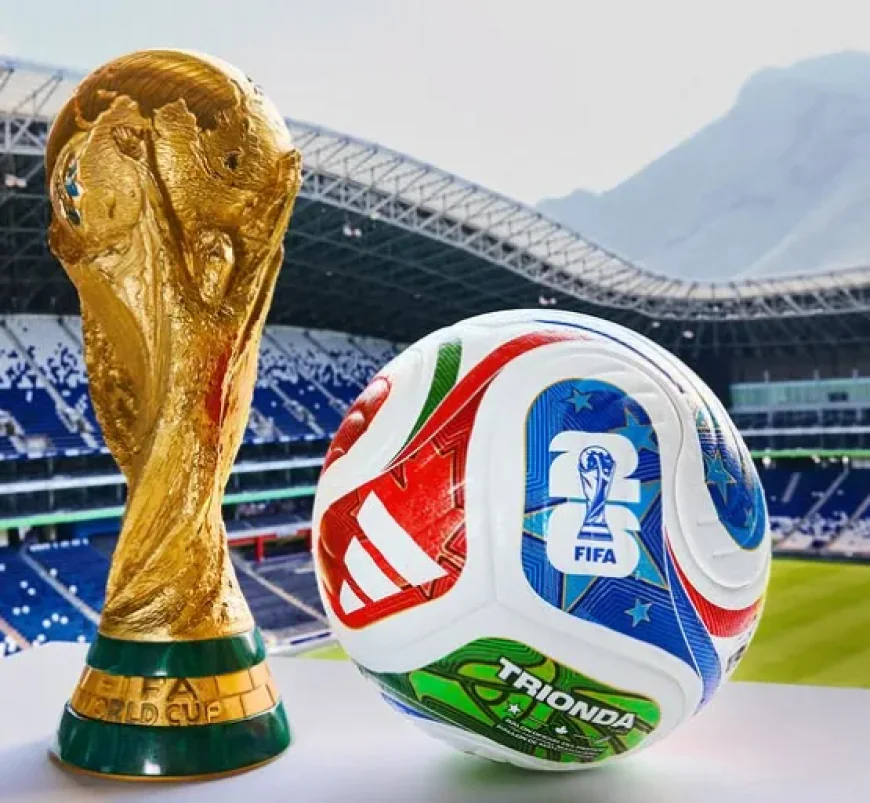
The unifying game of football has never looked so unpleasant off the field. With the opening kick-off just days away, is being overshadowed by intense geopolitical turbulence that threatens to redefine the relationship between sport and international politics.
The tournament will take place from 11-19 July 2026. It will be jointly hosted by sixteen cities—eleven in the United States, three in Mexico, and two in Canada. The tournament will be the first FIFA World Cup to be hosted by three nations, and the first to include 48 teams, an expansion from 32 previously.
For the first time, a host nation the USA is actively at war with a participating nation Iran. The US and Israel launched military strikes on Iran in February, and while a fragile ceasefire exists, tensions remain explosive.
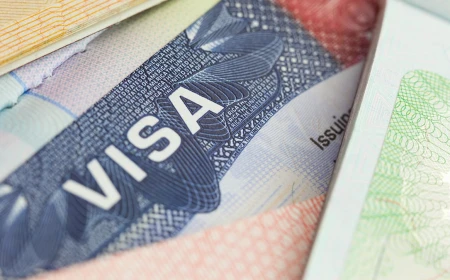
Iran’s football chief, Mehdi Taj, has insisted that their host “is FIFA, not Trump or America,” demanding guarantees that Iranian officials linked to the Islamic Revolutionary Guard Corps will not face insult or visa denial when entering the US. His concerns are not abstract—Taj himself was turned back from the Canadian border last week after his visa was cancelled over such links.
Beyond the Iran flashpoint, the tournament is buckling under the weight of severe US travel bans that restrict citizens from 39 countries, including qualified nations Haiti, Senegal, and Ivory Coast. Fans from these nations face full or partial entry bans, turning the World Cup dream into a logistical nightmare. FIFA has been forced to allow Iran to relocate its base camp to Mexico, and even a Somali referee was dropped after being denied a US visa.
Africa's top referee Omar Artan will not be allowed to officiate at the World Cup after he was refused entry to the USA, FIFA has confirmed.
Meanwhile, the three co-hosts are hardly united. US President Donald Trump’s tariffs and comments about making Canada the “51st state” have frayed relations, while Mexico grapples with strikes and cartel violence. Experts warn that stepped-up immigration enforcement and the ongoing Iran war could turn border crossings into flashpoints.
Meanwhile, Mexico is facing its own challenges, with the rise in cartel-related violence sparking major concerns over fan safety and the security of the event as a whole. The logistical complexity of a 48-team, tri-national tournament, including the coordination of fan festivals, transportation, and stadium operations, has been elevated to a whole new level.
Awkward political and diplomatic subtexts have never been far from the World Cup. Uruguay hosted the first edition in 1930 at the onset of the Great Depression. Underscoring an anti-colonial subtext, Montevideo’s Estadio Centenario, venue of the final match, was built to commemorate 100 years of Uruguay’s independence from Spain in 1830. Spain kept away.
Italy’s ruler, Benito Mussolini, hosted the tournament in 1934 and turned it into a prop for fascist iconography. Political machinations on and off field enabled Italy’s emergence as eventual winners. It was the beginning of an Italian spring in world football.
By the time the third edition of the World Cup turned up in France on 4 June 1938, Austria, one of the favourites for the title, was no longer in existence. Three months earlier, on 12 March – one day after the abdication of Kurt von Schuschnigg as Austria’s Chancellor – Hitler’s troops crossed the border from Germany.
Austria’s annexation was formally pronounced the next day and Hitler turned up in Vienna, the capital, to celebrate two days later, on 15 March.
The 1978 World Cup in Argentina brought international attention to the host country government’s human rights abuses involving thousands of political prisoners.
Given the global backlash against United States foreign and domestic policies under the Trump administration, it remains highly uncertain whether the 2026 FIFA World Cup will serve as a force for unity. As Amnesty International condemns what it calls "abusive" immigration enforcement, and with President Trump poised to take the spotlight during America's 250th anniversary celebrations, the tournament is poised to become the most politically charged and potentially volatile event in football's history.
What's Your Reaction?
 Like
0
Like
0
 Dislike
0
Dislike
0
 Love
0
Love
0
 Funny
0
Funny
0
 Wow
0
Wow
0
 Sad
0
Sad
0
 Angry
0
Angry
0



Comments (0)