

Gayebi Mosque preserves Mughal legacy
According to information from the Gurudaspur Upazila Administration, the mosque was constructed between 1628 and 1658 AD during the reign of Shah Jahan, the fifth Mughal emperor

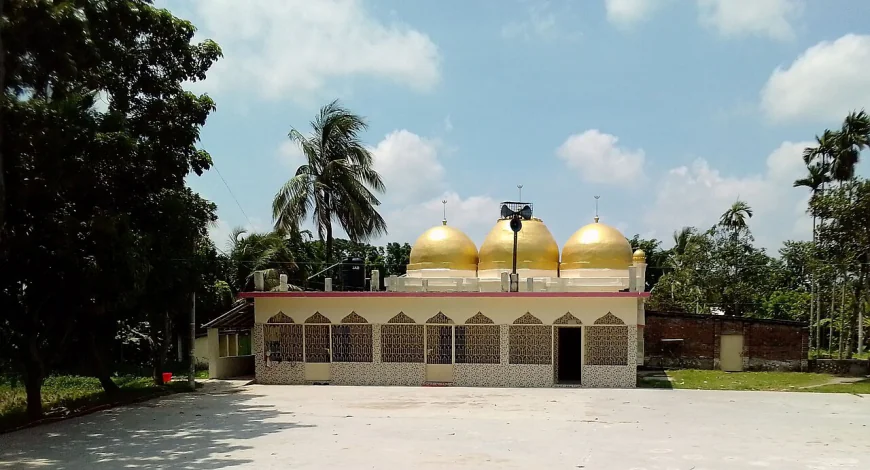
The historic Bri-Chapila Shahi Jame Baro Mosque, locally known as the 'Gayebi Mosque', stands as a rare and remarkable example of Mughal architecture in Natore's Gurudaspur upazila, carrying nearly four centuries of heritage.
Located in Bri-Chapila village under Chapila Union, about 26 kilometres from the district town, the three-domed mosque reflects the grandeur of the Mughal era. Though parts of the mosque have been renovated and extended over time, its original foundation, design and craftsmanship have been preserved, creating a unique blend of ancient and modern architecture, reports state news agency BSS.
According to information from the Gurudaspur Upazila Administration, the mosque was constructed between 1628 and 1658 AD during the reign of Shah Jahan, the fifth Mughal emperor.
Historical accounts suggest that Chapila once served as an administrative centre during Mughal rule. Shah Shuja, son of Shah Jahan, was appointed governor of Bengal at the time, and a Mughal military outpost was established in the area.
The mosque was reportedly built by a Mughal official, Munshi Enayetullah, for the prayers of local residents and Mughal officials. His name was inscribed on the mosque as its founder. Historical records from 1920 mention that he donated 65 bighas of land in the name of the Shahi Mosque.
Before British rule, Chapila was a thriving settlement with forts, court houses, buildings, water bodies and religious structures. A criminal court was reportedly established there on June 27, 1787, during the East India Company period. Over time, however, the settlement declined and was eventually abandoned, leaving the mosque hidden beneath dense forest for years.
Following the Partition of 1947, settlers from Murshidabad, Kolkata, Dhaka and Mymensingh began moving into the area. While clearing the thick forest, locals rediscovered the mosque, which had remained concealed beneath a massive cane tree.
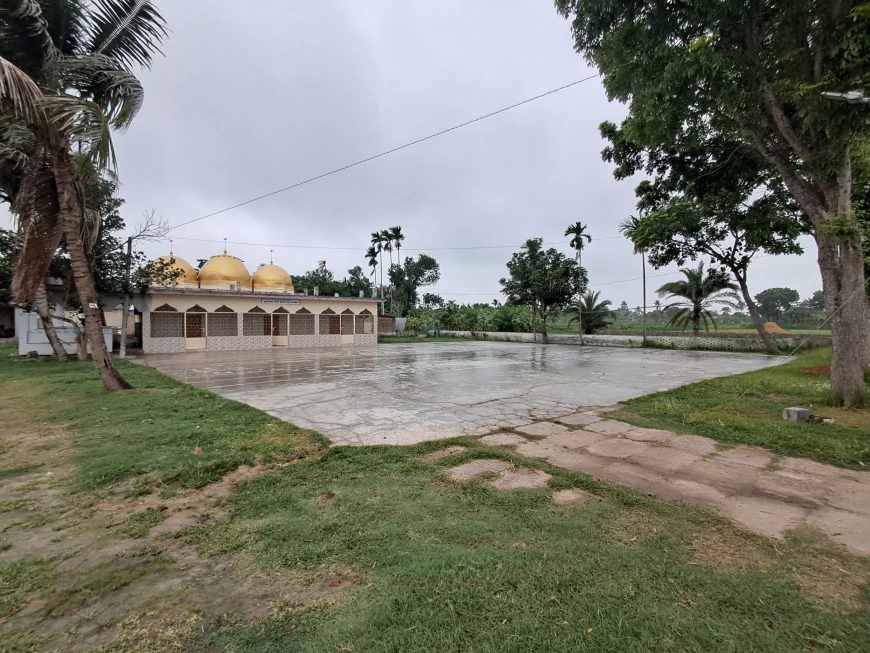
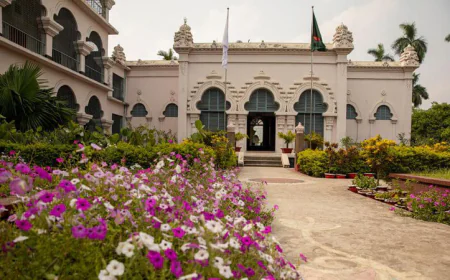
The Eidgah Bri-Chapila Shahi Jame Eidgah Ground in front of the mosque. Photo: Md Shanto Rahman/Wikimedia Commons
Faruk Hossain, treasurer of the mosque management committee, said his grandfather, Mia Hossain Sarkar, who migrated from Mymensingh after 1947, witnessed the mosque's rediscovery. "The mosque was found while clearing the forest. Later, Muslims from different areas cleared the jungle and resumed prayers," he said.
Emdadul Haque, an elderly resident of Chapila Sadhupara, recalled that the area was once covered with cane forests and inhabited by wild animals, including tigers and snakes. Even after the mosque was cleared in the 1960s, devotees reportedly offered prayers in shifts under guard due to fear of wild animals.
Later, local folklore emerged that the mosque had appeared mysteriously overnight, earning it the name 'Gayebi Mosque'.
The brick-built mosque measures approximately 40 feet in length and 20 feet in width, with walls nearly four feet thick. It features three large domes and two minarets on either side. Crescent moons and stars crown the domes and minarets. The golden hue of the domes gives the impression that they are gilded when viewed from a distance.
Three intricately designed entrances lead into the mosque. The interior walls and arches are adorned with exquisite terracotta motifs and craftsmanship typical of Mughal architectural style. Despite the passage of time, much of the original artistry remains visible, although some decorative elements have deteriorated.
Maulana Mahmudullah, the mosque's khatib, said the original structure could accommodate 60 to 65 worshippers in three rows. Since the 1990s, expansions have been carried out to accommodate the growing Muslim population. Currently, 50 to 60 people offer daily prayers, while Friday congregations attract between 200 and 250 worshippers. During Eid, additional devotees pray on tarpaulins in the adjacent Eidgah field due to limited space.
Abdul Hannan, a ward member of Chapila Union Parishad, said that while Munshi Enayetullah was a Mughal government employee, detailed information about his lineage remains unknown.
Lutfar Rahman, principal of Moukhara Islamia Degree College, emphasised the mosque's cultural significance. "This traditional mosque stands as a symbol of Muslim heritage in our area. If expansion is undertaken, the original structure's size and design must be preserved," he said.
Md Abdul Aziz, newly elected Member of Parliament for Natore-4 constituency, described the mosque as a valuable historical asset. "The Bri-Chapila Shahi Jame Baro Mosque is a unique example of Mughal architectural style and a keeper of our heritage. Initiatives will be taken to restore its terracotta craftsmanship and make the mosque more visitor-friendly," he added.
Today, the centuries-old mosque continues to attract visitors and worshippers from far and wide, standing as a testament to Mughal-era architectural excellence and the enduring faith of the local community.
What's Your Reaction?
 Like
0
Like
0
 Dislike
0
Dislike
0
 Love
0
Love
0
 Funny
0
Funny
0
 Wow
0
Wow
0
 Sad
0
Sad
0
 Angry
0
Angry
0


Comments (0)