

Air China Cargo expands A350F order
The latest acquisition forms part of the airline’s strategy to optimise its fleet structure and expand transport capacity in response to growing demand in international air cargo markets

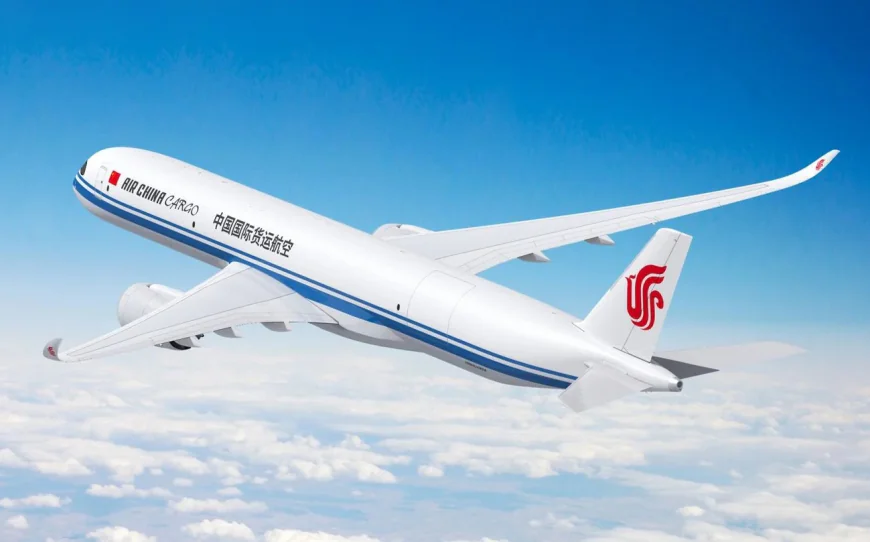
Air China Cargo has signed an agreement with Airbus to purchase four additional Airbus A350F freighters, increasing its total order for the next-generation cargo aircraft to 10, Airbus said in a statement issued on Tuesday.
The Chinese cargo carrier, a subsidiary of Air China, had previously ordered six A350F freighters in November 2025. The latest acquisition forms part of the airline’s strategy to optimise its fleet structure and expand transport capacity in response to growing demand in international air cargo markets.
“This additional order, following our initial A350F order last year, is a crucial strategic decision for the company to further optimise our fleet structure and expand transport capacity,” Wang Hongyan said in a statement issued by Airbus.
“It will allow us to better meet the demands of the international air cargo market, laying a solid foundation for the company’s long-term stable development,” Wang added.
Airbus welcomed the expanded commitment, describing it as a strong endorsement of the A350F programme.
“We are very pleased with Air China Cargo’s decision to increase its order for the A350F freighter. It reflects Air China Cargo’s confidence in Airbus products and reaffirms the A350F’s leading position as a next-generation freighter,” said Benoît de Saint-Exupéry.
Air China Cargo began integrating Airbus freighters into its operations in late 2023 and currently operates eight Airbus A330-200P2F freighters.
Airbus said the new A350F aircraft would complement the existing fleet and would mainly be deployed on long-haul international routes while also improving operational flexibility on medium-to-long-haul services.
Designed to meet evolving global cargo transport demands, the A350F can carry payloads of up to 111 tonnes over distances of up to 8,700 kilometres. Airbus said the aircraft is built with more than 70 per cent advanced materials and is around 46 tonnes lighter than competing freighter aircraft.
Powered by Rolls-Royce Trent XWB-97 engines, the aircraft is expected to reduce fuel consumption and carbon emissions by up to 20 per cent compared with previous-generation freighters of similar payload and range.
Airbus also said the A350F is currently the only freighter meeting the International Civil Aviation Organization’s 2027 carbon dioxide emissions standards.
The aircraft will be capable of operating with up to 50 per cent sustainable aviation fuel (SAF) when it enters service, with Airbus aiming for compatibility with 100 per cent SAF across its aircraft portfolio by 2030.
Although the order is unlikely to directly affect passenger operations, aviation analysts said continued investment in freighter fleets reflected sustained confidence in global air cargo demand, particularly as airlines seek to strengthen supply chain resilience and e-commerce logistics capabilities.
As of the end of April 2026, Airbus said the A350F programme had secured 101 orders from 14 customers worldwide, highlighting growing industry interest in fuel-efficient cargo aircraft as operators modernise ageing fleets.
What's Your Reaction?
 Like
0
Like
0
 Dislike
0
Dislike
0
 Love
0
Love
0
 Funny
0
Funny
0
 Wow
0
Wow
0
 Sad
0
Sad
0
 Angry
0
Angry
0





Comments (0)