

Boeing sees global aircraft fleet at 50K by 2045
The leading global aerospace giant said operators will need nearly 44,000 new aircraft over the next 20 years to support this growth, with about half of those deliveries replacing older aircraft with more fuel-efficient models

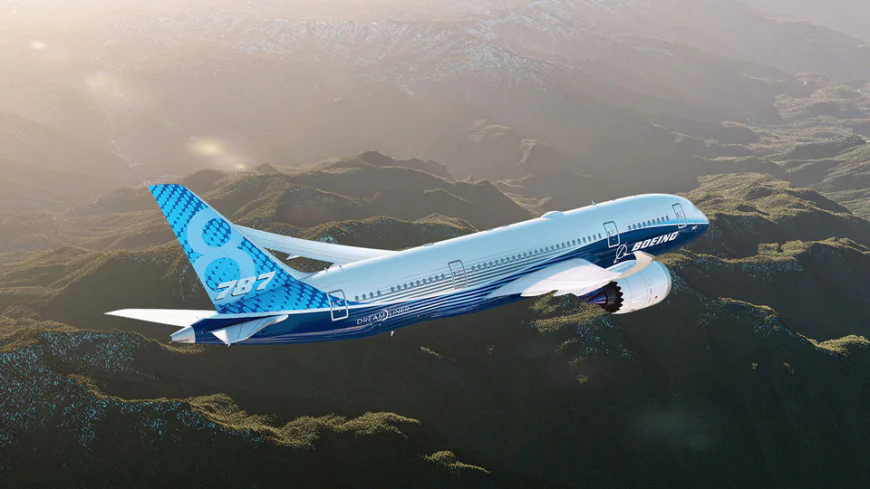
The leading global aerospace company Boeing projects that near-term disruptions will not significantly affect long-term growth in commercial aviation, with global air travel demand set to double over the next 20 years, the manufacturer said in its 2026 Commercial Market Outlook released on Friday ahead of the Farnborough International Airshow.
The global commercial aircraft fleet is expected to grow by nearly 80 percent, topping 50,000 aircraft by 2045, as airlines and cargo operators add capacity to meet rising demand. Boeing said operators will need nearly 44,000 new aircraft over the next 20 years to support this growth, with about half of those deliveries replacing older aircraft with more fuel-efficient models, says a press release.
Brad McMullen, Boeing's senior vice-president of Commercial Sales and Marketing wing, said airlines were adapting quickly to near-term industry constraints even as demand for air travel remained resilient, adding that this was driving the need to modernise the global fleet with new, fuel-efficient aircraft.
Middle East disruptions and travel patterns
Boeing said passengers were largely changing destinations and routes rather than cancelling travel plans in the near term amid ongoing regional tensions. Point-to-point and short-haul leisure travel is leading traffic growth, while long-haul travel in some regions, including the Middle East, has seen the greatest short-term impact. Overall passenger traffic is still expected to grow by about 4 percent annually, doubling global air traffic between 2026 and 2045.
Fleet and network expansion
Airlines have added nearly 5,500 new airport-pair routes since 2015, driving network growth of almost 30 percent, Boeing said. Carriers are also expanding their service offerings, with premium travel growing in North America and Northeast Asia, while low-cost services expand in emerging markets such as Latin America, Eastern Europe and Southeast Asia.
Of the nearly 44,000 new aircraft deliveries projected through 2045, mature regions including North America, Eurasia, Oceania and Northeast Asia will account for about 45 percent, while transitioning and emerging markets, including China, the Middle East, Latin America, South and Southeast Asia, and Africa, will make up the remaining 55 percent.
By aircraft type, Boeing projects 33,545 single-aisle deliveries, 7,715 widebody aircraft, 1,435 regional aircraft and 930 freighters over the period. The global single-aisle fleet is expected to nearly double to more than 36,000 aircraft, while the widebody fleet will exceed 8,000 aircraft by 2045.
Air cargo demand resilient
Air cargo demand has remained resilient despite geopolitical disruptions, with international freighter capacity up 5 percent year to date in 2026, Boeing said. Cargo traffic is forecast to grow by about 3.7 percent annually through 2045, outpacing broader trade and economic growth, driven by demand for time-sensitive goods and cross-border e-commerce.
Boeing has published its Commercial Market Outlook annually since 1961. The company also released its Commercial Services Market Outlook and Pilot and Technician Outlook for 2026-2045 on the same day.
What's Your Reaction?
 Like
0
Like
0
 Dislike
0
Dislike
0
 Love
0
Love
0
 Funny
0
Funny
0
 Wow
0
Wow
0
 Sad
0
Sad
0
 Angry
0
Angry
0





Comments (0)