
Emirates chief vows swift rebound after regional disruption
Speaking to journalists in Berlin, Clark said Emirates had no intention of cutting back, reducing, or anything else

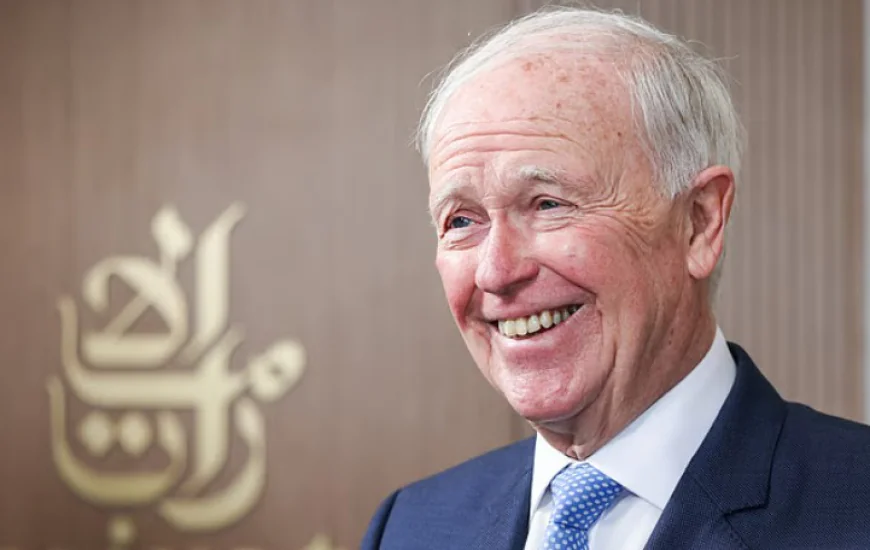
Emirates President Tim Clark has said the airline will recover quickly from the crisis affecting carriers in the Middle East, warning European airlines against assuming the disruption will offer them a lasting advantage.
Speaking to journalists in Berlin, Clark said Emirates had “no intention of cutting back, reducing, or anything else”.
He said it was “a little bit sad” to see European carriers seeking to benefit from the difficulties facing Middle Eastern airlines after failing to respond effectively to their rise over the past decades.
“My message to all of them: be careful what you wish for, we will be back very hard and fast,” Clark said.
Emirates, Qatar Airways and Etihad Airways have been forced to scale back operations since hostilities began at the end of February, as airspace closures across the region disrupted flights.
The disruption has sidelined a major aviation hub for weeks, creating opportunities for airlines such as Lufthansa to increase capacity on Asian routes.
However, some industry leaders have suggested the advantage will be short-lived. At this week’s annual meeting of the International Air Transport Association (IATA), executives said Middle Eastern carriers were likely to return to normal operations before long.
Clark also renewed his call for Emirates to be granted “free and open access” to additional markets, including Berlin, where the airline has long sought landing rights.
German authorities have repeatedly rejected the request, arguing that Emirates already operates flights to four German cities and should not receive additional slots.
“We have brought enormous economic wealth to Germany just by virtue of what we’ve bought,” Clark said, pointing to investments in aircraft partly built in Germany and purchases from local suppliers. “We have very compelling reasons to be allowed to go to Berlin.”
Clark also indicated that Emirates is in no hurry to order Airbus’s A350-1000 aircraft, saying the Rolls-Royce engines powering the model do not yet meet the airline’s durability requirements.
“I don’t think we are in a position to take the A350-1000 until we’ve seen whatever engine improvements they make,” he said.
He added that while the aircraft performs well in temperate climates, operating conditions in the Gulf region present greater challenges due to high take-off weights, dust, air pressure and extreme summer temperatures.
Emirates has built its fleet around the Airbus A380 and Boeing 777, while gradually introducing the smaller A350-900. Clark said he was satisfied with the performance of the A350-900 and acknowledged that the airline would eventually need a replacement for the out-of-production A380, potentially creating an opportunity for the A350-1000 in the future.
Clark, 76, also dismissed any suggestion of imminent retirement, saying he intends to guide the airline through the current challenges.
“We have a team of people working in Emirates, some of them are lifers like me, who live and breathe the carrier,” he said.
“So if I was to step out personally, I would be quite confident that the people left in place to run the business are so well attuned to the criticality of the message that it would not be affected by my absence.”
What's Your Reaction?
 Like
0
Like
0
 Dislike
0
Dislike
0
 Love
0
Love
0
 Funny
0
Funny
0
 Wow
0
Wow
0
 Sad
0
Sad
0
 Angry
0
Angry
0




Comments (0)