

The Sundarbans: A fragile mangrove forest under pressure
A comprehensive guideline for travellers to explore the Sundarbans

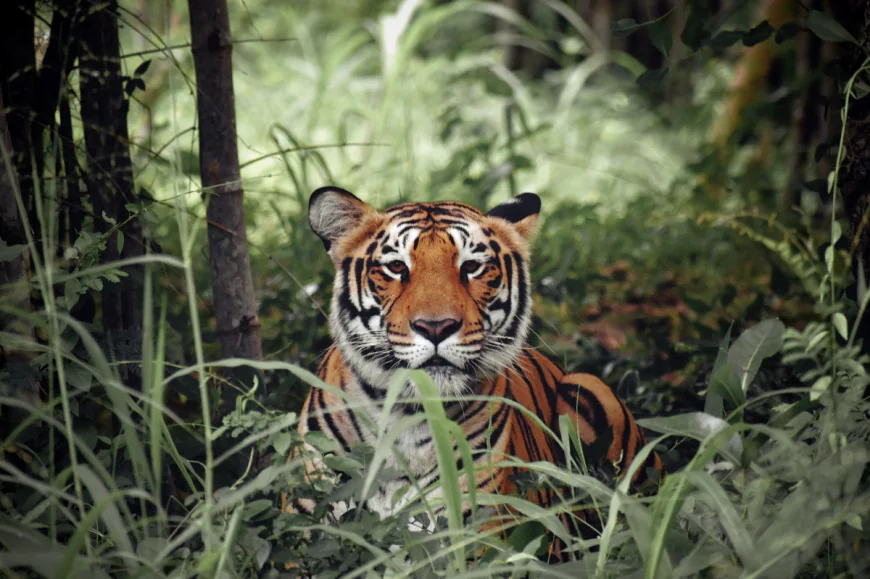
The world’s largest mangrove forest, a UNESCO World Heritage Site, is experiencing an unprecedented surge in visitors. But as tourism flourishes, so do concerns about its delicate ecology.
Sundarbans is a mangrove forest area in the Ganges Delta formed by the confluence of the Ganges, Brahmaputra and Meghna rivers in the Bay of Bengal. It spans the area from the Hooghly river in India’s state of West Bengal to the Baleswar river in Bangladesh’s Khulna Division.
It covers over 6,017 km2 in Bangladesh’s Khulna Division. In West Bengal’s Presidency division, they extend over 4,260 km2 in the South 24 Parganas and North 24 Parganas districts.
A new era of accessibility
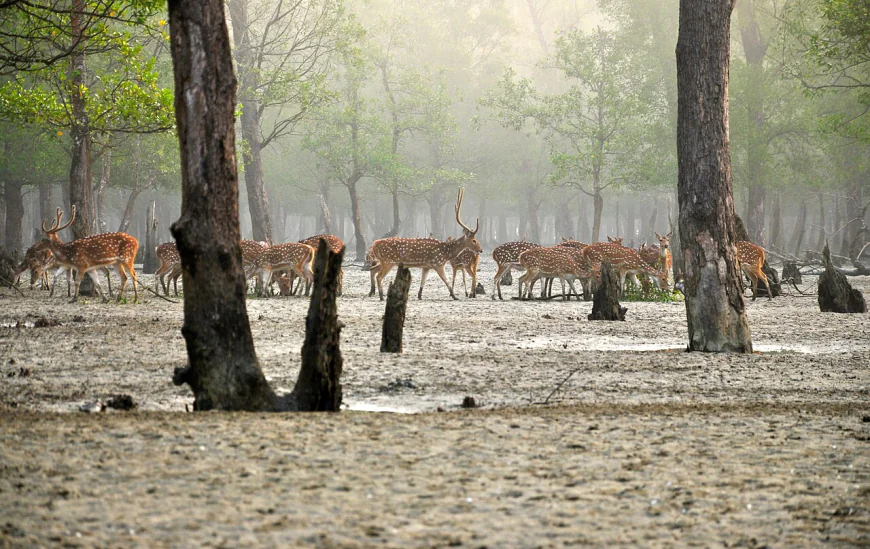
A herd of Chital deep in the Bangladeshi Sundarbans Photo: Wikipedia
For decades, the Sundarbans, spanning 10,000 square kilometres across Bangladesh and India—remained a remote and arduous journey. However, the opening of the Padma Bridge in June 2022 has revolutionised access, transforming the region into a convenient weekend escape. Tourists can now travel from Dhaka to Khulna in a matter of hours before boarding launches into the forest's intricate waterways.
This ease of travel has triggered a tourism boom. Visitor numbers in the Bangladeshi side of the Sundarbans have soared from 128,175 in 2015-16 to over 216,000 in 2022-23, with operators reporting a 45% rise in domestic visitors alone.
The rise of eco-tourism
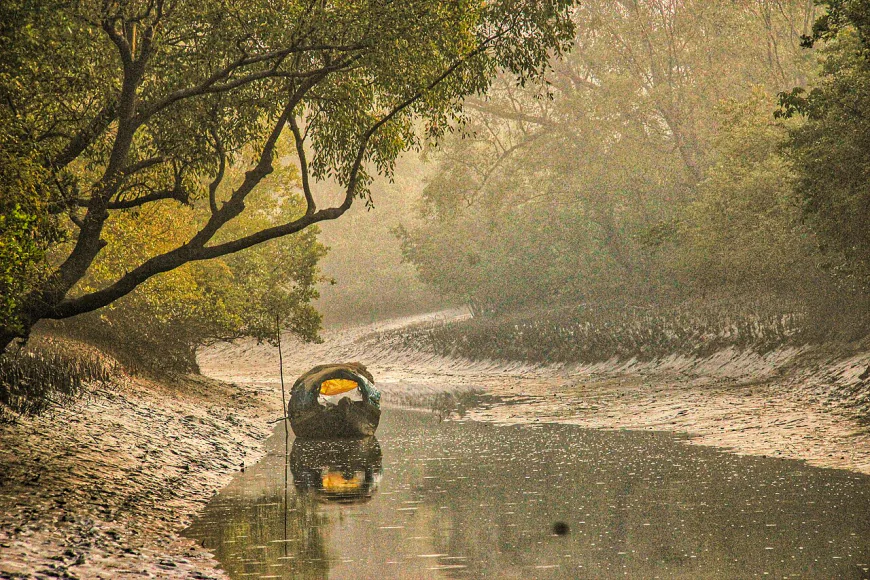
Inside the Sundarbans Photo: Wikipedia
The rush in tourism has catalysed significant economic development. Along the riverbanks, a cluster of forest-themed eco-resorts has emerged, offering tourists a blend of rustic charm and modern comfort. Built from traditional materials like bamboo and golpata palm leaves, these resorts boast stylish interiors and balconies overlooking the tidal rivers.
Local entrepreneurs report these resorts are creating steady alternative incomes for hundreds of families through hospitality, guiding, and handicraft sales. The goal is to provide sustainable livelihoods that reduce dependence on extractive practices like honey and crab collection.
The tiger and the eco-system
The Sundarbans is globally renowned as the last mangrove habitat of the Royal Bengal tiger. It also harbours exceptional biodiversity, including saltwater crocodiles, spotted deer, and over 315 bird species.
However, this fragile ecosystem has a finite carrying capacity. A 20-year Sundarbans Ecotourism Masterplan has been developed to balance conservation with community benefit. It calls for regulated visitor flows, improved waste management, and establishing new tourist zones to ease pressure on core sites.
The challenge ahead
Despite the masterplan, challenges persist. Unregulated visits to sensitive areas, uncollected plastics, and mass tourism threaten the very biodiversity that attracts visitors. Professor Anwarul Kadir of the Sundarbans Academy warns that to keep the tiger and migratory birds thriving, "we must enforce no-take zones and strictly regulate where and how tourists enter”.
Conservator of Forests Imran Ahmed echoes this sentiment, stating the priority is to keep tourism "controlled, with strict zoning and trained eco-guides”. The future of this unique wilderness depends on a careful balance between economic opportunity and environmental stewardship, ensuring the forest remains a wild heart rather than a theme park.
How to go from Dhaka
Your journey from Dhaka will take around 6 to 10 hours depending on your chosen transport. Dipping in on a day trip gives visitors a great taste of the dynamic mangrove forest. However, to delve deep into the forest, a three- or four-day boat trip will ensure extraordinary experiences and beautiful forest serenity.
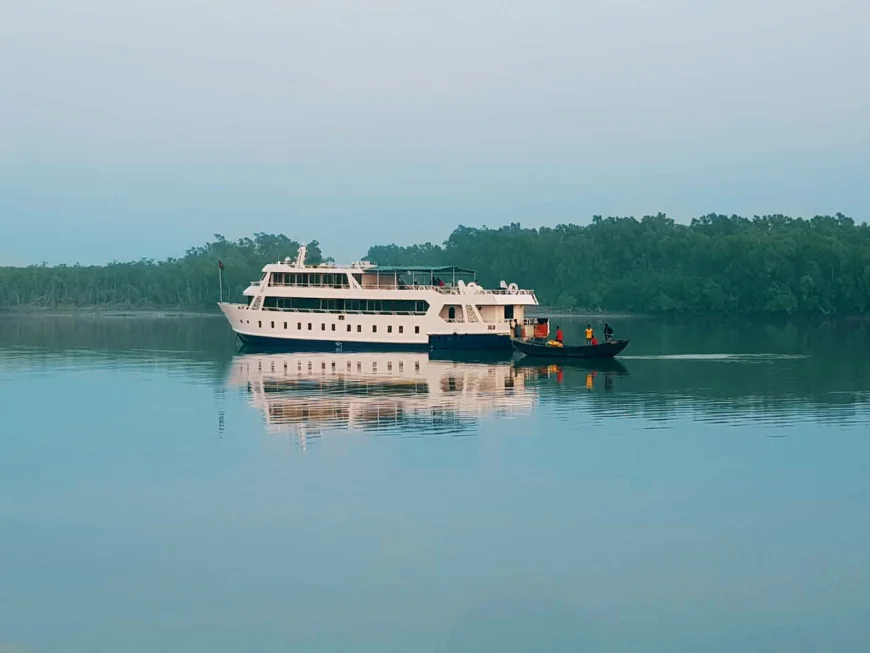
Tourist vessel Photo: Sundarban tourist boat
By bus
This is the most popular and straightforward option. Several direct, comfortable AC and non-AC buses operate daily from Dhaka to Khulna. You can catch a bus from major terminals like Gabtoli, Saidabad, or Mohakhali. Reputable companies include Green Line, Shohagh, Eagle, or Hanif Paribahan. The journey takes about 6-8 hours, and AC bus fares range from BDT 750 to 1,400.
By train
For a more scenic and relaxing journey, you can take the train from Kamalapur Railway Station in Dhaka. The Sundarban Express is the most direct train to Khulna. Other options include the Chitra Express and the Kapotaksha Express. Travel time is about 8-9 hours, with tickets costing between BDT 400 and 1,000 depending on the class.
By Air
A faster, though less common, alternative is to fly from Dhaka to Jessore Airport. From there, you can hire a car or take a bus to Khulna. This is the quickest way but typically more expensive.
Package Tours
The easiest and most common way to visit is by booking an all-inclusive package with a tour operator. Packages range from 3 to 6 days and typically include the forest permit, accommodation on a boat, all meals, a guide, and sometimes even transfers from the airport in Dhaka.
When to visit
The Sundarbans is a year-round destination, however during the rainy months of June to August, the reserved forest and sanctuaries are closed to visitors. While the protected area remains off-limits during this time, Eco-cottages in the periphery remain open year-round and offer accommodation options for tourists to explore nearby villages, rivers, and attractions.
For the best experience, plan your visit between October and March, when the weather is most favorable, offering ideal conditions for exploring the Sundarbans and encountering its diverse wildlife.
Where to stay
A traveller cannot stay overnight inside the protected forest or on boats anchored within the reserve itself. Overnight stays are restricted to permitted human settlements, eco-villages, and riverside islands just outside the core forest boundaries.
What's Your Reaction?
 Like
0
Like
0
 Dislike
0
Dislike
0
 Love
0
Love
0
 Funny
0
Funny
0
 Wow
0
Wow
0
 Sad
0
Sad
0
 Angry
0
Angry
0




Comments (0)