

Zia Museum: Preserving a historic legacy
A significant political and ideological legacy that reflects and preserves the memories of Shaheed President Ziaur Rahman and the 1971 Liberation War
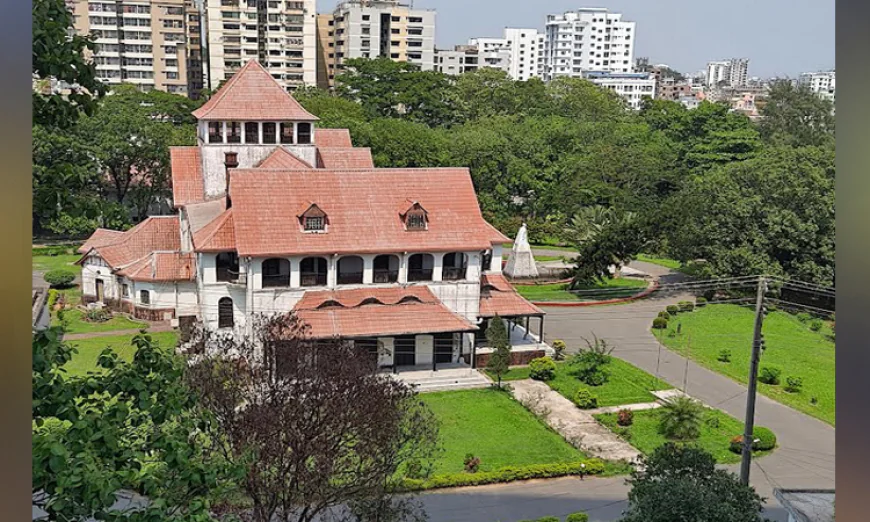
Zia Memorial Museum (ZMM) is widely regarded as a significant political and ideological legacy that reflects and preserves the memories of Shaheed President Ziaur Rahman and the 1971 Liberation War.
Many of its historically invaluable artefacts and blood-stained belongings of Shaheed Zia — known for proclaiming the country's Independence during the Liberation War — are gathering dust and falling into disrepair, raising concerns about possible damage.
The ZMM can be developed into a school of political thought and a centre of ideological inspiration for the followers, admirers and disciples of Shaheed President Ziaur Rahman. Visitors can gain insights from his brief handwritten notes addressed to political leaders and civil society members, as well as the 19-point programme widely regarded as a foundation of the Bangladesh Nationalist Party (BNP).
A conscious citizen or curious political worker can find much food for thought in the remarkably simple meal menu of a President displayed on the wall, as well as in his handwritten notes on political philosophy and views on various issues exhibited throughout the museum, reports state news agency BSS..
The museum, named after the proclaimer of the country's Independence and still regarded by many as one of the most popular heads of state in Bangladesh's more than half-century history, is located in the Stadium-Kazir Dewri area, a central point of the port city surrounded by lush greenery.
The structure, built on 3.17 acres of land during British rule in 1913, symbolises South-East Asian pagoda-style architecture while also reflecting the design of traditional local multi-tiered tin-roofed houses.
The Pakistani occupation forces established a camp there during the Liberation War and used it as a torture cell, where innocent Bengalis and freedom fighters were detained and killed. In that sense, the structure stands as a silent witness to the country's War of Independence.
The old Circuit House was later converted into a museum. It was there that Shaheed President Zia was assassinated in the dead of night on May 30, 1981, by a group of disgruntled army personnel as part of an alleged conspiracy.
The building itself is a historic structure because of its architectural and structural significance. A cabinet meeting on June 3, 1981 decided to establish a museum there in honour of Liberation War hero Shaheed President Ziaur Rahman.
After coming to power through the 1991 general election following the fall of the Ershad regime, Begum Khaleda Zia formally inaugurated the facility as "Zia Smriti Jadughar" on September 6, 1993.
“Only political philosophy is not enough — it must lead to a socio-economic programme”, “BNat got to be outward-looking”, “Party is people-based”, and “We should not bluff people anymore to execute the party programme” are among the key policy points found in his handwritten notes while addressing political leaders and civil society members. The notes reflect his core political ideas centred on Bangladeshi nationalism, self-reliance and an agriculture-led economy.
Visitors are often struck by the remarkably simple lunch menu of a President at a time when rulers and VIPs were frequently criticised for extravagance and wasteful spending of public funds.
Zia’s personal staff prepared the written menu for his stay at the Circuit House during his May 29-30, 1981 visit.
According to the menu, lunch included tea with milk and sugar, bread, butter, fried fish and chips, roast chicken and vegetables, fruit cocktail and lemon. Dinner consisted of plain rice, chicken soup, pudding, chicken curry, mutton dopiaza, dal and salad. Afternoon refreshments included Ispahani tea with milk and sugar, salted Haque biscuits and lemon.
The museum not only preserves the memories of Zia but also displays 876 Liberation War-related artefacts. These include a diorama of the microphone and table from the Kalurghat Radio Transmitting Centre, from where Major Zia declared the War of Independence; paintings of the seven Bir Sreshthas and sector commanders; rifles used by freedom fighters; a diorama of the inauguration of a post office at Roumari in Kurigram, marking the first liberated area in 1971; the surrender ceremony at the then Racecourse Maidan on December 16, 1971; letter pads and envelopes of Z Force; the monogram of Muktijoddha Sangsad; and Zia’s military uniform.
“ZMM is not only the largest museum in the Chattogram region, it is also a centre for education, culture, heritage and research,” an official said.
However, not only many of the historically valuable objects preserved in the museum, but also the main structure itself, are in a dilapidated condition due to neglect and a lack of proper preservation initiatives.
“Preservation and proper maintenance were never a priority for the previous regime, and that is why the museum is now in a shambles. An influential section of the fallen government had been trying to erase it in a bid to remove the memories of Shaheed President Ziaur Rahman,” a museum staff member, requesting anonymity, told BSS.
During a recent visit, it was observed that plaster on the walls and ceilings of both the ground and second floors was peeling extensively. Wooden stairs, windows and several other key structural components inside and outside the museum were also on the verge of damage.
A number of invaluable artefacts, including gold and metal medals, equipment from the historic Kalurghat Radio Transmitting Centre, furniture and fixtures from the VIP room used by Zia on the night of his assassination, the blood-stained jute mat from the room, the stretcher used to transport his body to Dhaka from his first grave in Rangunia, and replicas of his iconic seated poses, were found covered in dust.
Some items have become discoloured and faded, while others have developed rust. Visible cracks have also appeared on parts of the main walls.
Finance and Planning Minister Amir Khosru Mahmud Chowdhury, while visiting the museum on March 20, disclosed the government's initiative to declare it a heritage site to preserve the memories of both Shaheed President Zia and the Liberation War.
He stressed the need to begin repair and maintenance work immediately, saying that despite its beauty and historical significance, neglect had left the structure vulnerable and at risk of collapse in the event of a moderate or strong earthquake.
“The museum is intertwined with the memories of Shaheed President Ziaur Rahman and the history of the Liberation War,” he said, adding that “the museum is not just a building but holds significance in the country's history and people's emotions.”
Cultural Affairs Minister Nitai Roy Chowdhury also visited the museum on March 24 and observed its condition while attending an Independence Day programme at its auditorium.
Part of a wall attached to the second-floor staircase collapsed during an earthquake on December 2 last year. Following an order from the Director General of the Bangladesh National Museum, the museum was closed to visitors for safety reasons.
ZMM Administrator Arpita Das Gupta said repair and renovation work worth Tk 1.87 crore, launched on February 2 under a special allocation, is now under way and is expected to be completed in June.
The work includes repairing damaged sections, painting the boundary walls and main structure, improving lighting in the building and garden, installing new dioramas and renovating the rest house.
“The historical importance of the museum is enormous and it carries deep emotional value for many people. It therefore deserves greater attention from higher authorities to preserve this heritage and protect the century-old structure and its invaluable artefacts,” she said.
Describing the century-old building as a “memorial emblem of history”, Director General of the Bangladesh National Museum Tanzim Ibne Wahab told BSS that authorities had adopted a three-phase long-term plan to preserve the museum while maintaining its original character.
Under the first phase, the authorities will soon declare the structure a heritage site. The second phase will involve preparing a project for retrofitting and full restoration with assistance from local and international experts.
“We have already started discussions with renowned experts in this regard, and we will not allow the removal of any artefacts or any damage to such a valuable establishment closely linked to our national history,” he said.
Authorities are considering reopening part of the museum after the ongoing repair and renovation work is completed, keeping in mind public interest and visitors' curiosity, he added.
What's Your Reaction?
 Like
0
Like
0
 Dislike
0
Dislike
0
 Love
0
Love
0
 Funny
0
Funny
0
 Wow
0
Wow
0
 Sad
0
Sad
0
 Angry
0
Angry
0
Comments (0)