

US-Iran deal likely Sunday: Trump
The strategic Strait of Hormuz would reopen to international shipping immediately afterwards.

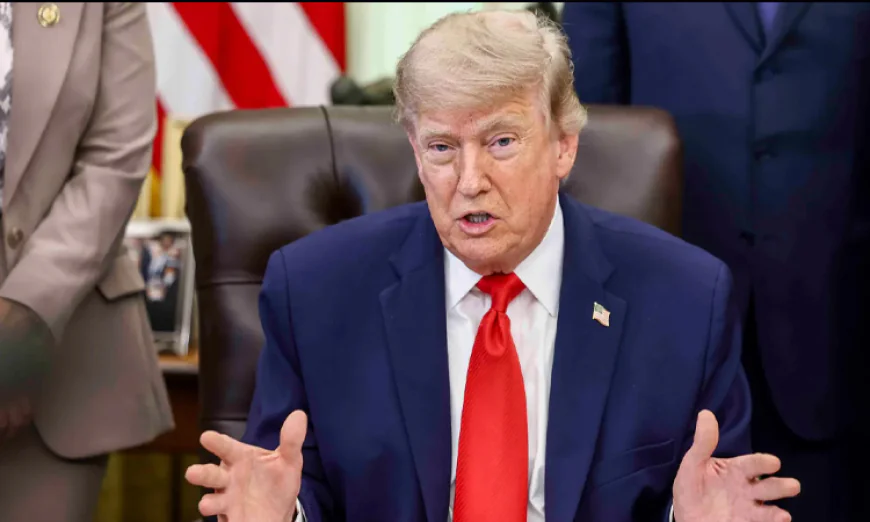
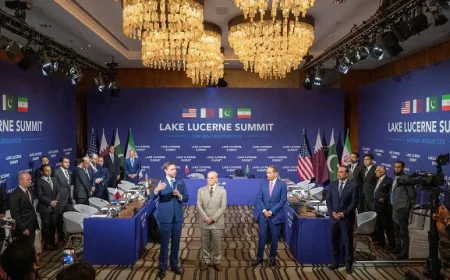
US President Donald Trump said a deal with Iran aimed at ending the conflict in the Middle East could be signed on Sunday, adding that the strategic Strait of Hormuz would reopen to international shipping immediately afterwards.
Iran earlier suggested a different timeline but also indicated that an agreement was within reach, as both sides and their mediators expressed growing optimism that weeks of difficult negotiations were nearing a conclusion.
Pakistan, a key mediator in the talks, said a breakthrough was closer than ever.
Pakistani Prime Minister Shehbaz Sharif said on X on Saturday that the agreement was expected to be finalised within the next 24 hours and would be signed electronically. He did not provide further details on the process.
Sharif added that technical-level discussions were expected to continue next week. Pakistan's foreign ministry also said the signing was planned for Sunday.
The renewed momentum came despite fresh tensions in the Strait of Hormuz, which Iran has blockaded since the early stages of the conflict, disrupting global energy markets.
"The deal is scheduled to get signed tomorrow, and immediately after it is signed, the Hormuz Strait is open to all," Trump wrote on his Truth Social platform on Saturday.
Since a truce on 8 April halted the most intense fighting, Trump has repeatedly predicted an imminent agreement, although negotiations have continued for several weeks.
Iranian Foreign Ministry spokesman Esmaeil Baqaei said earlier on Saturday that no date had yet been set for signing the agreement.
"It will not be tomorrow," he said, while adding that a deal in the coming days remained possible.
Despite signs of progress, the two sides have continued to offer differing accounts of the proposed agreement, with each seeking to present the outcome as a strategic success.
Dispute over Hormuz
Tehran has insisted it will retain control of the Strait of Hormuz, a vital route for global oil and gas exports.
Since imposing the blockade, Iran has required vessels to obtain permission from its armed forces before passing through the waterway and has established a new authority to oversee operations and collect transit fees.
The United States has responded by imposing its own blockade on Iranian ports.
US Central Command said on Saturday that Iran had launched several one-way attack drones targeting commercial vessels transiting the strait.
It said US forces had intercepted and destroyed all of the drones.
Iranian Foreign Minister Abbas Araghchi said on Friday that the proposed agreement included the lifting of the US naval blockade.
"The administration of the Strait of Hormuz will no longer be the same as before," he said, describing the waterway as one of Iran's key deterrent tools.
The United States has repeatedly stated that continued Iranian control over the strait would be unacceptable, while Trump's latest remarks did not mention transit fees or future administrative arrangements.
Nuclear programme remains key issue
Another major issue in the negotiations is the future of Iran's nuclear programme, particularly its stockpile of highly enriched uranium, which is believed to have been buried following US air strikes during a previous conflict last year.
Iran maintains that its nuclear programme is entirely peaceful and that it has the right to enrich uranium. However, the United States, Israel and several Western countries suspect Tehran of seeking the capability to develop nuclear weapons.
Araghchi said the only viable solution for the enriched uranium stockpile was to dilute it within Iran.
Trump has previously argued that the material should be removed and destroyed by the United States.
In his latest post, Trump wrote: "When all is calm, we will go in and get the nuclear dust ... and downblend and destroy it, whether in Iran, or the United States."
He added that he hoped the process would proceed "quickly, easily and smoothly", while warning that alternative options remained available if negotiations failed.
Israeli Prime Minister Benjamin Netanyahu, whose country launched the conflict alongside the United States in February, said Trump had assured him that any agreement would include the removal of Iran's enriched uranium stockpile.
On the streets of Tehran, however, some residents remained sceptical.
"I don't think there is any deal soon," said 49-year-old Saeed Sadeghi. "I don't trust their word."
Iran's Fars news agency published footage from the northeastern city of Mashhad showing dozens of protesters demonstrating outside a foreign ministry building on Saturday, reports French news agency AFP.
The protesters, many carrying red and black flags, chanted slogans against Foreign Minister Araghchi and criticised the proposed agreement.
What's Your Reaction?
 Like
0
Like
0
 Dislike
0
Dislike
0
 Love
0
Love
0
 Funny
0
Funny
0
 Wow
0
Wow
0
 Sad
0
Sad
0
 Angry
0
Angry
0

Comments (0)