

Impact of Mideast war on global tourism
Tourism depends heavily on safety, stability and seamless international mobility. As uncertainty deepens in the Middle East, airlines, hotels and tour operators are beginning to feel the heat

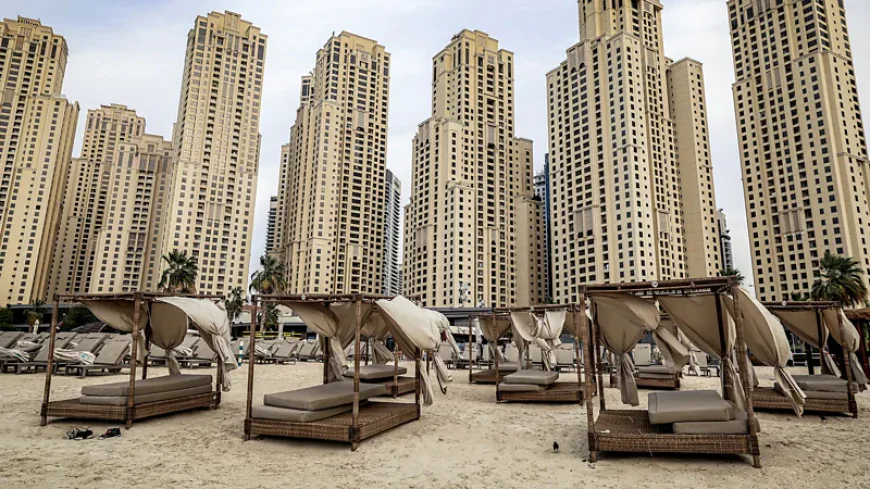
Geopolitical conflicts often cast a long shadow far beyond the battlefield, and the growing confrontation involving the United States, Israel and Iran is no exception. The escalating tensions are already sending shockwaves through the global tourism and hospitality industries, proving once again that when conflict erupts in a strategic region, travel demand can dry up overnight.
Tourism depends heavily on safety, stability and seamless international mobility. As uncertainty deepens in the Middle East, airlines, hotels and tour operators are beginning to feel the heat.
One of the first sectors hit has been international aviation. Airlines are increasingly avoiding airspace near conflict zones, forcing flights to take longer alternative routes or suspend operations altogether. The knock-on effect has been higher operational costs, longer travel times and widespread disruption for passengers.
At the same time, tensions in the Gulf — a key artery of global oil supply — have fuelled concerns over rising fuel prices. Higher oil costs inevitably push up airfares, placing additional pressure on both airlines and travellers.
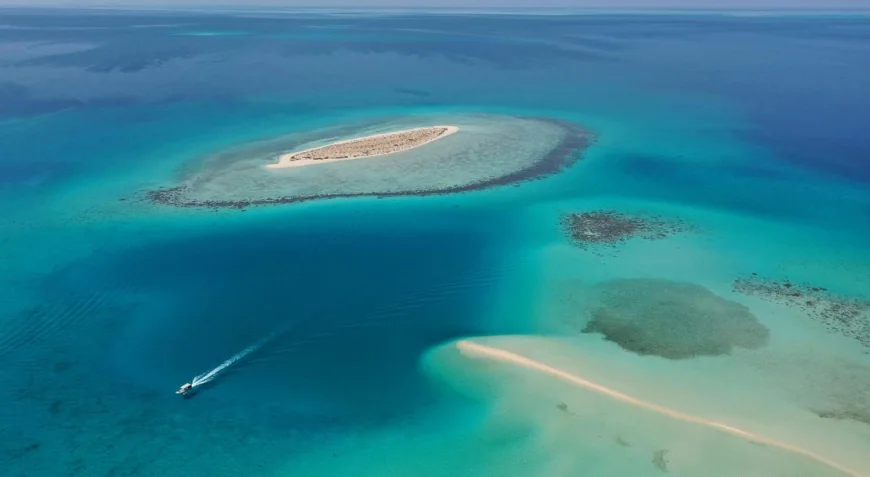
Saudi Arabia is promoting tourism with billion-dollar projects, including the Red Sea Project. Photo: Xinhua/picture alliance
The Middle East tourism market, which had been booming in recent years, is now facing a sudden downturn. Countries such as the United Arab Emirates, Saudi Arabia, Qatar, Egypt and Jordan had successfully positioned themselves as major global tourism destinations. However, conflict has a habit of scaring travellers away, even from areas far removed from direct fighting.
The closure of airspace across parts of the Gulf following the latest US and Israeli strikes on Iran and Tehran’s retaliatory response has stranded thousands of passengers. Holidaymakers and business travellers alike have found themselves caught in limbo as flights were cancelled or rerouted at short notice.
Shipping disruptions in the Strait of Hormuz have also affected cruise operations in the Persian Gulf, adding to the growing uncertainty surrounding regional travel.
Hans Hopfinger, a professor of cultural geography at the Catholic University of Eichstätt-Ingolstadt, described the crisis as a major setback for Gulf tourism. According to him, Gulf states spent years carefully building an image of stability and security to attract global travellers. Dubai, in particular, had emerged as one of the world’s leading tourism and aviation hubs.
The rise of Middle Eastern tourism in recent years has been remarkable. According to the United Nations World Tourism Organisation, the region became one of the fastest-growing tourism markets globally. In 2025, nearly 100 million international tourists visited destinations across the Middle East and North Africa — a sharp rise from pre-pandemic levels.
Dubai International Airport alone handled more than 95 million international passengers last year, cementing its position as one of the busiest airports in the world. The emirate also welcomed nearly 20 million visitors, setting another tourism record.
Much of this success stemmed from long-term economic diversification plans. Gulf states invested heavily in luxury tourism, sporting events, shopping festivals and cultural attractions to reduce dependence on oil revenues. But the latest conflict threatens to throw a spanner in the works.
According to Oxford Economics, the crisis has already caused severe disruption to regional aviation networks. More than 5,000 flights were cancelled during the early days of the escalation as Iran, Israel, Iraq, Qatar, Bahrain, Kuwait and Syria imposed airspace restrictions.
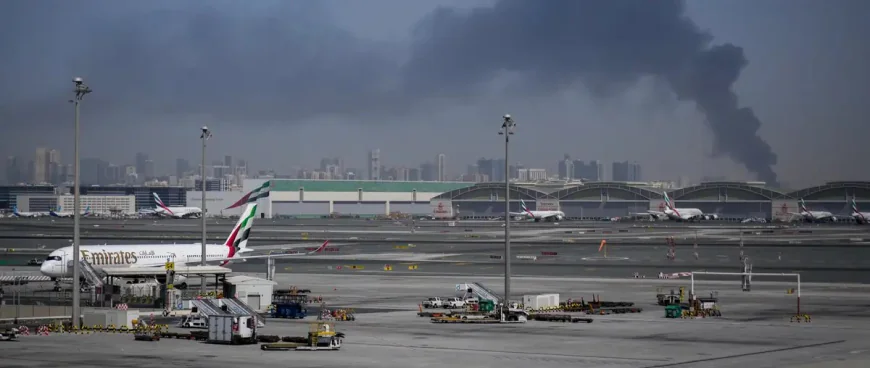
Smoke billows over Dubai Airport following a missile attack from Iran. Photo: Altaf Qadri/AP
The impact is not confined to the Middle East. Because Gulf airlines such as Emirates, Qatar Airways and Etihad Airways play a central role in linking Europe, Asia and Oceania, disruptions in the region are affecting global travel routes.
Flights between Europe and Asia-Pacific are now being rerouted to avoid restricted airspace, increasing fuel consumption and operating costs. Airlines already strained by restrictions linked to the Russia-Ukraine war are facing even greater pressure on global flight corridors.
Oxford Economics outlined two possible scenarios. In the first, the conflict ends within weeks, limiting the damage. In the second, a prolonged confrontation lasting up to two months could inflict far deeper economic wounds.
Even under the more optimistic scenario, inbound tourism to the Middle East could decline by around 11% in 2026, translating into a loss of roughly 23 million visitors and about $34 billion in tourism spending.
Should the conflict drag on, losses could climb to 38 million visitors and nearly $56 billion in tourism revenue.
Israel and Iran are expected to suffer the sharpest declines in visitor numbers, while Gulf states could face major financial losses because of their heavy reliance on international tourism and air connectivity.
The fallout is also spilling into the wider global economy. Longer travel times, rising airline costs and disrupted cargo operations are affecting business travel and international trade. Several airlines have already suspended flights between the United States and Israel due to mounting security concerns.
The crisis highlights just how fragile global tourism can be in the face of geopolitical instability. In an interconnected world, turbulence in one region can send ripples across continents within days.
For now, the future of Middle Eastern tourism hangs in the balance, while the global travel industry watches nervously from the sidelines.
What's Your Reaction?
 Like
0
Like
0
 Dislike
0
Dislike
0
 Love
0
Love
0
 Funny
0
Funny
0
 Wow
0
Wow
0
 Sad
0
Sad
0
 Angry
0
Angry
0





Comments (0)