

See the sky meet the Himalayas in Panchagarh
Panchagarh offers breathtaking views of Kanchenjunga, a unique rock museum, tea and tulip gardens, and an Asian highway connection

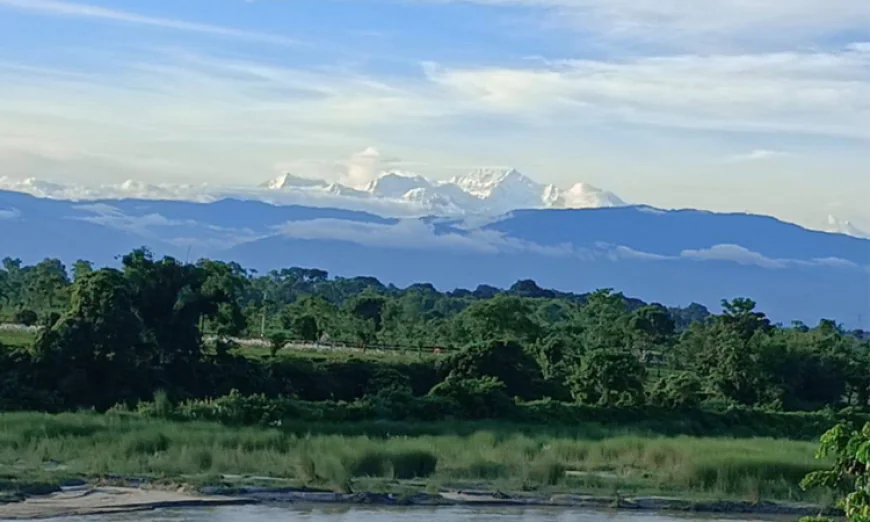
Panchagarh, sometimes cited as the 'Daughter of the Himalayas', endures to be one of Bangladesh’s most overlooked travel destinations. Despite its tranquil beauty, rich heritage, and unique sights, the district’s tourism prospect remains largely unexplored.
Panchagarh, extreme northern district of Bangladesh with an area of 1,404.63 sq km is bounded on three sides by 288 km long Indian border, having Darjeeling district on the north, Jalpaiguri and Kuchbihar districts on the northeast, West Dinajpur and Purnea district on the west, Dinajpur and Thakurgaon districts on the south, Nilphamari district on the east.
Panchagarh district features snippets of the colossal Kanchenjunga, the world’s third-highest peak, visible from Tetulia upazila on clear winter morning. Travellers can unveil the country’s only rock museum. The Banglabandha Zero Point and Land Port in Tetulia serve as a lively tri-nation business hub connecting Bangladesh, India, Nepal, and Bhutan.
Other notable sites include sprawling Kazi and Kazi tea estates, the ancient fort city ruins of Bhitargarh, Maharaja Dighi, Mirza Shah Mosque, Golokdham Temple, and the tulip garden in Tetulia’s Darjipara village. The district comprises five upazilas—Panchagarh Sadar, Tetulia, Debiganj, Boda, and Atwari, each holding historical and cultural significance.
Panchagarh Rocks Museum
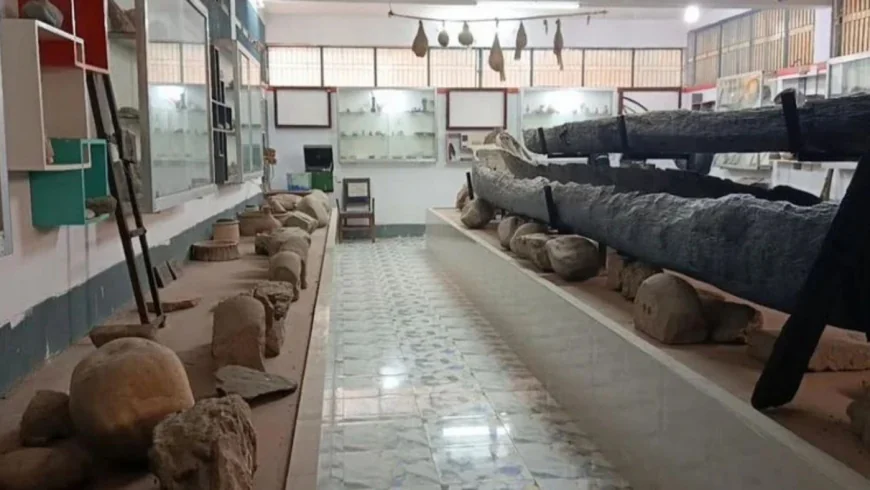
The museum boasts an extensive collection of diverse rocks and stones. Photo: BSS
Rocks Museum at Panchagarh Government Women's College, established in 1997, offers a unique glimpse into the geological history and ancient artefacts of Bangladesh. What began as a single-room initiative by Principal Dr Nazmul Haque has since evolved into a prominent centre for tourists, students, and researchers.
From statues made of terracotta and bricks to containing items used by indigenous people, this museum preserves stones of significance and values.
Banglabandha Zero Point
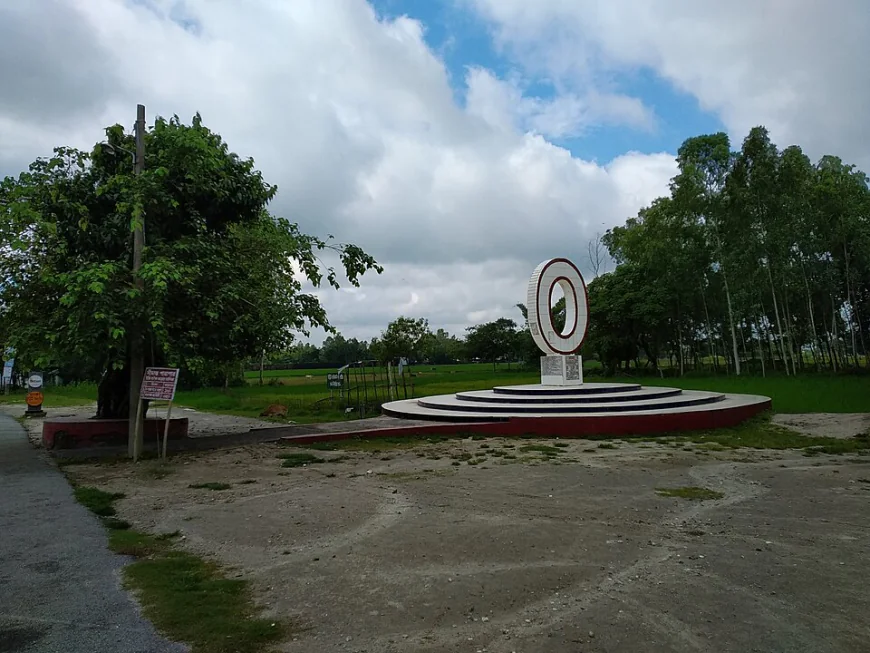
The Banglabandha Zero Point and Banglabandha Land Port are located in the Banglabandha union of Tetulia upazila. Photo: Wikipedia
The Banglabandha Zero Point and Banglabandha Land Port are located in the Banglabandha union of Tetulia upazila. Constructed on a 10-acre land in 1997, this area acts as a converging point of trade between Bangladesh and its neighbouring countries. Tourists travel to Bangladesh-India-Nepal-Bhutan by road through this land port. Visiting this point will allow you to witness all the hustle and bustle of a busy port, the surrounding greenery serving as a bonus.
Kazi and Kazi Tea estate
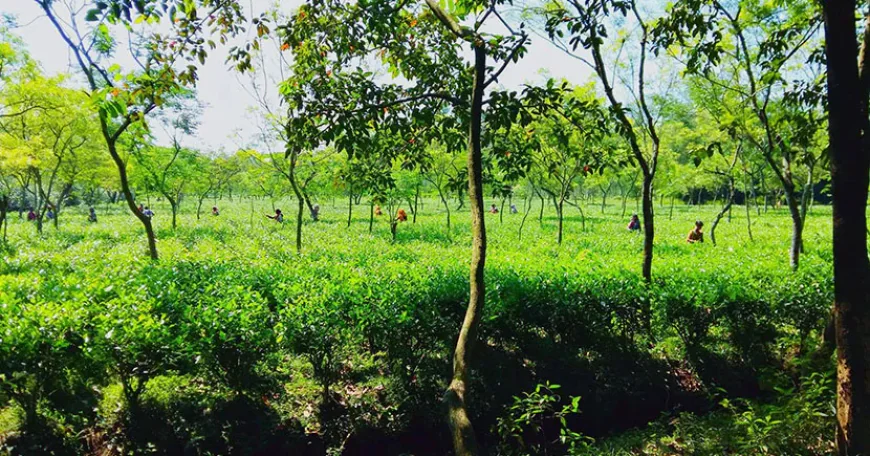
Kazi and Kazi Estate Photo: Adarbapari
Travellers to Tetulia are pleasantly surprised by the sight of tea gardens. Located in Raushanpur village in Tetulia, 55 km away from Panchagarh town, you will see a merger of modernity and raw natural beauty when you visit the lush green fields of a tea garden.
The Asian Highways
The Asian Highway (AH-2) passing through Panchagarh is a highly important international route in Bangladesh. It extends approximately 55 kilometers from Panchagarh town to Tetulia and directly connects to the Banglabandha Land Port, linking India, Nepal, and Bhutan.
Tulip gardens in Panchagarh
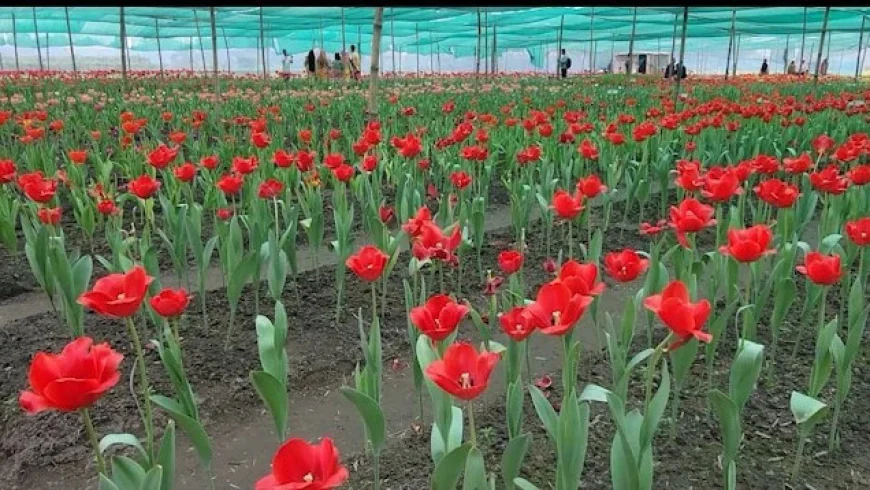
Tertulia, in Panchagarh, thrives with vibrant tulip blooms, boosting tourism. Photo: UNB
Vibrant tulip gardens in Panchagarh made it like a Little Netherlands. Tentulia upazila is now abuzz with visitors from various parts of Bangladesh after eight farmers harvested high-value tulip flowers under a pilot scheme. The farm was developed with the efforts of 10 marginalized women entrepreneurs under the initiative of the Eco Social Development Organization (ESDO). While tulips are traditionally associated with the Netherlands and Kashmir, Tetulia's unique cold climate has proven ideal for their cultivation. Rajkumar, Pink Ardour, Parade, Oxford, Orange Van Borlsch, Ferdex, Appeldoorn, Blushing Elite, and Mystic Van Eijk—have been successfully grown, adding to the garden's allure.
Tulips grown in the Panchagarh district are now being sold in Dhaka due to high demand.
Where to stay
The district’s tourism infrastructure remains weak. According to local businesspeople, Panchagarh has only about 25 hotels, mostly in Sadar and Tetulia, alongside three resorts and 10–12 homestays. The sector employs roughly 250 people and generates an estimated Tk 10–12 crore annually. Accommodation shortages deter both travellers and tour operators. Homestays offer an alternative for overnight stays.
How to go from Dhaka
Panchagarh is located about 400 km from Dhaka, accessible by bus or train within 10–12 hours. Ticket prices range from Tk 800 to Tk 2,000. Though officially established as a district in 1976, its tourism promise remains largely unrealised. With proper investment in lodging, marketing, and transport, Panchagarh could transform into a premier eco-historical destination in northern Bangladesh. For now, it waits—beautiful, serene, and largely undiscovered.
Vast green plains, fresh unpolluted air, and a calm, serene environment, all together make Panchagarh a ecstasy for wanderers. In winter, the clear sky offers a view of Kanchenjunga from here, something almost impossible from anywhere else in the country. The rivers, green fields, rural life, and peaceful atmosphere, they provide a truly unique experience.
What's Your Reaction?
 Like
0
Like
0
 Dislike
0
Dislike
0
 Love
0
Love
0
 Funny
0
Funny
0
 Wow
0
Wow
0
 Sad
0
Sad
0
 Angry
0
Angry
0


Comments (0)