

Rescue underway as Nepal flood death toll past 1,000
At least 1,010 have been killed in Nepal, with 3,916 still missing and hundreds believed to be trapped in hydropower tunnels as rescue teams working heart and soul to reach communities cut off by the disaster


The death toll from catastrophic flooding in Nepal and Tibet has gone past 1,000, authorities said, as rescue teams worked to reach communities cut off by the disaster.
At least 1,010 have been killed in Nepal, with 3,916 still missing and hundreds believed to be trapped in hydropower tunnels, report Qatar-based media outlet AL Jazeera and Associated Press (AP).
Nepal PM Balendra Shah said 279 workers had been rescued from hydropower projects so far, where authorities had initially estimated that more than 900 people were missing.
The disaster began with a chain of events high in the Himalayas last week, with a glacial collapse sending large amounts of rock, ice and meltwater into valleys below.
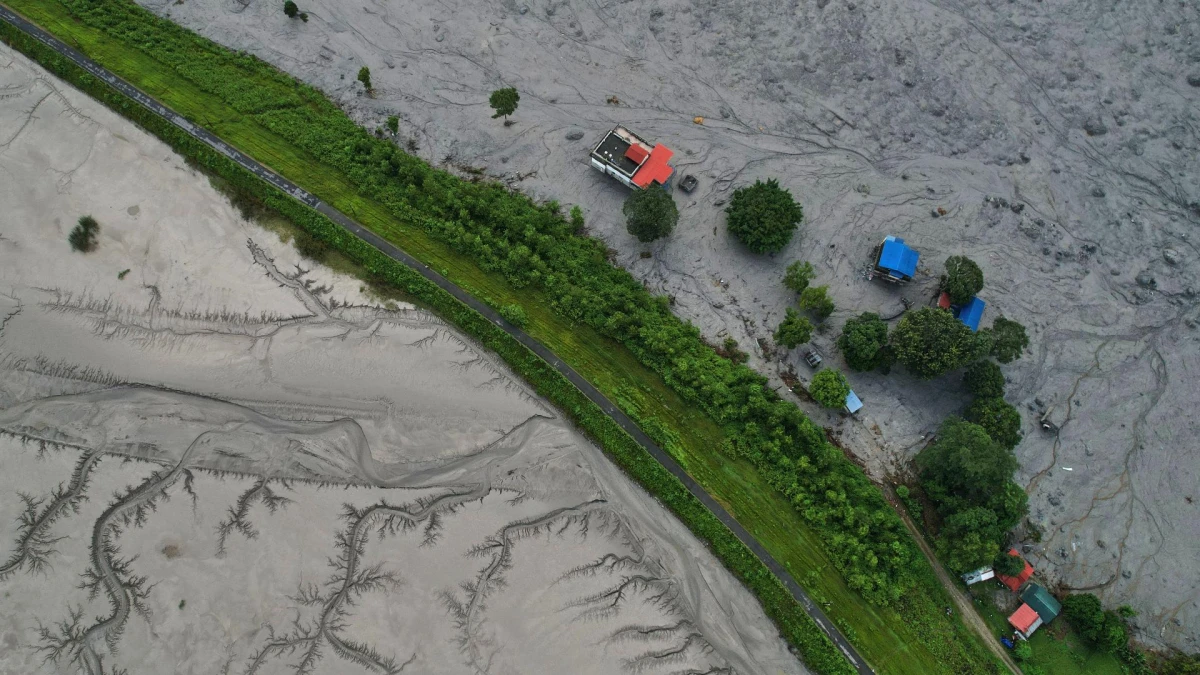
A drone view shows the Pasang Lhamu highway washed away along the swollen Trishuli River in Nepal on August 31, 2026. Photo: Rajesh Kumar Singh/AP
4,000 still missing: Nepal
In a press briefing on Tuesday, Nepal’s Foreign Ministry said in addition to the rising death toll, about 4,000 people remain missing, with 11,800 people rescued so far.
The ministry’s spokesperson said forensic teams from China and Singapore are coming to help identify the dead, with more DNA kits and freezers arriving.
China to send DNA experts
China will send DNA testing experts to disaster-hit areas on the Nepal border, as well as a second batch of relief supplies later on Tuesday, its Foreign Ministry said, adding that equipment would include drones and water purification.
In response to a question about what further support China plans to provide to disaster-hit Nepal, Chinese Foreign Ministry spokesperson Guo Jiakun said on Tuesday that providing emergency assistance to affected areas in Nepal and carrying out international rescue cooperation are important political decisions made by China, reflecting its friendly ties with Nepal.
China's second batch of disaster relief supplies for Nepal is expected to be shipped out starting Tuesday, including urgently needed relief materials such as drones, DNA testing equipment and reagents, water purification equipment and lighting equipment. Chinese DNA identification experts will also travel to the front line to assist their Nepalese counterparts, Guo said.

Sunmaya Tamang waits outside an army camp for the news of her missing relatives in Nepal's Nuwakot district. Photo: Rajesh Kumar Singh/AP
Authorities 'can still find' survivors
People who still have their homes are starting to go back and pick up the pieces. But a lot of people have lost their homes, and so they’re staying at their relatives’ or at shelters where they’re being taken care of by volunteer organisations, both local and international.
Search and rescue is still the government’s priority. At this point, it would usually be the recovery phase, but authorities believe that they can still find survivors, and so they’ve been combing communities that are under the mud. "We’ve just received reports that more than 20 people have been recovered from one convenience store."
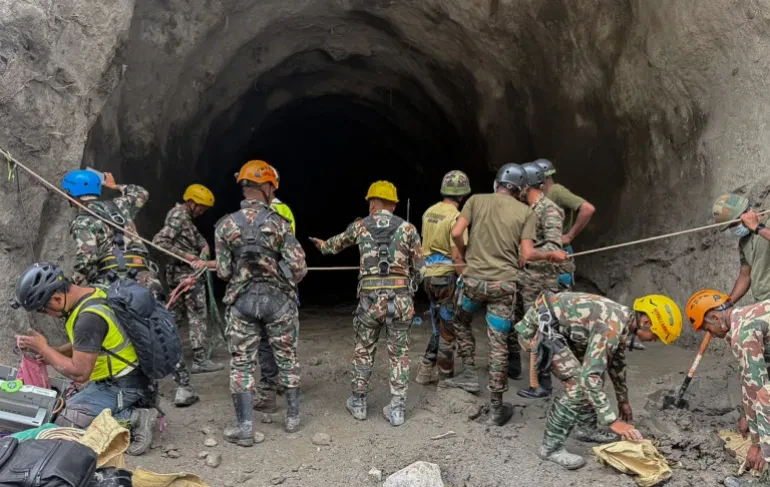
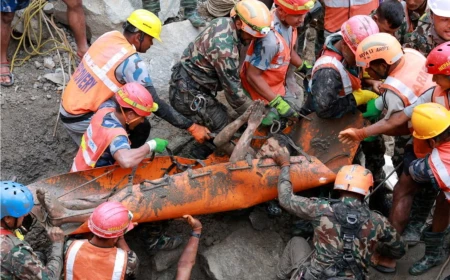
Nepal Army personnel conduct a search and rescue operation at a tunnel site of the Rasuwagadhi Hydropower project in Rasuwa district of Nepal. Photo: Nepal Army
Uphill battle of tunnel rescue
Efforts are also focused on the hydropower tunnels where authorities believe hundreds of workers are trapped, and so army personnel have been able to enter some of those tunnels. They are using excavators, other heavy equipment, hand tools, and limited explosives to try and get rid of barriers – some of them huge boulders, thick mud and sludge – to try to get to the workers who are trapped there.
Rescuers raced Monday to free hundreds of workers believed to be trapped in tunnels at hydropower sites that were buried in mud by catastrophic flooding on the Nepal-China border, as the death toll climbed and increasingly desperate families searched for missing loved ones.

This image shows the mud-filled interior of a hydropower project tunnel at Hakku-216 in the Rasuwa district of Nepal, where hundreds of workers are feared trapped following severe floods and landslides. Photo: The Kathmandu Post
The combined deaths in Nepal and China surpassed 950, with more than 4,400 people missing. A private-sector association representing power companies said at least 900 workers were unaccounted for at 12 hydropower projects damaged by the flash floods in Nepal’s Rasuwa and Nuwakot districts.
At least one expert said that some workers could have access to oxygen, but others warned that the chances of finding survivors were diminishing. As the rescue efforts intensified, four bodies were recovered from three mud-filled tunnels, Nepal’s army said.
Some workers managed to call for help when the disaster struck last Wednesday, and others who managed to flee reported that many of their colleagues were still in the tunnels, said Mohan Kumar Dangi, president of the Independent Power Producers’ Association, Nepal, or IPPAN.
It was unclear whether rescuers have had any contact with the trapped workers since the initial calls for help.
Six days after the disaster, fears were growing that some might have suffocated, Dangi said.

Damaged houses sit precariously near the swollen, debris-choked banks of the Trishuli River after floods in Nepal's Nuwakot district on August 26, 2026. Credit: Photo: Niranjan Shrestha/AP
Giant tunnels built to control water
Rescue efforts were focused on people trapped in the gigantic tunnels built for controlling the flow of water.
“These tunnels are big enough to drive trucks through,” said Jakob Steiner, a geoscientist at the University of Graz in Austria based in Dhaka, Bangladesh. “And from what we understand, they have managed to get oxygen to some of those stuck inside and are trying to rescue them now. It’s a race for time, though, as people need food and water."
In the Upper Trishuli-1 Hydropower Project, in the hard-hit Rasuwa district, at least 576 people were missing, Dangi said, adding that around 300 of them were believed to be trapped inside the project’s tunnel.
At the Trishuli-3 Hydropower Project, crews were working to descend about 50 feet into a tunnel to reach those believed trapped inside, according to Brig. Gen. Raja Ram Basnet, Nepal’s army spokesman.
Workers shoveling mud from a flood-ravaged power station in Dhading, Nepal, told The Associated Press that the station is a key connection for providing power to over 20,000 people in the region.

A drone view of the aftermath of flash flooding along the Trishuli River in Nepal on August 30, 2026. Photo: Rajesh Kumar Singh/AP
Families desperate for information
Nepal’s disaster agency said Monday that 939 deaths had been counted in that country, with 3,925 people missing, including 592 foreigners. As of Sunday, Chinese authorities reported 16 deaths and 546 missing. Chinese state media said 261 of the missing were foreigners, including over 100 Nepalis.
Eighty Americans are missing, and 13 have reached safety, the US State Department said.
Two days after the disaster, the owner of an Indian travel company, Maraval Nagappan, traveled to Nepal to search for his missing son. He visited rescue centers and morgues and went as far as 25 miles from where his son was believed to have been, but found no sign of him.
His son, Sathya Narayan, had been leading a group of 49 Indian travelers who were returning from Mount Kailash in Tibet. The group has been missing since floodwaters swept through a Chinese immigration complex where they were waiting to cross into Nepal.

A mud-covered classroom at the Shree Bageshwori Madhyamik school, damaged in flash flooding in the Dhading district of Nepal. Photograph: Niranjan Shrestha/AP
Principal saves 900 schoolkids
The principal of a high school, Tribhuvan Trishuli Secondary School, saved 900 students before his school was washed away in Nepal.
Rajendra Dawadi had less than 15 minutes to act on a warning of approaching floodwaters. His swift evacuation plan saved hundreds of lives. He was inside his classroom when a colleague rushed in with a warning: Floodwaters were racing through Nepal's Trishuli Valley, tearing apart homes, bridges and entire villages.
Then a teacher received another warning by phone. Moments later, a parent arrived to take her child home. The danger had not yet been confirmed, but Dawadi, the principal, had little time to act. He rang the school bell and ordered his students and staff out of the building and toward higher ground.
"I immediately decided to stop ... school" and get the children out, he told The Associated Press.
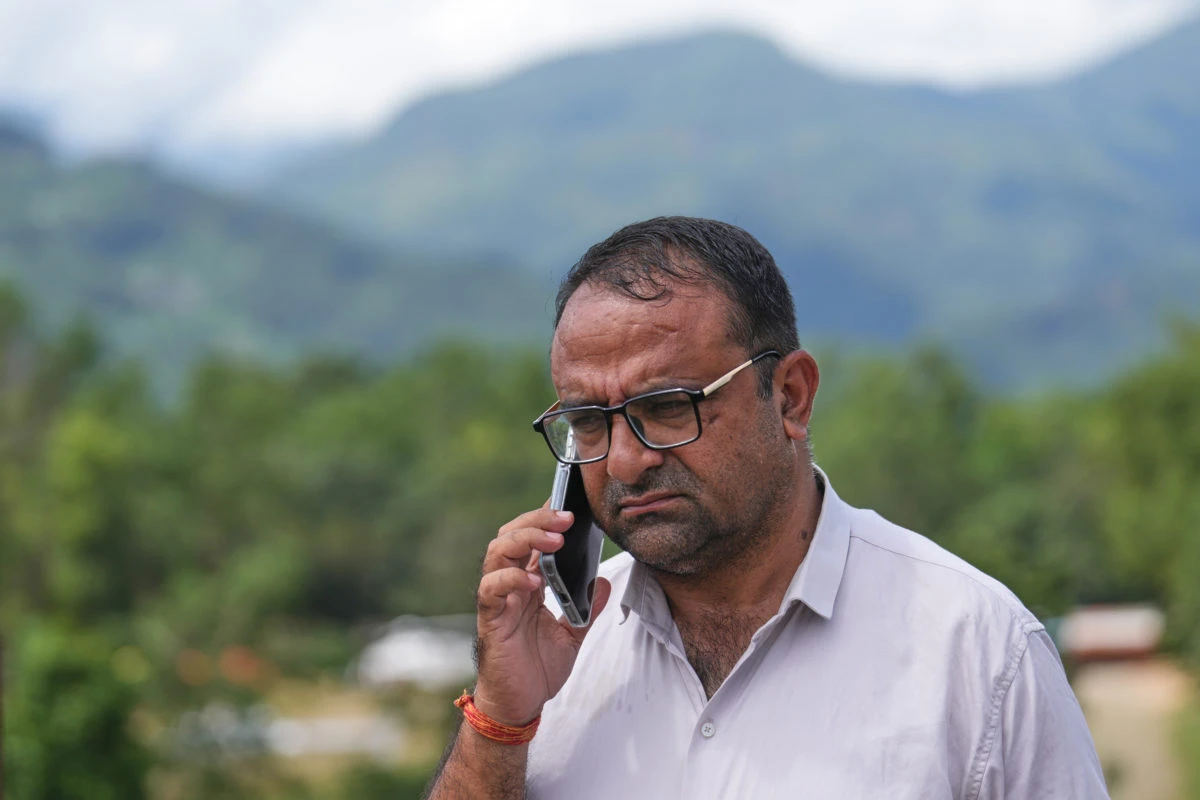
Rajendra Dawadi, the headteacher of Tribhuvan Trishuli secondary school in Nuwakot, talks on his mobile phone in Trishuli Valley in Nepal's Nuwakot district on Monday (August 31, 2026). Photo: Rajesh Kumar Singh/AP
As he followed them to a nearby hill, the floodwaters rose behind him. From the safety of the hillside, he turned to watch the school where he had once been a student — and where he had spent years teaching — disappear beneath a torrent of water, mud, boulders and debris. Two staff members could not make it and remain missing.
Though the physical infrastructure of the school is entirely gone, Dawadi told reporters that saving lives was what truly mattered. He is currently working with local authorities to find a way to resume operations, emphasizing that ensuring the continuity of the children's education is the next vital step.
Rajendra Dawadi, the 47-year-old principal of Tribhuvan Trishuli Secondary School in Nepal's Nuwakot district, has been hailed as a hero for his quick thinking that saved over 900 students just 10 minutes before a catastrophic flash flood completely obliterated his school.

A person looks at the ruins from where his home had been washed away by flash floods in Nepal’s Nuwakot district. Photo: Arun Sankar/AFP
Thousands in need of water, sanitation: UN
Nearly a week after the disaster, about 65,000 people need emergency water, sanitation and hygiene materials, the United Nations said Monday.
UN spokesman Stephane Dujarric told reporters that more than 22,000 children need protection, 2,600 children younger than 5 will likely need treatment for severe wasting and around 10,500 pregnant and breastfeeding women need nutrition assistance. He also noted schools were damaged or destroyed or are being used as shelters for displaced people.
“More than 10,000 school-age children need psychosocial support, and preliminary reports indicate that 107 children may have been separated from their parents or caregivers,” Dujarric said.
What's Your Reaction?
 Like
0
Like
0
 Dislike
0
Dislike
0
 Love
0
Love
0
 Funny
0
Funny
0
 Wow
0
Wow
0
 Sad
0
Sad
0
 Angry
0
Angry
0








Comments (0)