

Bangladesh's tourism potential: Why the country still falling behind?
Tourism’s contribution to Bangladesh’s gross domestic product remains stuck around 2-3 percent


Shoeb Shammyo Siddiq
There is no reason to doubt Bangladesh’s potential in the tourism sector. The only question should be — why is the country still lagging behind many other countries despite having so much potential? The world’s longest natural sea beach, the Sundarbans, a world heritage mangrove forest, the green hills of the Chittagong Hill Tracts, and the archaeological heritage of northern Bangladesh are sources of pride. Yet the reality is quite the opposite.
The tourism sector now contributes around $11 trillion to the global economy. Despite the global economic slowdown and inflation, the sector has emerged as a centre of major economic growth. Yet tourism’s contribution to Bangladesh’s gross domestic product remains stuck at around 2-3 percent. The government, however, has said it wants to raise the share to 6-7 percent. Around 86 percent of Asia’s tourism revenue comes from India, Thailand, Malaysia, Indonesia, Singapore and Vietnam, while Bangladesh’s share is almost negligible.
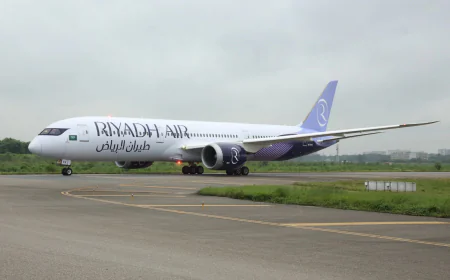
There is little benefit in blaming neighbouring countries for the gap. Thailand, Malaysia and Vietnam do not have more natural resources than Bangladesh. The difference has been created by policy, planning and long-term commitment. Our first problem is infrastructure. The third terminal at Hazrat Shahjalal International Airport has been completed, but a single terminal cannot turn a country into a tourism hub without direct air routes, competitive fares and logistics.
The second problem is visa complications. While Vietnam has made visas easier for air travellers, Malaysia has involved private airlines in providing visa facilities. The third problem is the lack of investment. A draft plan of the Bangladesh Tourism Board states that around $1.08 billion in investment is required to develop 10 tourism circuits. Yet the private sector is not coming forward because of uncertainty over land and a lack of policy continuity.
The prolonged delay in preparing the master plan is also partly responsible. Although the draft of the National Tourism Master Plan, launched in 2019, was completed in 2023, it has still not received final approval from the National Tourism Council or entered implementation even after six years. When a country takes six years to determine its own future, how can investors have confidence?
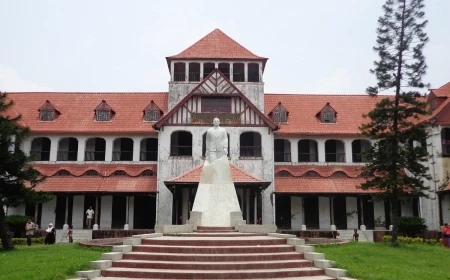
The same weakness exists in the case of skilled manpower. Institutional training opportunities are limited for everyone, from hotel workers to tour guides. Despite having heritage sites such as the temple architecture of Puthia, Bagha Mosque and the Varendra Museum in areas such as Rajshahi, these places have not secured a significant place on the national tourism map because of inadequate promotion and lack of communication facilities.
But the real story goes deeper. One simple question is enough to understand it: while we are highly interested in travelling abroad, we do not give the same importance to bringing foreign visitors here. According to data from the World Travel and Tourism Council, more than three million people travel abroad from Bangladesh every year, with around two million going to India alone.
In 2022, Bangladesh was the second-largest source country for foreign visitors to India, just after the United States. In contrast, the number of foreign tourists visiting Bangladesh is so low that the country struggles even to raise tourism’s contribution to gross domestic product to 3 percent. We are readily sending foreign currency abroad, while failing to create attractive offerings capable of bringing money into our own country.
Diplomatic neglect is a major factor behind this imbalance. Among the top 20 countries that Sri Lanka granted visa-fee waivers in 2025, Bangladesh was the only country excluded. Even so, the number of tourists travelling from Bangladesh to Sri Lanka continues to rise. The same picture is evident in relations with India. The number of Bangladeshi tourists visiting India fell by 73 percent in 2025 compared with the previous year, mainly because of political tensions and visa complications. Yet no parallel diplomatic initiative is visible to attract tourists from India, China or the Middle East.
The second factor is the lack of market analysis. An official of India’s Ministry of Home Affairs said around 25 percent of tourism visa applications from Bangladesh are for Kashmir. Bangladeshis are travelling thousands of miles in search of mountains and cool weather, while we are unable to retain our own citizens because of inadequate infrastructure and marketing, despite having similar experiences in Rangamati, Bandarban and Sajek.
The third factor is the short-sightedness of the private sector. Travel agencies consider outbound business more profitable because packages are easier to prepare and involve less risk. Few are willing to pursue the long-term investment and international networking required for inbound tourism. As a result, our travel industry has remained one-way — a mechanism for sending Bangladeshis abroad rather than a bridge for bringing foreigners here.
So, what needs to be done? Tourism must be treated not as an isolated sector but as part of a long-term economic plan. The National Tourism Master Plan should be finalised quickly and implemented so that policy and planning remain consistent even when governments change. Coordination among aviation, communication, visas, investment, security and tourism management needs to be strengthened. Diplomats should also make tourism an important part of their discussions and take initiatives to attract foreign tourists through easier visas, direct flights, joint promotion and reciprocal tourism facilities.
At the same time, various destinations across the country, including Puthia, Bagha and the Varendra region, should be incorporated into planned tourism circuits, while communication, accommodation, security and service standards should be improved for domestic tourists. This would encourage people to travel within their own country and create a strong domestic tourism market. On that foundation, it would also become easier to present Bangladesh anew to foreign tourists.
Private investment in hotels, resorts, transportation, eco-tourism and other tourism services should also be increased through easier approvals, long-term financing and necessary tax benefits. Bangladesh’s problem is not a lack of potential; rather, it is the absence of integrated planning, investment and sustained implementation capable of turning that potential into economic strength.
Not every solution to tourism and aviation development requires massive spending. Many effective measures primarily require policy decisions and consistent implementation. Will we simply continue to lament the flow of our own citizens abroad, or will we turn the same interest into a strategy for bringing them back to domestic destinations and attracting foreigners? As neighbouring countries turn their natural resources into economic engines, the time has come to ask: when will we develop the political will, institutional capacity and long-term planning needed to turn this potential into reality?
Author: Banker and economic analyst
What's Your Reaction?
 Like
0
 Dislike
0
 Love
0
 Funny
0
 Wow
0
 Sad
0
 Angry
0






Comments (0)