

Saudi F-35 deal, mineral discovery trigger diplomatic debate
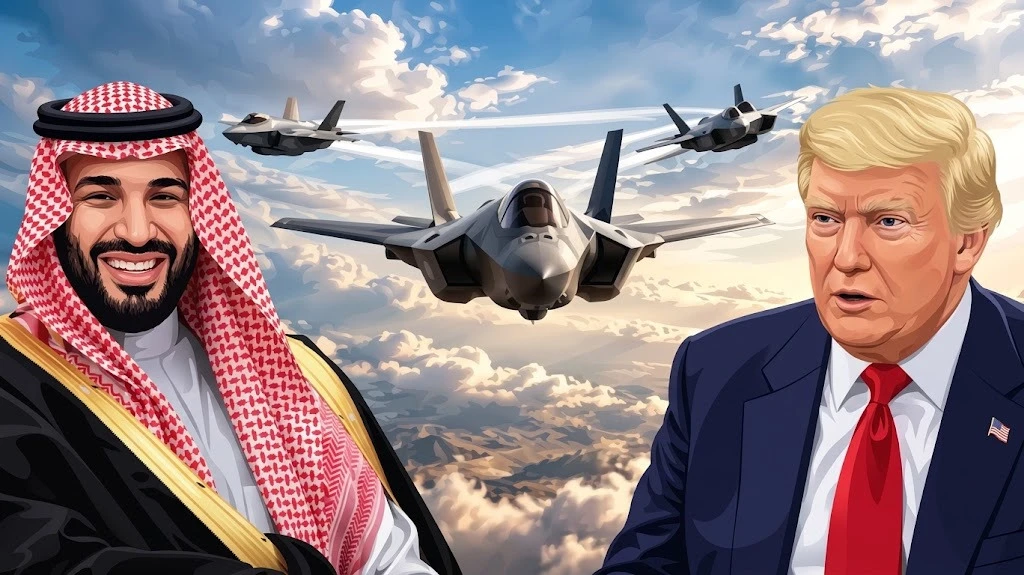
The US State Department approved the potential sale of 48 F-35 Lightning II stealth fighter jets to Saudi Arabia for $24.3 billion

A series of announcements from Washington and Riyadh in mid-September has sparked new discussions in international diplomacy.
Just three days after Saudi Arabia announced the discovery of large quantities of uranium-bearing ore and rare minerals in the Medina region, the US State Department approved the potential sale of 48 F-35 Lightning II stealth fighter jets to Saudi Arabia for $24.3 billion. The deal, which still requires congressional approval, would make Saudi Arabia the first Arab country to acquire the United States' most advanced fifth-generation fighter aircraft.
The two developments came at a time when Riyadh is not receiving direct US military assistance in its fight against Houthi rebels in Yemen, while reports have emerged of secret talks between Washington and the Houthis. This has raised questions over whether Saudi Arabia is using its economic and mineral resources as leverage to secure strategic benefits from US President Donald Trump.
The US State Department said the deal for the 48 F-35 fighter jets would not alter the military balance in the Middle East but would strengthen the security of a major non-NATO ally. The Saudi Embassy in Washington welcomed the move, saying the proposed F-35 sale demonstrates the strength of the Saudi-US strategic partnership and progress in the two countries' ongoing defence cooperation.
Reports that Saudi Arabia is withdrawing from China's Project mBridge digital currency initiative have added another dimension to the speculation. A report by the Financial Times said Riyadh has exited the project, which was created to reduce dependence on the US dollar. Saudi Arabia's participation had already followed a planned development process, however, and there is no publicly established evidence that its departure was directly linked to US pressure or the F-35 negotiations.
According to many analysts, the sequence of events — the uranium discovery, reports of US-Houthi talks, approval of the F-35 sale and withdrawal from the China-led initiative — is part of Riyadh's shrewd and high-risk commercial diplomacy.
At the International Atomic Energy Agency's (IAEA) General Conference, Saudi Energy Minister Prince Abdulaziz bin Salman said around 110 million tonnes of uranium-bearing ore had been found at the Jabal Sayid project in Medina. Following the signing of a US-Saudi civil nuclear agreement in July, the uranium discovery could facilitate Riyadh's path towards domestic uranium enrichment.
Meanwhile, although the Houthis have strengthened their control along Yemen's Red Sea coast and advanced towards the Bab al-Mandab Strait, the United States is unwilling to escalate military confrontation on behalf of Saudi Arabia. The Houthis held secret talks with US officials in Muscat, Oman, and indicated that they would maintain the 2025 ceasefire with the Trump administration.
Defence expert Lieutenant General DP Pandey commented in a post on X that a form of pressure had been exerted by not helping in the fight against the Houthis. As a result, Saudi Arabia is now giving the United States business by purchasing F-35 fighter jets worth $24.3 billion, which may not be of much immediate use against the Houthis.
According to defence analysts, the effectiveness of high-tech stealth fighter jets such as the F-35 is quite limited against the Houthis, who fight using guerrilla tactics. In addition, the deal could face opposition in the US Congress over the 2018 killing of journalist Jamal Khashoggi and civilian casualties in the Yemen war. A report in The New York Times, citing concerns from US intelligence agencies, said Saudi Arabia's close military ties with China could create a risk of F-35 technology information reaching Beijing.
Despite these controversies, amid the tense situation in the Middle East, Saudi Arabia is seeking to use the equation involving its financial and mineral resources to strengthen its position in its relationship with the United States.
What's Your Reaction?
 Like
0
Like
0
 Dislike
0
Dislike
0
 Love
0
Love
0
 Funny
0
Funny
0
 Wow
0
Wow
0
 Sad
0
Sad
0
 Angry
0
Angry
0








Comments (0)