

Kolmakanda booms with tourism prospects
The scenic spot offers visitors a rare combination of hills, rivers, waterfalls, forests, indigenous heritage and centuries-old folklore

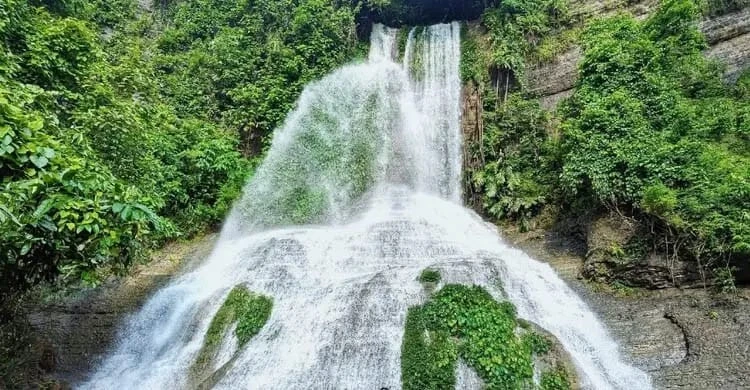
Nestled along the Meghalaya border in Netrokona, Kolmakanda is emerging as a promising destination for nature and cultural tourism, offering visitors a rare combination of hills, rivers, waterfalls, forests, indigenous heritage and centuries-old folklore.
Spread across 376.22 square kilometres, the upazila is home to winding rural roads, scattered hillocks, and rivers and streams, including Mahadeo, Ganeshwari, Mangleshwari and Phuleshwari.
Kolmakanda's Rangsati, Lengura and Kharnoi unions border India’s Meghalaya state, creating a landscape where Bangladesh’s green hills meet the larger mountain ranges across the frontier.
Among the most attractive locations are Chandradinga and Patlabon in Rangsati, where visitors can experience the natural beauty of the border hills alongside the traditional lifestyle of indigenous communities.
The areas are particularly attractive to visitors seeking quiet, less-developed destinations away from crowded tourist spots.
From Chandradinga and Patlabon, the high hills of Meghalaya can be seen stretching across the horizon in an arch-like formation. Parts of the hills lie within Bangladesh, while the wider mountain landscape extends across the border.
Hundreds of tourists visit the areas, particularly during the dry season, although movement in some parts of the border zone has been restricted for security reasons since August 2024.
The Border Guard Bangladesh (BGB) maintains strict security along the frontier. A BGB check post has been established at Hatiber, around 300 yards from Chandradinga, to prevent visitors from accidentally crossing towards the zero line while exploring streams and waterfalls.
Lieutenant Colonel Touhidul Bari, commander of BGB’s Netrokona-31 Battalion, said restrictions had been imposed in some border areas for security reasons.
“Many tourists accidentally move towards the zero line while bathing in hill streams. Check posts have been established to raise awareness and prevent risks. Tourists can enjoy the scenery at designated locations after obtaining permission,” he said.
Chandradinga’s folklore, cultural appeal
Beyond its natural beauty, Chandradinga has a strong connection with local folklore.
According to a popular legend, the place is associated with Chand Saudagar, a prominent character in the 15th-century Bengali epic Manasamangal. Local people believe that the wealthy merchant’s boat became stranded there after he incurred the wrath of the serpent goddess Manasa, giving the place its name, Chandradinga.
There is no definitive historical evidence supporting the legend, but it remains deeply rooted in local tradition.
A huge rock in the middle of the hill is said to resemble part of a boat’s mast. Members of the Hajong and Hindu communities hold annual worship ceremonies dedicated to Manasa and Chand Saudagar there. Incense and lamps are also lit at the site every Tuesday and Saturday.
A century-old banyan tree, a nearby stream and a waterfall add to the attraction, making the location suitable for visitors interested in both nature and cultural heritage.
Tourists have already begun gathering around the BGB check post, where several shops and food outlets have developed.
A resident of Netrokona town, AK Azad Pintu, described the area as “a blessing of nature” and said he regularly visited with family and friends.
The area attracts visitors throughout the year, although tourist numbers increase during the dry season.
Suman Chowdhury, who travelled from Gouripur in Mymensingh with his two children, said Chandradinga and Patlabon were different from many other tourist destinations he had visited.
“I have visited many places, but I have never seen such a quiet and enchanting area. Anyone looking for peace of mind can visit here,” he said.
He said better accommodation, hotels and roads would make the destination more attractive to tourists.
Mahadeo River adds to tourism potential
About a 15-minute journey from Chandradinga takes visitors to the Patlabon border area, where the Mahadeo River flows down from the hills.
The river is known for its remarkably clear water and stretches of silica sand that resemble a beach. During the dry season, visitors can walk across the sandy riverbed and enjoy the water, while the surrounding hills and forests provide a striking backdrop.
During the monsoon, streams from the hills swell the river, carrying sand, stones and coal downstream.
The river and its resources have historically supported local livelihoods. Its sand has also been used in the construction industry.
However, unregulated extraction of sand and stones using numerous dredgers raised environmental concerns. Following a writ petition filed by environmental organisation Bangladesh Environmental Lawyers Association, sand extraction from the river has been stopped.
The surrounding landscape also includes Betgora, Gopalbari’s Chengni area and the nearby Phulbari area of Lengura union, where the memorial site associated with the seven martyrs of the Liberation War is located.
According to local resident Jhumur Marak, the combination of hills, greenery, cultural heritage and border landscapes gives the area considerable tourism potential.
She said the local community regularly assists visitors and highlighted the Gopalpur temple in Chengni Hill, where a seven-day fair has been held for more than 200 years during Dol Purnima.
The fair attracts visitors from different parts of the country, further increasing the area’s tourism activity.
Govt eyes tourism development
Netrokona Deputy Commissioner Khandkar Mushfiqur Rahman said the district had many attractive tourist destinations, with Chandradinga and Patlabon among the most promising.
“Necessary steps are being taken so tourists can travel to these areas easily, while ensuring their security and providing better accommodation and food facilities,” he said.
He said increasing the number of quality hotels and motels could help attract more domestic and international tourists.
The development of basic tourism infrastructure, however, remains crucial if Kolmakanda is to move beyond day trips and become a sustainable destination.
Better roads, accommodation, food services, visitor facilities and regulated access to sensitive border areas could help unlock the area’s tourism potential while protecting its natural environment and local culture.
How to get there
Kolmakanda can be reached directly from Dhaka by bus from the Mohakhali bus terminal. From Kolmakanda, Chandradinga and Patlabon are around 12 kilometres away and can be reached by motorcycle or easy-bike.
Visitors can also travel by intercity Haor Express or Mohan Ganj Express trains from Kamalapur Railway Station to Netrokona and then continue by bus, CNG-run auto-rickshaw or motorcycle.
With its combination of border hills, clear rivers, waterfalls, indigenous culture, folklore and historical sites, Kolmakanda has the potential to become one of Bangladesh’s distinctive nature tourism destinations, provided tourism development is balanced with environmental protection and border security.
What's Your Reaction?
 Like
0
 Dislike
0
 Love
0
 Funny
0
 Wow
0
 Sad
0
 Angry
0





Comments (0)