

800 tourists missing after Nepal flash flood
Missing tourists includes 105 Indian nationals, along with travellers from the UK, the USs, Malaysia, South Africa, Australia and the Netherlands


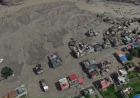
The tourism sector in Nepal has been thrown into deep crisis after a flash flood, accompanied by mudslide, swept through the Bhote Koshi River corridor in the Himalayan border district of Rasuwa, leaving around 800 travellers, mostly foreigners, unaccounted for, according to latest media reports and government sources.
The list includes 105 Indian nationals, along with travellers from the United Kingdom, the United States, Malaysia, South Africa, Australia and the Netherlands. The whereabouts of several other foreign travellers have yet to be confirmed. Sources said the number is preliminary and is being verified with travel agencies, guides, local authorities, security agencies and tourist police.
The disaster has severely disrupted a major tourism corridor connecting Nepal with the Tibet region, with roads, bridges and settlements damaged and access to the Rasuwagadhi border crossing disrupted.
Many of those reported missing were travelling towards Kailash Mansarovar in Tibet, one of the region’s most important pilgrimage tourism destinations. Others were travelling towards popular Himalayan destinations, including Gosainkunda.
Tourism routes hit by disaster
The flash flood struck the Rasuwa area early on Wednesday, sending a powerful surge through the Bhote Koshi River and sweeping away vehicles, bridges and infrastructure along the river corridor.
The Timure and Syafrubesi areas were among the worst affected, with settlements, police posts and customs facilities damaged. Roads linking the region with the Rasuwagadhi border crossing were also affected, making it difficult for rescue teams and tourists to move through the area.
Nepal authorities said tourism police, local authorities and security agencies have been mobilised to locate the missing travellers and establish their safety status.
The number of casualties was compiled from information supplied by travel and trekking companies. It includes 92 travellers associated with Trekkers Society, 71 with Samrat Tours & Travels, 55 with Leaf Holiday, 52 with Himalayan Glacier and 31 with Kailash Journey, among others.
The board has urged travellers and their families not to draw conclusions from the preliminary list until the verification process is completed.
Kailash pilgrimage disrupted
The disaster has particularly affected travellers using Nepal as a gateway to Tibet for the Kailash Mansarovar pilgrimage.
Most of the Indian nationals reported missing were believed to be part of groups travelling towards the pilgrimage route. The incident has raised fresh concerns over the vulnerability of Himalayan tourism and pilgrimage routes to sudden weather and geological disasters.
Nepal’s mountainous terrain makes the country a major destination for trekking, mountaineering and pilgrimage tourism, but the same geography can make rescue operations extremely difficult when roads and bridges are destroyed.
Bad weather and high water levels have already hampered access to some affected areas. Rescue helicopters have faced difficulties landing, while damaged roads have further complicated efforts to reach stranded travellers.
Disaster believed linked to glacier or rock collapse
The precise cause of the flash flood was initially unclear. However, preliminary satellite analysis and expert assessments indicate that a sudden collapse of ice and rock near the Nepal-Tibet border may have triggered the massive surge.
Reuters reported that satellite imagery showed a significant portion of a glacier at an altitude of about 5,200 metres had broken away and plunged into a valley, releasing ice, rock and debris that caused the downstream surge.
Experts have also pointed to rising temperatures and accelerating glacier melt as factors that can increase the risk of sudden Himalayan floods.
Tourism safety concerns
The incident is likely to raise questions about safety management along Nepal’s remote trekking and pilgrimage routes, particularly those close to glaciers, rivers and international borders.
For Nepal’s tourism industry, the affected corridor is strategically important because it serves both adventure tourists and international pilgrims travelling towards Tibet. Prolonged disruption could affect travel operators, guides, hotels, transport providers and border tourism in the region.
Meanwhile, the Nepal Tourism Board has advised tourists in affected areas to remain calm, follow official instructions and stay in contact with their travel agencies, guides and local authorities. Emergency assistance is available through the board’s toll-free numbers 1234 and 1144.
Nepal has also sought assistance from India and China for rescue operations as authorities continue searching for missing travellers.
For the tourism sector, the immediate priority is to locate the missing travellers and restore safe access to the affected areas. But the disaster also highlights a wider challenge for Himalayan destinations: how to expand tourism while preparing for increasingly unpredictable glacier-related floods, landslides and other climate-linked hazards.
What's Your Reaction?
 Like
0
Like
0
 Dislike
0
Dislike
0
 Love
0
Love
0
 Funny
0
Funny
0
 Wow
0
Wow
0
 Sad
0
Sad
0
 Angry
0
Angry
0










Comments (0)