

Cox’s Bazar dried-fish traders face Tk 5cr unsold stock
Tourists visiting Cox’s Bazar are the market’s main customers

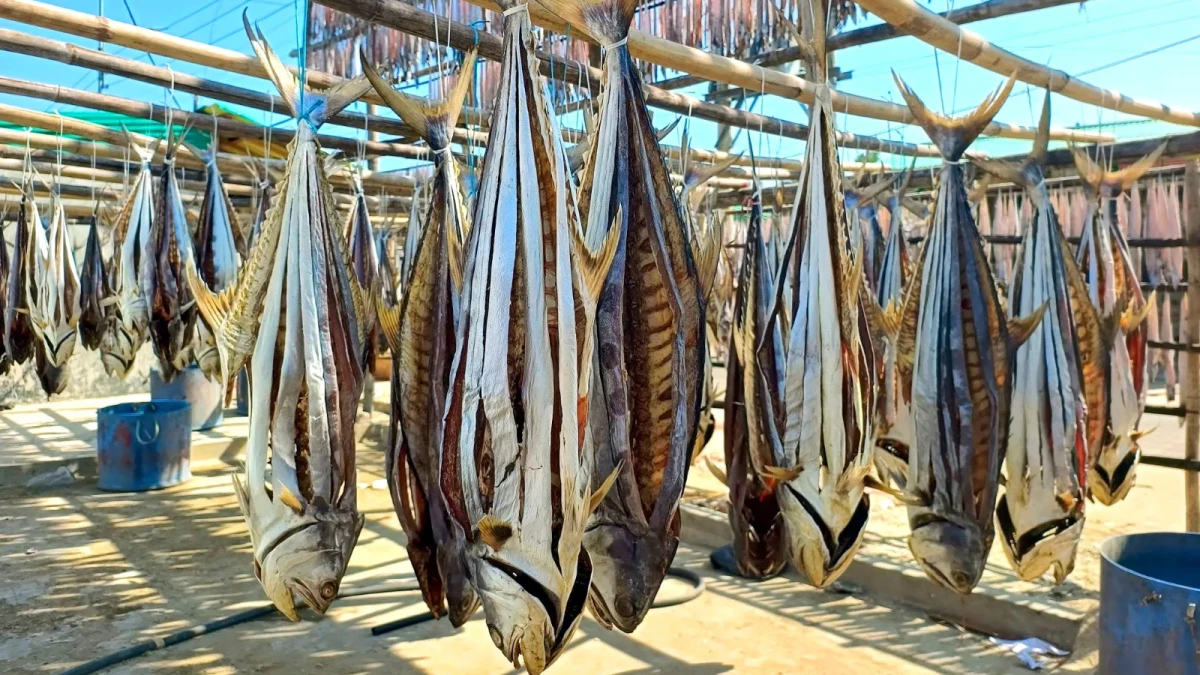
Dried-fish traders in Nazirartek, Cox’s Bazar, are struggling with unsold stock worth at least BDT 50 million as customers stay away and production at nearby processing yards comes to a halt, according to media reports.
The market has at least 45 shops selling various types of dried fish, including ribbonfish, Bombay duck, jewfish, croaker and king mackerel. However, during a recent visit, few customers were seen, while shop employees sat idle.
A shop manager said daily sales, which previously reached BDT 50,000, had fallen to between BDT 3,000 and BDT 3,500. Several other shops, each holding stock worth between BDT 700,000 and BDT 2 million, also reported a sharp slowdown in business.
Some traders said they had taken out bank loans to build up their stocks in anticipation of a market shortage. With sales declining, they are now struggling to repay the loans and meet operating expenses.
Tourists visiting Cox’s Bazar are the market’s main customers. Traders said the poor condition of a road stretching about two kilometres to Nazirartek, particularly in the Samitipara, Kutub Bazar and Paschim Kutubdiapara areas, was discouraging visitors.
According to traders, some shops were selling dried fish worth between BDT 50,000 and BDT 200,000 a day as recently as 15 days ago. Daily sales have since fallen to between BDT 3,000 and BDT 20,000.
Mohammad Shamim Al Imran, Administrator of Cox’s Bazar Municipality and Deputy Director of the Local Government Division, said the municipality lacked sufficient funds to repair the damaged sections of the road.
He said an initiative had been taken to renovate the road with funding from the World Bank.
Drying Yards Shut Down
The decline in sales has coincided with a sharp drop in production. According to people involved in the industry, more than 600 dried-fish processing yards along the Nazirartek coast in Ward No. 1 of the municipality have suspended operations.
The shutdown has affected the livelihoods of around 30,000 dried-fish workers. About 120,000 fishermen and workers associated with 6,000 fishing trawlers are also facing difficulties.
During a recent visit, only three yards were found drying small quantities of ribbonfish. Workers said the fish had been purchased from Fisheryghat in Chattogram before the fishing ban took effect and had been kept in cold storage.
At one of the few yards still in operation, more than 60 bamboo drying racks stood empty, with fish placed on only two of them. Six workers were present: a woman and five children and adolescents. The owner said the yard had previously employed more than 40 workers.
Male workers at the yard are paid BDT 800 a day, while women receive between BDT 500 and BDT 600. With production suspended, most workers have lost their jobs.
Akhtar Kamal, a former councillor of Ward No. 1, said the yards remained closed despite it being the peak season. He said more than 30,000 people, including over 12,000 female workers, had lost their livelihoods.
Fears of Deeper Crisis
The president of the Cox’s Bazar Shutki Processing Traders Cooperative Association said production had been disrupted at more than 600 yards in coastal areas, including Nazirartek, Nuniachhara and Mogchitapara.
He said the yards had produced dried fish worth more than BDT 4 billion last year. Production during the first 10 months of this year was worth about BDT 2 billion. He warned that the situation could deteriorate further if fish catches did not improve.
According to the District Fisheries Office, more than 31,000 metric tons of dried fish were produced in Cox’s Bazar during the first eight months of the current fiscal year, from July to February. Total production during the 12 months of the previous fiscal year was 48,285 metric tons.
District Fisheries Officer Nazmul Huda said climate change, overfishing and other factors had reduced fish availability. He stressed that compliance with government fishing restrictions was essential to conserving marine resources.
He acknowledged that the shortage of fish was reducing dried-fish production and said the authorities were investigating the factors behind the decline.
What's Your Reaction?
 Like
0
 Dislike
0
 Love
0
 Funny
0
 Wow
0
 Sad
0
 Angry
0






Comments (0)