

Software defect behind UK air traffic control failure
The defect occurred within a millisecond causing the September 8 air traffic control failure that contributed to more than 2,000 flight cancellations across Britain

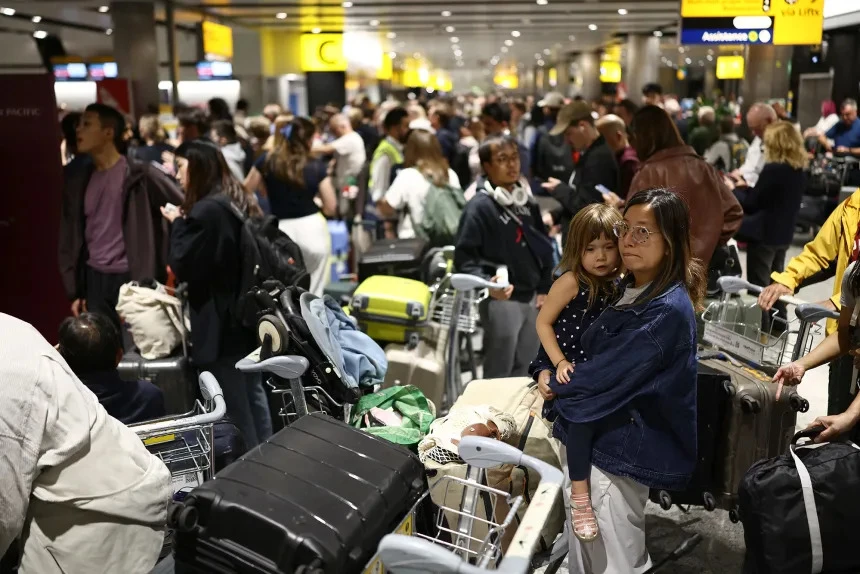
A software defect that occurred within a millisecond caused the September 8 air traffic control failure that contributed to more than 2,000 flight cancellations across Britain, according to a preliminary investigation by NATS, the UK's air navigation service provider.
NATS said the fault was in a small part of the National Airspace System, which supports the management of UK airspace. The affected software assigns identification codes to aircraft when staff make manual requests. Controllers use these codes to identify flights on radar after they are airborne.
According to the report, the system was processing a manual request for an aircraft code when it received a message about a higher-priority activity, causing the request to be paused. A defect meant the request did not resume correctly. The output was corrupted, affecting some subsequent flight data updates. NATS said the incident occurred 'in the space of a millisecond'.
With controllers having less information available, NATS restricted aircraft movements to maintain safety while it restarted its systems and reloaded flight data. The restrictions lasted about six hours. NATS said operations returned to normal later that evening, but it took more than two days to clear the passenger backlog.
Aviation analytics company Cirium recorded 1,746 cancelled flights on September 8 and 399 on September 9, bringing the total to 2,145. Airlines UK, the industry body, said more than 330,000 passengers were affected, including about 155,000 by cancellations and about 180,000 by delays.
British Airways cancelled nearly 550 flights over the two days, affecting about 85,000 customers. After normal operations resumed, airlines also had aircraft and crews out of position. The disruption also affected travellers between the UK and the UAE.
NATS has ruled out a cyberattack. Chief executive Martin Rolfe said the problem was traced to 'a small subsection of coding'. He also rejected speculation that military intervention was responsible. NATS said the failure was unrelated to the major UK air traffic control outage of August 2023.
The findings are preliminary. UK Transport Secretary Heidi Alexander has ordered an independent review into the cause of the disruption and the resilience of Britain's air traffic control infrastructure. NATS said mitigation measures are in place while a permanent software fix is safety-tested and deployed.
What's Your Reaction?
 Like
0
Like
0
 Dislike
0
Dislike
0
 Love
0
Love
0
 Funny
0
Funny
0
 Wow
0
Wow
0
 Sad
0
Sad
0
 Angry
0
Angry
0









Comments (0)