

Creative economy to drive domestic tourism growth: Finance minister
Domestic tourism alone has the potential to make a significant contribution to economic growth, even without a large influx of foreign visitors

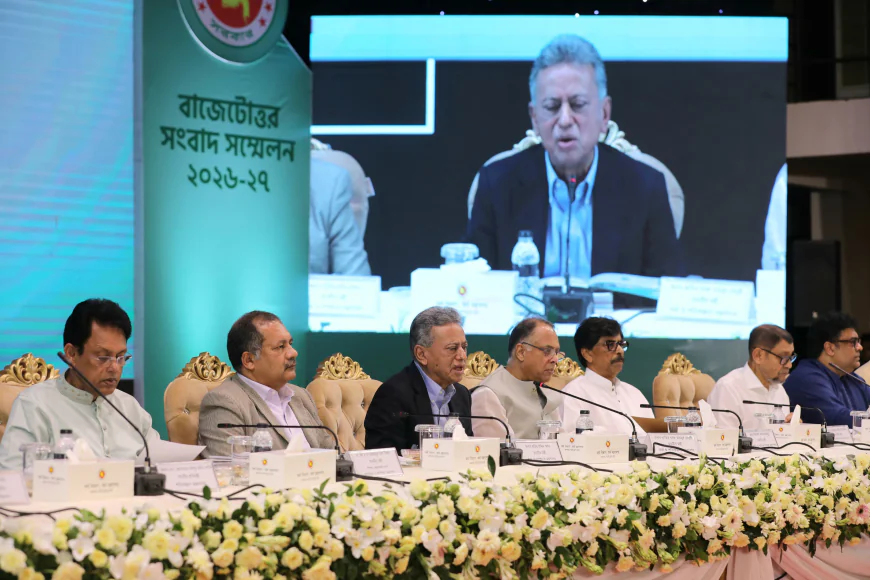
Finance Minister Amir Khosru Mahmud Chowdhury has outlined an ambitious plan to transform Bangladesh's tourism sector through investment in the creative economy, saying domestic tourism alone has the potential to make a significant contribution to economic growth, even without a large influx of foreign visitors.
Speaking at a post-budget press conference at the Osmani Memorial Auditorium on Friday, the minister said Bangladesh has largely failed to monetise its cultural assets, heritage, arts and entertainment industries, leaving considerable tourism and economic potential untapped.
"Foreign tourists are welcome, but my primary concern is not whether foreign visitors come or not," he said. "If we can properly cater to our own domestic tourists, it will make a huge contribution to the economy."
The remarks came a day after he unveiled the FY2026-27 national budget, which places unprecedented emphasis on the creative economy as a new pillar of economic development, tourism promotion and employment generation.
Tourism beyond traditional destinations
Chowdhury said Bangladesh's tourism potential extends far beyond beaches, forests and historical sites.
He noted that major cities such as Dhaka lack organised entertainment and cultural spaces, limiting opportunities for recreation and tourism spending.
"Our entertainment is often limited to visiting relatives or dining in restaurants," he said. "We need to create destinations where people can spend an entire evening enjoying culture, music, theatre, arts and entertainment."
To address this gap, the government plans to establish creative centres across the country, bringing together theatres, music venues, art galleries, designer outlets, cultural performances and entertainment facilities within integrated cultural districts.
The concept draws inspiration from internationally renowned cultural and theatre districts that attract visitors while generating substantial economic activity.
Tk 800 crore allocation
The finance minister said the government has earmarked an initial Tk 800 crore to launch creative economy initiatives, describing it as an unprecedented investment in a sector that has historically received little policy attention.
The programme aims to create income-generating opportunities for artists, musicians, actors, designers, craftspeople and cultural entrepreneurs, while also strengthening domestic tourism.
"We have talented artists, performers and creators throughout the country, but many have never had the opportunity to monetise their skills," Chowdhury said.
He added that cultural activities must become economically sustainable if they are to flourish in the long term.
Heritage and religious tourism
The government is also planning to expand heritage and religious tourism by restoring and developing historical and cultural sites across the country.
Chowdhury said Bangladesh has numerous heritage locations and religious landmarks with the potential to attract both domestic and international visitors, particularly from Buddhist and other faith-based tourism markets.
However, many of these sites remain underdeveloped because of inadequate infrastructure, poor visitor facilities and limited promotion.
The new strategy aims to improve access, infrastructure and visitor experiences at key heritage destinations.
One village, one product
A key component of the creative economy initiative is the development of tourism linked to local products and traditional industries.
The finance minister cited international examples where villages have become tourist attractions by specialising in a single craft or product.
Bangladesh plans to adopt a similar approach through programmes designed to showcase local heritage, handicrafts, handloom products and traditional industries.
One such initiative has already been identified in Barishal, where local products could be integrated into tourism circuits, allowing visitors to observe production processes while supporting rural economies.
Tourists would be encouraged to visit heritage sites, craft centres, production hubs and cultural attractions as part of a broader tourism experience.
Building Bangladesh's soft power
Chowdhury said the creative economy could also help strengthen Bangladesh's international image and cultural influence.
He noted that countries around the world have successfully used music, film, theatre and cultural industries to project their identities globally and attract visitors.
"Music has no borders. Films have no borders. Cultural products have become powerful economic and diplomatic tools around the world," he said.
The government believes that greater investment in cultural industries could help Bangladesh develop its own soft power while opening up new opportunities in international markets.
Economic and tourism potential
Industry observers say the initiative represents one of the most significant shifts in Bangladesh's tourism strategy in recent years, moving beyond traditional destination marketing towards a broader model that integrates culture, creativity, heritage and local enterprise.
If implemented successfully, the programme could generate employment, stimulate domestic tourism spending and create new revenue streams for communities that have historically remained outside the mainstream economy.
The finance minister expressed optimism that the creative economy would not only improve livelihoods for artists and cultural workers but also create new tourism products capable of attracting visitors from across the country.
"This is about creating opportunities, generating economic activity and giving people reasons to travel, explore and experience Bangladesh," he said.
What's Your Reaction?
 Like
0
Like
0
 Dislike
0
Dislike
0
 Love
0
Love
0
 Funny
0
Funny
0
 Wow
0
Wow
0
 Sad
0
Sad
0
 Angry
0
Angry
0

Comments (0)