
One decade on, Sabrang Tourism Park still lies undeveloped
The planned tourism park faces multiple obstacles like lack of adequate investment, infrastructure, basic tourist facilities and coastal erosion

A decade has elapsed but the highly prospective Sabrang Tourism Park project in Teknaf still remains largely undeveloped, altough the government allocated 967 acres of land in 2016, thereby leaving its tourism and investment potential untapped.
The park was planned at Sabrang Point, about 84 kilometre from Cox’s Bazar town, to attract both domestic and international tourists. The Bangladesh Economic Zones Authority (BEZA) is implementing the project.
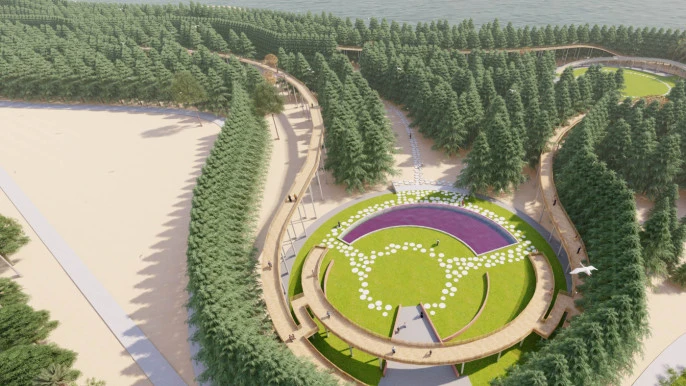
The planned tourism hub includes five-star hotels, eco-tourism facilities, a marine aquarium, sea cruises and an underwater restaurant. Once developed, it is expected to create around 35,000 jobs and attract up to 39,000 visitors per day.
Despite the slow progress, there is already significant investor interest. BEZA has allocated around 120 acres to 28 investors for hotels, resorts and entertainment facilities, with proposed investments worth about $460 million, according to Sabrang Tourism Park Assistant Director Julhaz Ahmed.
Infrastructure work is still limited. A sea defence embankment and boundary wall are under construction, while preparations are under way to build a permanent jetty near the clock sculpture to facilitate direct travel to St Martin’s Island.

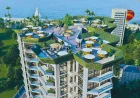
Animated view of Sabrang Tourism Park at Teknaf in Cox’s Bazar.
BEZA Executive Member Saleh Ahmed said the Sabrang park has been given the highest priority for development over the next 10 years. The proposed jetty would allow tourists to travel to St Martin’s directly from Sabrang instead of travelling to Cox’s Bazar town to board ships.
Natural attraction, limited facilities
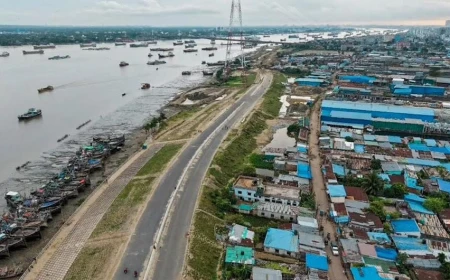
Sabrang already attracts hundreds of visitors daily because of its natural beauty. The area offers an open sea, green hills along the Marine Drive, a relatively quiet beach and colourful fishing boats along the coastline.
More than 1,000 fishing boats have reportedly been painted in bright colours to add to the attraction for tourists.
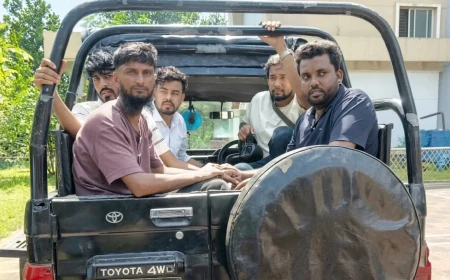
However, basic tourist facilities remain inadequate here. A recent visit found several hundred visitors enjoying the beach despite rain, but there were no proper public toilets or passenger shelters. Small roadside shops offer tea, coffee and meals, while the area around the clock sculpture has effectively become a terminal for dozens of open-top jeeps.
Visitors say better facilities, including restaurants, coffee shops, children's attractions and a marine aquarium, could significantly increase tourist arrivals. The lack of infrastructure is also raising concerns among tourism businesses.
Mukim Khan, general secretary of the Cox’s Bazar Hotel-Resort Owners’ Association, said the project could generate substantial economic activity and attract foreign tourists if development moves forward more quickly.
Coastal erosion adds to the challenge
One of the major obstacles for tourism is coastal erosion. The geo-bag protection embankment built earlier has been damaged by tidal pressure, while new defence and boundary-wall works are now under way.
BEZA officials say addressing coastal erosion and completing essential infrastructure are necessary before investors can fully develop their projects. The park is not the only stalled tourism initiative in the area.
Naf Tourism Park also stalled
BEZA approved the master plan for Naf Tourism Park in 2020, allocating 271 acres on Jaliardia, an island that emerged in the Naf River.
The plan included hotels, eco-cottages, a cable car, suspension bridge, floating jetty, children’s park and underwater and floating restaurants. Initial land-filling, bridge construction and a security post were completed in 2023, but development has remained suspended for around two years.
BEZA officials said the park’s location near Myanmar’s Rakhine State, the instability there and security concerns have prevented further development.
For domestic tourism sector, the stalled projects highlight both the country’s considerable potential and the challenges of turning natural attractions into commercially viable destinations. With Sabrang already drawing visitors despite limited facilities, completing its basic infrastructure could be a crucial first step towards unlocking its wider tourism and investment potential.
What's Your Reaction?
 Like
0
Like
0
 Dislike
0
Dislike
0
 Love
0
Love
0
 Funny
0
Funny
0
 Wow
0
Wow
0
 Sad
0
Sad
0
 Angry
0
Angry
0




Comments (0)