

Bangladesh struggles to harness its tourism potential
The roar of the sea, the silence of the hills, the beauty of the haors and ancient archaeological remains together give Bangladesh enormous tourism potential

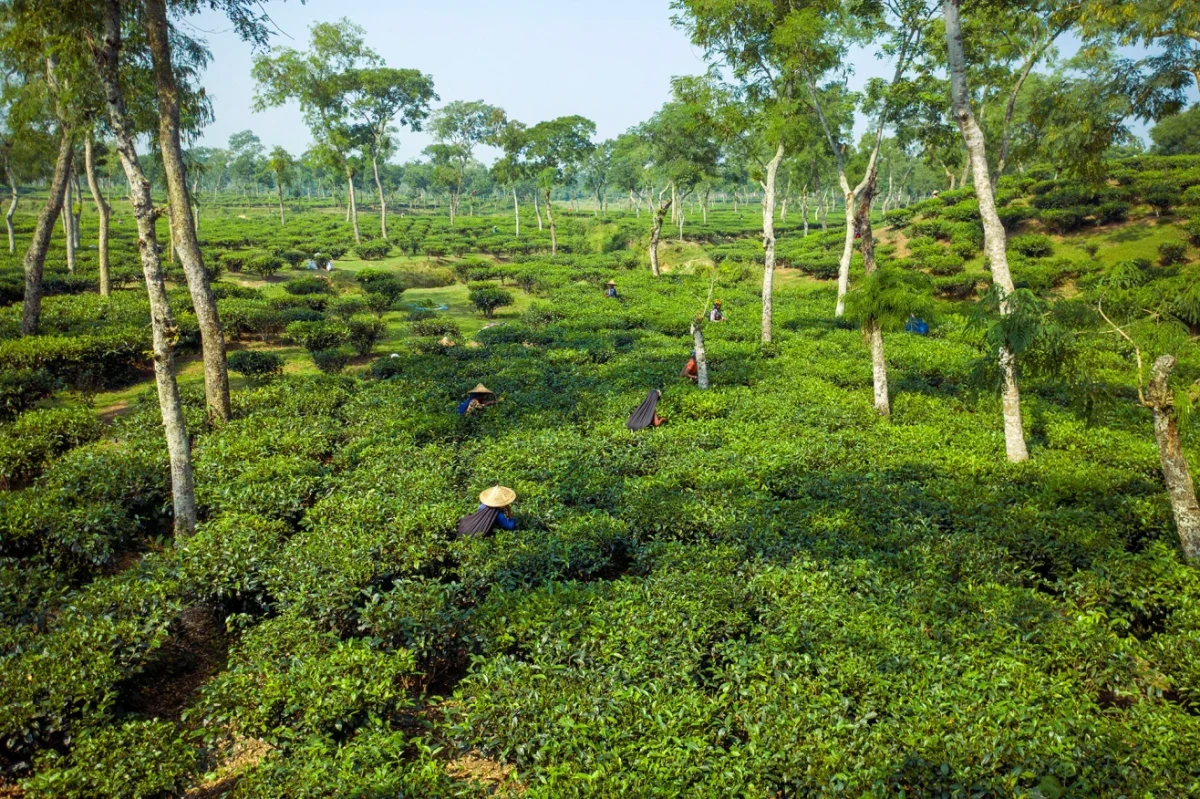
Bangladesh is a country of natural beauty. From Cox’s Bazar, home to the world’s longest sea beach, and the Sundarbans, the world’s largest mangrove forest, to the vast haor wetlands, extensive hill tracts and thousand-year-old archaeological sites at Mahasthangarh and Paharpur, some 700 to 800 tourist attractions are scattered across the country. The roar of the sea, the silence of the hills, the beauty of the haors and ancient archaeological remains together give Bangladesh enormous tourism potential.
Yet the country has been unable to fully capitalise on that potential. Bangladesh has not only struggled to attract foreign tourists but is also failing to retain domestic travellers. Instead, many Bangladeshis are travelling abroad for leisure. Stakeholders identify inadequate infrastructure, a lack of quality roads, security weaknesses, poor coordination among agencies, a shortage of skilled manpower, budget constraints and inadequate promotion as some of the key reasons.
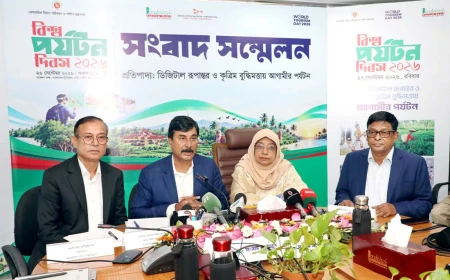
Against this backdrop, World Tourism Day is being observed today, Sunday (September 27). This year’s theme is ‘Digital Agenda and Artificial Intelligence to Redesign Tourism’. To mark the day, the Ministry of Civil Aviation and Tourism has taken a week-long programme focusing on the potential of digital transformation and artificial intelligence. From today until October 3, the programmes include colourful procession, a bicycle rally, city tours for disadvantaged children, exchanges with tourism stakeholders and foreign diplomats, exhibitions and discussion meetings. For the first time, the Bangladesh Tourism Awards will be given in 13 categories.
Stakeholders say tourism is one of Bangladesh’s emerging industries. The sector contributes 4.4 percent of the country’s total GDP. Developing tourism could help reduce unemployment while generating substantial foreign currency earnings. However, the potential remains largely untapped due to a lack of coordination among ministries, inadequate planning and poor implementation, among other reasons.
Weaknesses in infrastructure and connectivity
Sector stakeholders say Bangladesh ranks 109th globally in terms of tourism infrastructure. In Asia, Bangladesh trails every country except Pakistan. The country’s infrastructural weaknesses in the tourism sector are one of the main reasons for its poor performance.
Although road connectivity has improved, lengthy traffic congestion and road accidents remain commonplace. There is also a lack of adequate hotel facilities. Tourist destinations remain neglected. The lack of planned modernisation and duty-free shopping facilities is another major obstacle for the tourism sector.
Limitations in the country’s aviation system are also contributing to the sector’s shortcomings. National airlines play an important role in presenting a country to foreign tourists. Although Biman Bangladesh Airlines represents Bangladesh on the international stage, it operates flights outside Asia only to London. As a result, the cost of travelling to Bangladesh is comparatively high for tourists from other countries. Bangladesh ranks 111th in terms of its aviation system, the lowest position in Asia.
Shortcomings in promotion and security
Bangladesh’s tourism profile is also limited on the global stage. While television channels, BBC, CNN, Discovery and National Geographic showcase the societies, cultures, heritage and natural beauty of different parts of the world, Bangladesh’s tourism receives little such exposure.
Security is also a major concern for foreign tourists. They need protection from instability, theft, robbery, murder, lawlessness and violence, as well as assurance that they can move around without disruption. Stakeholders believe attracting tourists will be difficult unless their safety can be ensured.
There are also a shortage of skilled and courteous manpower and a lack of an effective system for rapidly exchanging information. Stakeholders also say the websites of the Bangladesh Tourism Board and Bangladesh Parjatan Corporation do not provide much of the necessary information.
Additional expenses are another major obstacle for tourists. Compared with some developed countries in the tourism sector, travel costs in Bangladesh are considerably higher, while the facilities are more limited in proportion. Tourists face difficulties because of additional transportation costs and high hotel prices compared with the quality offered. Better facilities are available in other countries at lower costs.
Why are there fewer western tourists?
Most tourists visiting Bangladesh come from India. Although only 5 percent of tourists come from the United States, most of them are expatriate Bangladeshis. Fifty-three percent of the global tourism market comes from America and Europe, a market from which Bangladesh remains largely deprived. While the share of tourists arriving from outside Asia ranges from 20 percent to 71 percent in different countries, the figure is only 7 percent in Bangladesh.
Kazi Russell, a businessman and former president of the Cox’s Bazar Resort Owners Association, said the lack of coordination was a major problem in tourism. He said the Tourism Board, Bangladesh Parjatan Corporation, Tourist Police, city corporation or municipal authority, Department of Environment and other relevant agencies all have responsibilities in a tourism area, but there is no coordination among them.
Highlighting the vast potential of Cox’s Bazar-centred tourism, he said, ‘Cox’s Bazar has the world’s longest sea beach. If opportunities are created to use it properly, the pressure of tourists on the city will decrease. The modernisation work at Cox’s Bazar Airport is now visible. Once the airport work is completed, the influx of domestic and foreign tourists will increase further. In this case, creating a separate area on the beach for foreign tourists would further increase the number of foreign tourists.’
Shiblul Azam Qureshi, former president of the Tour Operators Association of Bangladesh (TOAB), said domestic tourists were visiting tourist destinations and that various businesses established there were surviving because of them.
‘We actually know where our failures are in this area. They are discussed at meetings and seminars. But the necessary work is not done to implement them. A new government has come. If it gives importance to tourism and resolves these problems, foreign tourists will come to our country,’ he said.
Firoz Alam Sumon, joint secretary general of the Bangladesh Hotel-Restaurant Owners Association, said all kinds of facilities, including security, must be ensured for tourists at tourist destinations. Although the sector is always described as promising, he said, the country was not working properly to realise its potential.
‘Development of this sector is possible only if all public and private organisations involved in it work together,’ he said.
Barrister Mutasim Billah Faruqi, chief executive officer of the Bangladesh Tourism Board, said, ‘There are many problems in the existing tourism management system. No carrying capacity has been determined for tourist destinations. There are also no statistics on how many tourists will visit. A place designed to accommodate 1,000 tourists is receiving 20,000. This is the biggest crisis.’
He said tourist facilities at destinations were also limited. Food and accommodation are very expensive, much more so than in other countries around the world. This is another major problem.
Referring to the poor quality of roads leading to tourist destinations, Mutasim Billah Faruqi said tourists often experience back pain while travelling. ‘This does not happen in many countries around the world. In developed countries, you can travel thousands of miles without even feeling the journey,’ he said.
What's Your Reaction?
 Like
0
Like
0
 Dislike
0
Dislike
0
 Love
0
Love
0
 Funny
0
Funny
0
 Wow
0
Wow
0
 Sad
0
Sad
0
 Angry
0
Angry
0







Comments (0)