

Golden days of golden fibre returning
The rising demand of jute has pushed up prices and encouraged more farmers to expand cultivation

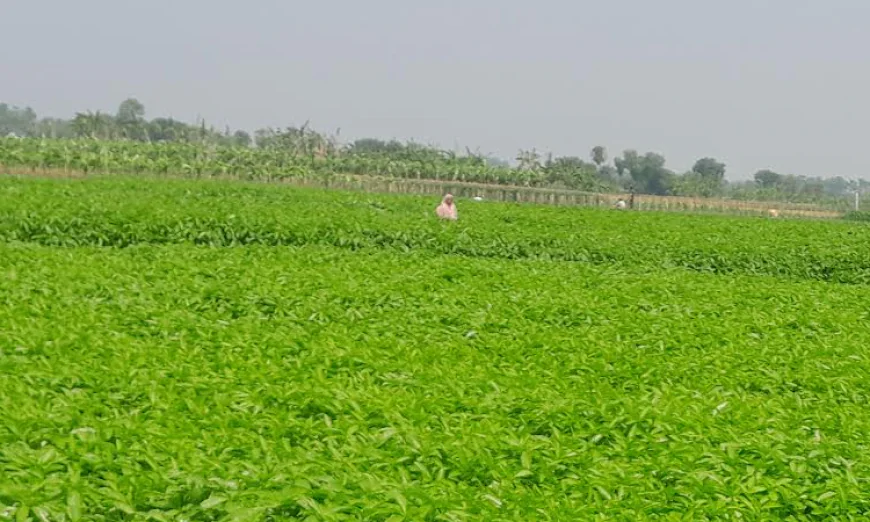
The golden days of jute, once known as Bangladesh's golden fibre, appear to be returning in Rajshahi as rising demand has pushed up prices and encouraged more farmers to expand cultivation.
Over the past decade, the price of jute has nearly tripled, while the area under cultivation has almost doubled. This season alone, jute cultivation in the district has increased by around 7,000 bighas, reports state news agency BSS.
Farmers involved in jute production say the crop is once again becoming a profitable and attractive option.
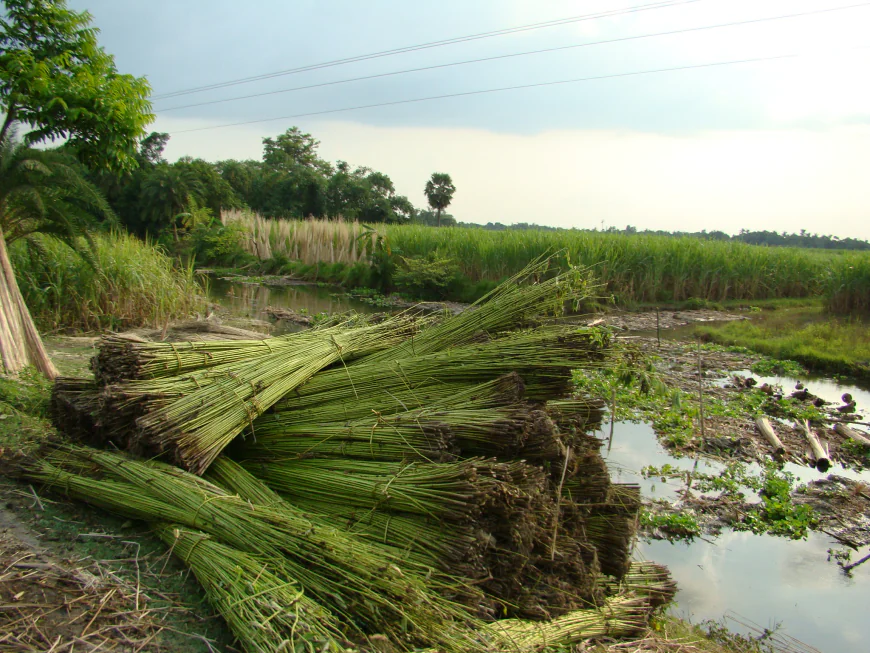
Jute Cultivation and harvesting goes on at a jute field. Photo: Shahnoor Habib Munmun
According to a 2016–2026 report by the Department of Agricultural Extension (DAE) in Rajshahi, jute production in the district has increased by 22,946 metric tonnes over the past 10 years. During the same period, an additional 7,000 hectares of land have been brought under cultivation.
Officials attributed the growth to higher market prices and continued support and guidance from agricultural extension services.
In 2016, farmers produced 22,836 metric tonnes of jute from 11,260 hectares of land. By 2025, production had risen to 45,782 metric tonnes from 17,305 hectares.
Farmers' interest in jute cultivation has increased significantly over the past four years due to favourable prices.
Kalam, a farmer from Duary in Paba upazila, said the total production cost, including land lease, seeds, fertiliser, labour and irrigation, was about Tk20,000 per bigha.
"Each bigha produces around nine to 10 maunds of jute. After deducting all expenses, I earned a profit of Tk16,000 to Tk18,000 per bigha last year," he said.
He added that many other farmers in the area had also made profits and had therefore increased the amount of land under jute cultivation this year.
According to the DAE, jute has been cultivated on 18,305 hectares of land in Rajshahi this year, exceeding the official target by around 7,000 bighas. Officials said favourable weather conditions have kept the crop in good condition so far.
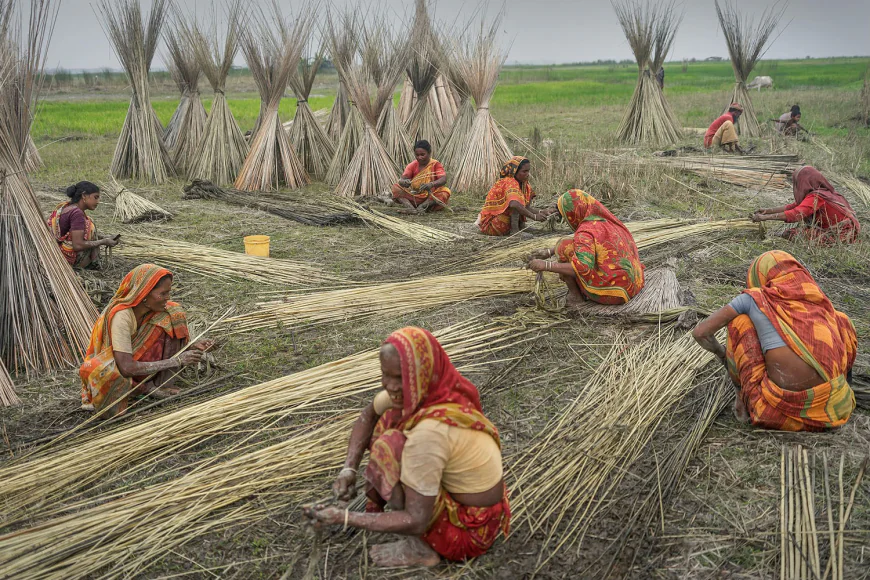
Women process fibre from harvested jute trees. Photo: Wikimedia Commons
The Department of Agricultural Marketing said it was regularly monitoring the market to ensure farmers receive fair prices for their produce.
Market committees have been instructed to safeguard farmers' interests, while efforts are also being made to strengthen the marketing system and reduce the influence of middlemen.
Officials said the government is implementing the Mandatory Jute Packaging Act 2010 to increase domestic use of jute products. In addition, the raw jute export policy has helped farmers secure better prices.
There are currently seven jute mills in Rajshahi district, including Rajshahi Jute Mills, which purchase jute directly from farmers at fair prices.
The largest, Rahman Jute Spinners in Puthia upazila, has a production capacity of 100 metric tonnes. Rahman Jute Mill has a capacity of 20 metric tonnes, Hasen Jute Mill 18 metric tonnes, while Nowhata Jute Mill and Aman Jute Fibres each have a capacity of 15 metric tonnes.
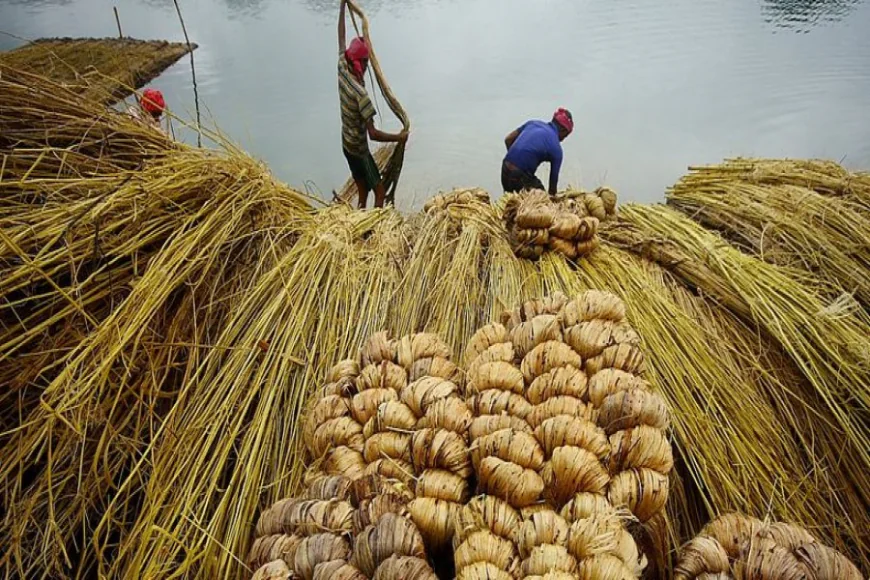
Farmers soak fibre extracted from jute trees in water as part of processing the golden fibre. Photo: Collected
Industry stakeholders said farmers enjoyed both good yields and favourable prices last year, and they expect cultivation to increase further if prices remain stable.
Mohammad Nasir Uddin, deputy director of the DAE in Rajshahi, said seeds, fertilisers and pesticides were being distributed among farmers alongside technical support to encourage jute cultivation.
He said sustained efforts to motivate farmers had helped expand cultivation in the region. He also noted that the government's restrictions on polythene bags had increased the use of jute bags and sacks, directly benefiting farmers.
What's Your Reaction?
 Like
0
Like
0
 Dislike
0
Dislike
0
 Love
0
Love
0
 Funny
0
Funny
0
 Wow
0
Wow
0
 Sad
0
Sad
0
 Angry
0
Angry
0




Comments (0)