
Time to say goodbye to the superjumbo?
The airline said in August that it will begin retiring its 10 A380s in 2028, or four years earlier than originally scheduled, due to rising maintenance and fuel costs

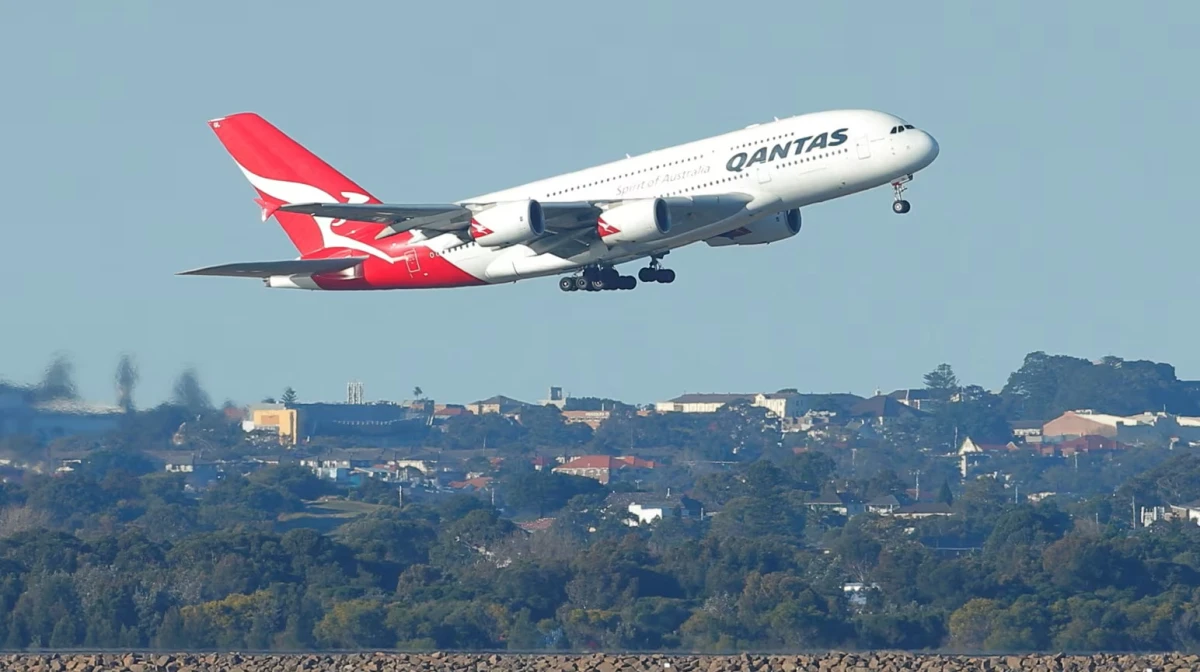
It’s enormous. It’s adored by fans. It’s clearly long past its prime. And it’s had more comebacks than Elvis.
But, as Australia’s national airline Qantas prepares to retire its entire fleet of Airbus A380 superjumbos, with the comfort and luxury of their full double-decker cabins, has the world’s largest passenger airplane finally had its day?
The airline said in August that it will begin retiring its 10 A380s in 2028, or four years earlier than originally scheduled, due to rising maintenance and fuel costs — a concern often echoed by other carriers still operating the gigantic aircraft, reports CNN.
Qantas’s A380 decision is the latest nail in the coffin for the superjumbo jet. Only 171 remain in service today, down from the global fleet’s peak of more than 230 planes in the late 2010s, data from aviation analytics firm Cirium shows. Airbus stopped making them in 2021 after orders dried up. And the Covid-19 pandemic prompted airlines including Air France and Thai Airways to retire their fleets in full as the world waited to see if air travel would ever recover.
It’s also a reflection of how the world of luxury aviation is changing. On its launch, the A380 rode a wave of emerging Middle Eastern airlines who used its status to claim a big slice of the executive travel market. Now, as other airlines catch up, the A380 is no longer the ace in the deck.
Of course, the superjumbo has been here before.
In those empty-sky days of Covid, many declared the A380 already dead, with aviation poised to enter a new world of smaller, more efficient medium- and long-haul aircraft that would render the hub-to-hub leviathans obsolete. But the A380’s enduring popularity won out and it surged back, aided by Airbus and Boeing production delays on new jets.
‘A smoother ride’
While it has not yet set an exact date for when the A380 will stop carrying its Flying Kangaroo logo, Qantas — an airline that has had a long and deep love affair with the superjumbo — can be seen as a harbinger of the A380’s fate.
“It’s an aircraft that’s been out of production since 2021,” Cam Wallace, the CEO of Qantas International and Freight, told investors recently. “We already have supply chain challenges today and we know there’s likely to be supply constraints in the future.”
It’s bad news for the legions of flyers who hold a special place in their hearts for the A380. The plane is renowned for offering a level of stability and comfort unmatched by other jets. The novelty of boarding on the upper deck and the sheer spaciousness of a plane that can easily seat more than 500 people add to its allure.
Planespotters too will be disappointed. The thrill of watching the gargantuan airplane wallowing in the sky, in apparent defiance of gravity, as it takes off or comes into land, has yet to be matched by other commercial jets.

Qantas says its superjumbos are becoming too uneconomical to operate and maintain. Photo: Sebastian Kahnert/picture alliance/Getty Images
“It’s my favorite aircraft,” said Sebastian Barney, a resident of Melbourne, Australia, and Qantas frequent flyer who often boards an A380 on his way to and from the United States. “It feels more open and a smoother ride” than other planes.
The good news is, while the countdown to oblivion may have started, the A380 is likely to endure for even a few more years.
Two worlds
George Dimitroff, the global head of aircraft valuations at Cirium, said the A380 use case is split in two: Emirates versus the rest of the aviation industry.
Emirates, the largest A380 operator with scores of the planes, has designed entire terminals around the A380 at its megahub airport in Dubai. For other airlines, with just a handful of A380s, the aircraft is used exclusively on key, high-traffic routes.
“Airlines with smaller fleets of A380s are going to retire them,” Dimitroff said. “Especially as the industry as a whole focuses on premium travel.”
He added: “It’s going to eventually be an Emirates-only aircraft.”
Other experts agree that Emirates will likely be the final major operator of the A380. The airline flies 101 of the planes today with another 15 in storage, Cirium data shows. Replacing that number of aircraft, even if Emirates wanted to, would take the better part of a decade at current production rates.
“Emirates plans to fly the A380 into the early 2040s, which is why we are investing billions to refurbish our existing planes with the latest cabin interiors and technologies like Starlink,” Tim Clark, the president of Emirates, said in a statement.
“The Emirates A380 continues to have strong customer appeal, iconic brand value, and unmatched capacity in supporting sustained growth in demand,” he added.
Emirates took delivery of the last A380 ever built in 2021.
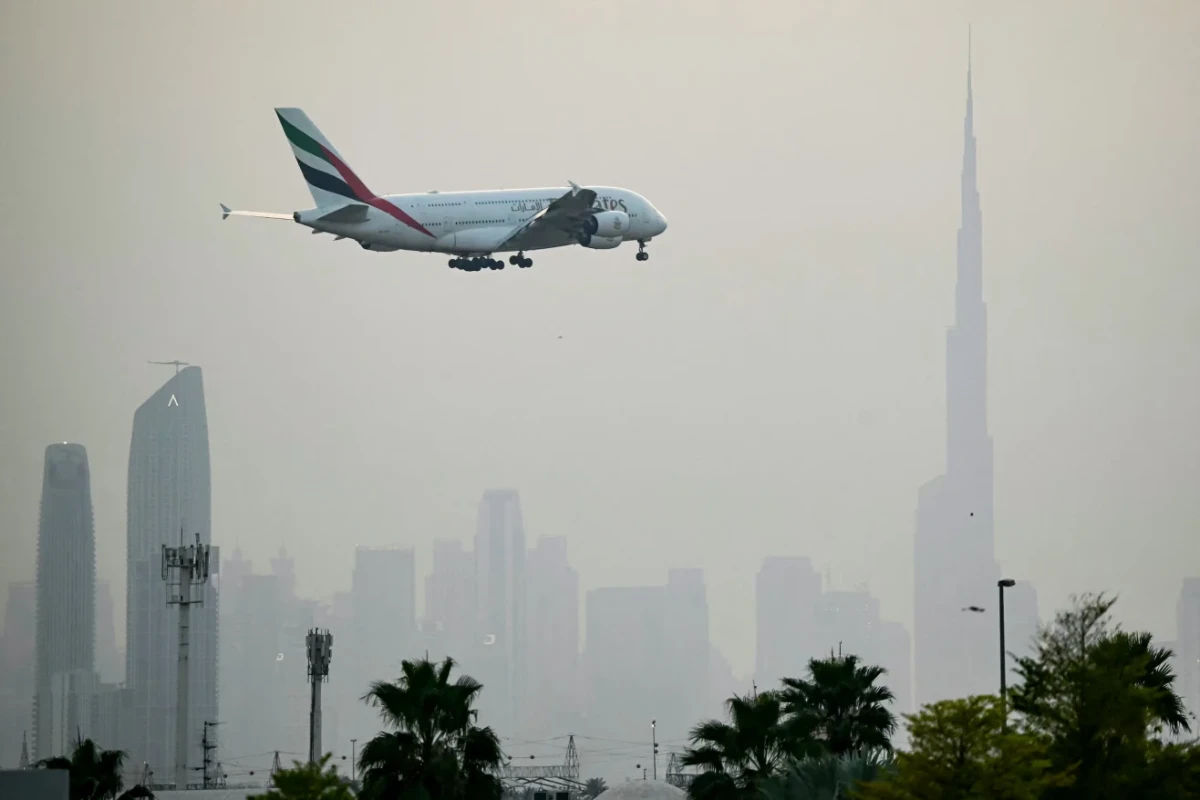
Emirates is the biggest A380 operator, with 101 superjumbos in operation and 10 in storage. Photo: AFP/Getty Images
Other airlines are not as tied to the superjumbo, but some have already committed to up to a decade of continued operation.
Lufthansa Group CEO Carsten Spohr said in 2021 that the group had “permanently decommissioned” the A380. Two years later, the planes were back in service owing to production delays at both Airbus and Boeing, particularly for the 777X, an aircraft that is still awaiting certification.
Today, Lufthansa is upgrading the business class suites and the inflight entertainment on its eight remaining A380s — a signal that the planes are here to stay for a while longer. A spokesperson for the airline said it plans to fly the A380 “well into the 2030s.”
All Nippon Airways, British Airways, Singapore Airlines and other operators also have no imminent plans to retire the A380. “They remain one of our most popular aircraft,” a spokesperson for Singapore Airlines said.
A380s, for now, will remain a staple of aviation hubs around the world, hitting the tarmac in London, Munich, Dubai, Singapore and beyond.
Shifting skies
One recent driving factor in the A380’s demise is the shifting landscape of luxury air travel. In the A380’s brief heyday, the passenger market was dominated by the cheaper seats, with plenty of economy provision in the back, and fewer first- or business-class options.
The Gulf airlines changed this, using the A380 to create new premium models that afforded extensive flying real estate to wealthier flyers. Emirates debuted the first inflight shower on its planes. Abu Dhabi’s Etihad Airways offered The Residence, a three-room private oasis complete with its own flight attendant.
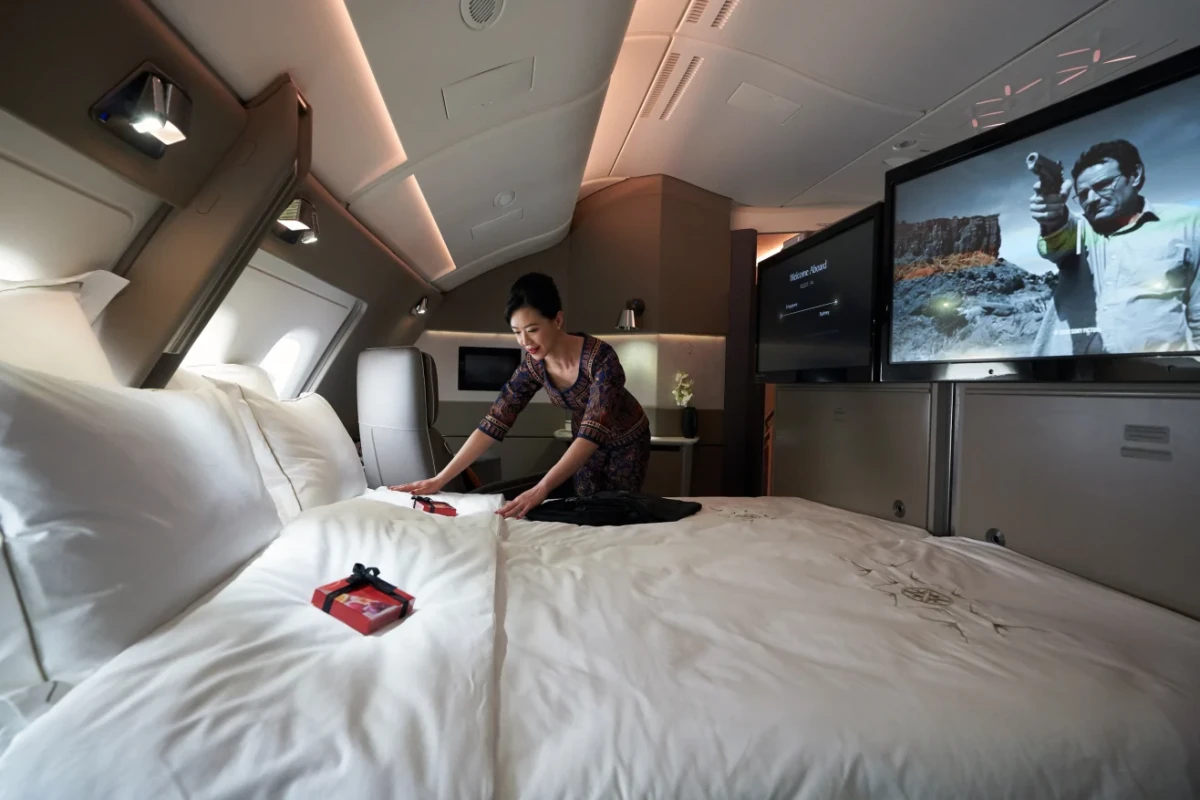
The A380 became a byword for luxury in the sky with carriers such as Singapore Airlines equipping their planes with opulent first-class options, like double beds. Photo: Nicky Loh/Bloomberg/Getty Images
But premium travel has evolved. The Gulf carriers are no longer the standard bearers of inflight luxury. Global carriers from Air France to Japan Airlines and Lufthansa have improved their poshest offerings. Private mini-suites are the standard today, not the exception, and showers above the clouds never really caught on.
Qantas will join the ranks of airlines doubling down on premium with its A380 replacement. In his presentation to investors, International CEO Wallace outlined how the airline’s new Airbus A350-1000s will have a higher share of first, business and premium economy seats than their superjumbo predecessors. That means more seats at the pointy end of the plane to sell to the growing ranks of travelers willing to pay up for a little more — or a lot of — comfort at 35,000 feet.
Expanded premium cabins can have the downside of fewer economy seats in the back and higher fares for those seats that remain. That’s not such a great outcome for budget-conscious travelers.
Like the Boeing 747 before it, the A380’s retirement is likely to be a slow burn. They will disappear airline by airline until, one day, only Emirates is left. Some, like Global Airlines founder James Asquith, may try to find a second life for the plane by offering niche A380-only services, but experts doubt this will ever be a significant market.
The best estimate is that the shift to the A380 becoming an Emirates-only plane will occur sometime in the early- to mid-2030s.
The retirement of A380s will undoubtedly diminish the status of any airlines waving goodbye to their superjumbos. But, say aviation experts, few of them will care.
“Airlines today fly for profit, not pride,” said Henry Harteveldt, a travel industry analyst and president of Atmosphere Research Group. “Airlines are not interested in having an airplane for the sake of prestige if it won’t produce an expected level of profitability.”

Although it's never been a huge commercial success, the A380 is much loved by aviation enthusiasts and passengers. Photo: Silas Stein/dpa/picture alliance/Getty Images
The A380, he explained, was a showpiece plane for Airbus. But it never sold in the numbers the manufacturer expected and its position slowly eroded as aircraft with better products hit the market.
“The A380 is a technological marvel but it’s been a commercial disappointment to Airbus,” said Harteveldt. “As newer, more fuel-efficient planes with longer ranges become available, airlines are realizing less is more.”
What's Your Reaction?
 Like
0
Like
0
 Dislike
0
Dislike
0
 Love
0
Love
0
 Funny
0
Funny
0
 Wow
0
Wow
0
 Sad
0
Sad
0
 Angry
0
Angry
0







Comments (0)